Jesselton Revolt
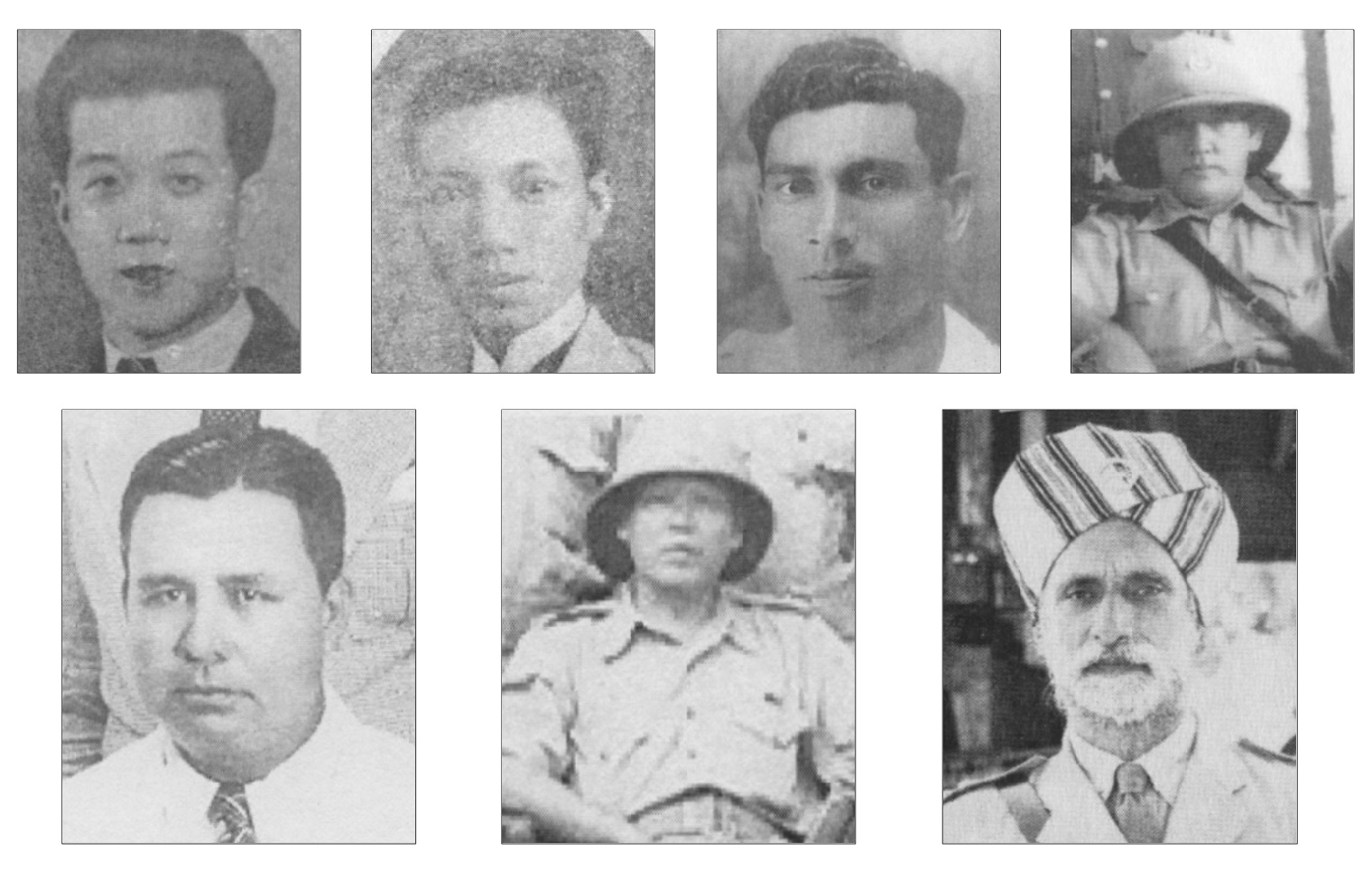
Albert Kwok arrived in Jesselton on 15 May 1941 and opened a medical practice treating piles. It was an unassuming start for the man who would lead the most significant armed resistance against the Japanese occupation of North Borneo. Kwok, a Teochew Chinese from Kuching in neighboring Sarawak, had previously worked with the China Red Cross and served under Chiang Kai-shek's Kuomintang. He had studied at a Seventh-day Adventist Mission School in Canton. None of this suggested the guerrilla leader he would become, but the Japanese occupation of Borneo had a way of remaking people.
Three Pistols and a Box of Grenades
Kwok spent nearly two years building a resistance network under impossible conditions. In February 1942, he attempted to reach Allied forces in eastern North Borneo on foot but turned back at Pensiangan, where Japanese troops were concentrated. He eventually made contact with American forces in the Philippines through a Chinese businessman named Lim Keng Fatt and a Muslim cleric from Sulu named Marajukim. Kwok traveled to Tawi-Tawi for training, then continued to Sulu, where he met Lieutenant Colonel Alejandro Suarez and learned how resistance operations functioned in the Philippine archipelago. Commissioned as a lieutenant by the U.S. Army on 1 July 1943, Kwok returned to North Borneo carrying three pistols and a box of hand grenades. The American promise of more weapons never materialized. He would have to launch his revolt with what he had.
The Double Tenth Rising
On 21 September 1943, Kwok formally established his resistance group, the Kinabalu Guerrillas Defence Force, built from a coalition of Chinese, indigenous Dusun and Murut peoples, Bajau-Suluk islanders, Sikh Indian policemen, and former colonial administrators. Most fighters carried parangs, spears, and kris -- melee weapons against a modern army. A pending Japanese decree to arrest anyone in opposition forced the guerrillas to launch their attack ahead of schedule. From 9 October 1943, the movement struck simultaneously by land and sea. Bajau-Suluk leaders like Panglima Ali of Sulug Island led attacks from boats, while Dusun and Murut fighters struck from the jungle. Members of the Indian Imperial Police under Constable Subedar Dewa Singh, and North Borneo Volunteer Force members led by Jules Stephens and Charles Peter, joined the assault. Jesselton, Tuaran, and Kota Belud fell to the guerrillas, with 50 to 90 Japanese killed.
Two Flags Over Jesselton
On 10 October 1943, the day after the uprising began, the resistance hoisted two flags over the liberated city: the flag of the Republic of China and the British Union Jack. The gesture revealed the coalition's divided loyalties. The Overseas Chinese Defence Association members were loyal to the Republic of China, while the North Borneo Volunteer Force still considered itself British, even though the British government had never recognized the NBVF. For one day, Jesselton was a free city under two foreign flags, liberated by people who belonged to neither nation but who had organized themselves across ethnic, religious, and political lines to fight a common enemy. On 12 November 1943, the OCDA celebrated Sun Yat-sen's birthday by raising the Chinese flag again and singing the Republic of China's national anthem from their hideout, a defiant act by people who knew Japanese reinforcements were already on their way from Kuching.
The Reckoning at Petagas
The Japanese response was methodical and devastating. Reinforcements from Kuching launched a counter-offensive that bombed coastal settlements from Kota Belud to Membakut, machine-gunned villages, and burned nearly every dwelling in the area. Between 2,000 and 4,000 civilians were executed, predominantly Bajau and Suluk people whose communities bore the brunt of Japanese reprisals regardless of whether individuals had participated in the revolt. The Japanese threatened to kill more civilians unless the guerrilla leaders surrendered. Kwok turned himself in under duress. On 21 January 1944, Kwok and approximately 175 others -- most of whom had no involvement in the uprising -- were executed at Petagas, near Putatan. After the war, the International Military Tribunal for the Far East concluded that the Kenpeitai had engaged in a reign of terror, systematically exterminating the coastal Suluk population. The Petagas War Memorial now stands on the execution site, just east of Kota Kinabalu International Airport, honoring the people who fought and those who died simply for living nearby.
From the Air
Coordinates: 5.97N, 116.10E. The Jesselton revolt took place in what is now Kota Kinabalu, the capital of Sabah. The Petagas War Memorial, which commemorates the executed resistance fighters, is located just east of Kota Kinabalu International Airport (ICAO: WBKK). From altitude, the coastal plain where the fighting occurred stretches between the South China Sea and the Crocker Range. Tuaran and Kota Belud, also involved in the uprising, lie to the north along the coast.