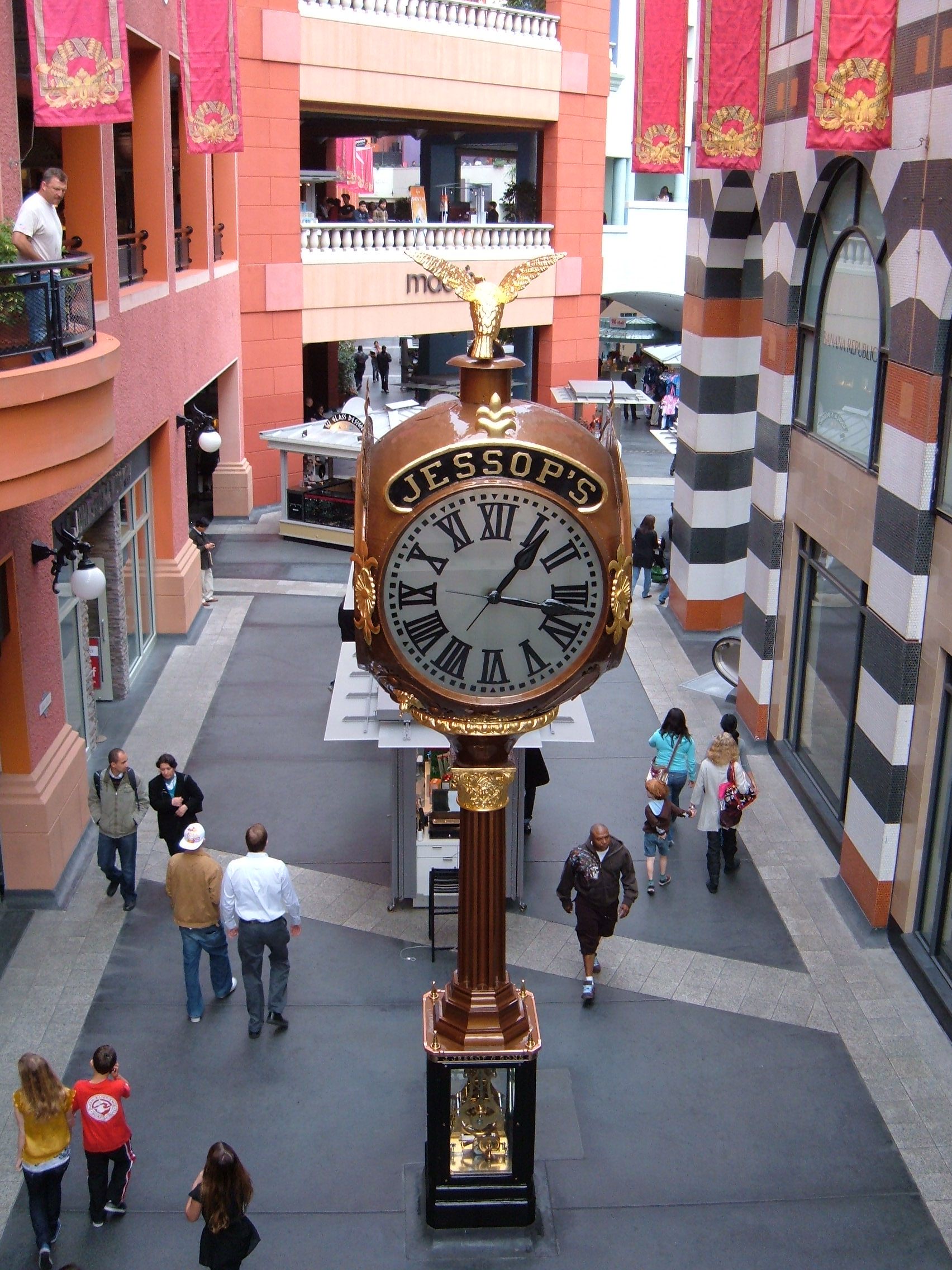
Jessop's Clock
Jessop's Clock stood outside a San Diego jewelry store for more than a century — 22 feet tall, 300 moving parts, 17 faces showing the time in 13 cities around the world, built by a man who rowed out to ships to check their chronometers, and now destined for Balboa Park after a decade in storage.
The Man Who Rowed to Ships
Joseph Jessop was born in Lytham, near Blackpool, in Lancashire, England. He came to San Diego in the late nineteenth century and established himself as a watchmaker and jeweler — a craftsman who understood time the way mariners understood the sea, as something to be measured precisely or not at all.
San Diego in those years was an active port, and accurate timekeeping mattered enormously to ships at sea. Chronometers — the precision timepieces that allowed sailors to calculate longitude — had to be checked and calibrated against a known standard. Jessop's service included rowing out to ships in the harbor to compare his chronometers with theirs and certify their accuracy. It was exacting work for an exacting man.
A Clock Commissioned in 1905
In 1905, Jessop commissioned the clock that would bear his name. It was built to stand outside his jewelry store on Fifth Avenue in downtown San Diego, a statement piece that would advertise the business while serving as a public timekeeper for the city.
The specifications were extravagant: 22 feet tall, with 300 moving parts and 17 clock faces. The faces showed not just local San Diego time but the current time in 13 cities around the world — London, Paris, New York, Tokyo, and others. The mechanism was elaborate enough to be a marvel of clockwork engineering in its own right, independent of its commercial purpose.
For the passers-by of downtown San Diego, Jessop's Clock became a landmark of daily life — a reference point, a meeting spot, a thing that told you where you were in the city as surely as a street sign.
The Clock That Stopped for Heath Ledger
Among the many small facts that accumulate around a century-old clock is this: Jessop's Clock stopped on January 22, 2008 — the day the actor Heath Ledger died. Ledger, who had grown up in Perth, Australia, was known to San Diego residents through his presence in the city, and his death was widely mourned.
Whether the stopping was mechanical coincidence or something else depends on your disposition. Clocks stop for mechanical reasons. But the timing registered for those who noticed it, and the story became part of the clock's folklore.
Jessop's jewelry store eventually closed, as businesses do. The clock remained on Fifth Avenue for years after the store's closure, a public artifact that had outlasted the commercial purpose it was built to serve.
Removed, Stored, and Eventually Coming Home
In 2019, Jessop's Clock was removed from its Fifth Avenue location. The removal had been a long time in planning — the clock required maintenance and restoration, and its future home was in question. It entered storage.
The plan, as of the mid-2020s, is for the clock to be reinstalled in Balboa Park's Casa de Balboa by 2028, where it will be a feature of the park's indoor cultural spaces rather than an outdoor street clock. The move changes its character somewhat — from a democratic public timekeeper visible to anyone walking downtown, to a featured attraction within a museum complex.
Jessop's Clock is California Historical Landmark No. 372. The designation recognizes its place in San Diego history: a piece of Victorian commercial craftsmanship that became a century-long fixture of the city's public life. When it returns to public view, it will have been away long enough that a generation of San Diegans will see it for the first time.
From the Air
Jessop's Clock was located on Fifth Avenue in downtown San Diego, approximately 3 miles northeast of KSAN (San Diego International Airport). It is currently in storage and planned for installation in the Casa de Balboa within Balboa Park by 2028. Downtown San Diego is clearly visible on approach to KSAN, with the grid of streets and the distinctive architecture of the Gaslamp Quarter and civic center visible from the air.