Jever
On the wall of the town hall in Jever, set into the gable, are four golden Latin letters: D V M G. Donat Urbi Maria Gubernacula. Mary gives the town the power to govern. The Mary in question is Maria of Jever, born in 1500, the unmarried daughter of the last male chieftain of the Jeverland, who took the throne as Fräulein - the title meaning unmarried noblewoman - and ran her tiny North Sea state through six decades of war, marriage proposals, and rival claims with a calm intelligence that left every neighbouring duke flat-footed. Most German market towns have a founder. Jever has a ruler, and the people who live here still call their home Marienstadt, Mary's City, even though it has been four and a half centuries since she died.
The Fräulein Who Wouldn't Marry
When Edo Wiemken the Younger died in 1511, the lordship of Jever passed to his children with a stipulation that worried the neighbours: it could descend through the female line. Maria, born in 1500, watched her older sister and brothers die one by one until she became sole heir. By her late twenties she was the sovereign of a small but stubbornly independent state on the marshes between Oldenburg and East Frisia, with everyone in northwestern Germany calculating how to marry her or annex her. She refused both. She negotiated with the Count of East Frisia, played the Emperor against the Duke of Oldenburg, and held the lordship together through wars she could not have won militarily. Her solution to dynastic pressure was to remain Fräulein - unmarried, formally a maiden - and to declare in her will that on her death the lordship would pass to the Counts of Oldenburg, a final piece of diplomatic chess that denied East Frisia the prize forever.
The City She Made
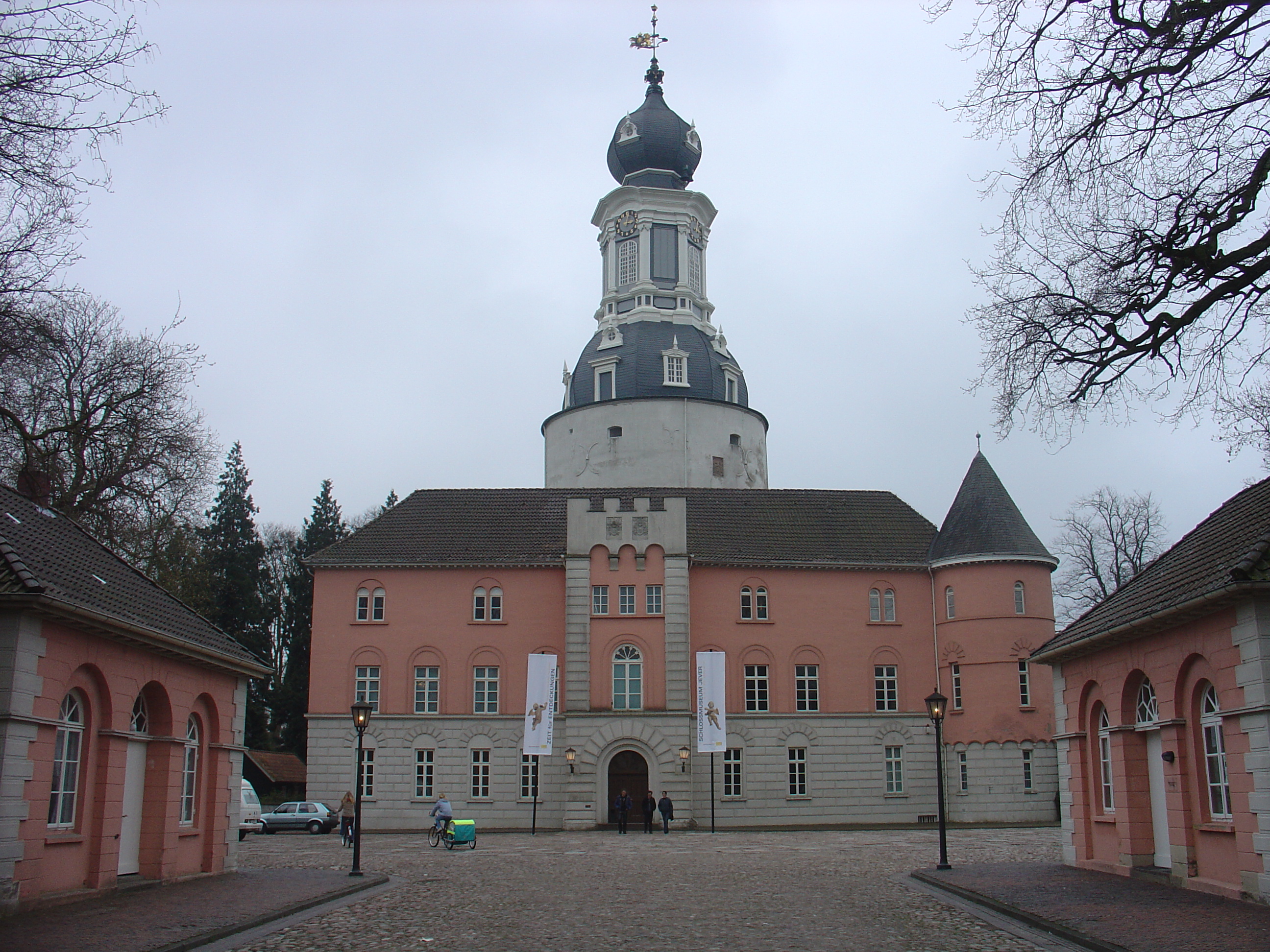
Jever had been a trading post since at least the 12th century - coins minted here have turned up in the Gulf of Finland and on the Warta in Poland - and it had carried town-rights since 1347. But the formal town charter, the one that anchored civic identity, came in 1536 by Maria's order. She also rebuilt the castle. Between 1560 and 1564 she had Schloss Jever - originally a medieval fortified keep - transformed into a Renaissance residence, with new wings, moats and ramparts in the Italian style fashionable across the German lands. Inside the town church she commissioned a monument to her father from students of the Antwerp sculptor Cornelis Floris - one of the great surviving pieces of Dutch Renaissance funerary art, which has now survived two major church fires. Walk through Jever today and the structures Maria built or commissioned still anchor the centre of town.
The Secret Death
Maria died in 1575, at 74 years old. Her advisors did something extraordinary: they kept the death secret. For weeks, possibly months, they continued issuing edicts and pronouncements as if the Fräulein were still alive, terrified that East Frisia would invade the moment word got out that the lordship had passed by her will to Oldenburg. The strategy worked. By the time her death became official, the Oldenburg succession was settled and East Frisia had missed its chance. The lordship would change hands many times in the centuries that followed - it became an exclave of Anhalt-Zerbst from 1667 to 1793, then was inherited by Catherine the Great of Russia (born a Princess of Anhalt-Zerbst), occupied by Napoleon, returned to Russia, given to the Grand Dukes of Oldenburg in 1818 - but never again did the East Frisians come close to swallowing it. Maria's last gambit held.
Pirates, Pilseners and Lapwing Eggs
Jever's history is full of moments that feel like they belong in a novel. In the early 15th century, when the town was still a port with access to the North Sea, the Likedeeler pirates - including the legendary Klaus Störtebeker - used Jeverland's tangle of waterways as a refuge between raids. Centuries later, the waterway silted up, the port disappeared inland, and the town pivoted to brewing. The Friesisches Brauhaus, founded in 1848, still anchors the south end of town and produces what is arguably Germany's most bitter Pilsener. And in one of the strangest local traditions, a group of citizens called Die Getreuen von Jever - the Faithful of Jever - sent Otto von Bismarck 101 lapwing eggs each year on his birthday during the late 19th century. Their successors still meet annually in the Haus der Getreuen inn on 1 April.
The Quieter Stories
Not every chapter of Jever's history is heroic. The town was for centuries a centre of Jewish life in Frisia, with a synagogue inaugurated in 1802 and a community that peaked in the late 19th century before economic emigration and rising antisemitism began to shrink it. By 1933 only 98 Jews remained. On Kristallnacht the synagogue was destroyed completely, and at least 63 Jewish residents of Jever were murdered in the Holocaust. The town remembers them now with plaques and stumbling-stones set into the pavement, brass cobbles bearing the names and dates of people who once walked these streets. The carillon at the Hof von Oldenburg, installed in 1983, plays folk tunes while figures of the town's rulers - Edo Wiemken, Maria, Anton Günther, Johann August, Catherine the Great - circle past in turn. A small Friesian town carries more history than most cities, and tries, with stones and bells and lapwing eggs, to honour all of it.
From the Air
Located at 53.58 north, 7.90 east in the Landkreis Friesland, Lower Saxony, about 15 km west of Wilhelmshaven on the East Frisian peninsula. The town centre is a compact medieval core dominated by the white tower of Jever Castle and the mirrored fermentation towers of the Friesisches Brauhaus. Nearest airports: Wilhelmshaven-Mariensiel (EDWI) about 18 km east, Wittmund (ETNT) Luftwaffe base about 10 km west, Bremen (EDDW) about 75 km south. Best viewed from 2,000-3,500 ft - the castle, the town church, and the brewery form a triangle in the heart of an otherwise flat marsh landscape laced with drainage tiefs. Westerly winds prevail.