Jewel Cave National Monument
The breeze gave it away. In 1900, brothers Frank and Albert Michaud noticed a strong current of air rushing from a small hole in a South Dakota hillside. They widened the opening enough to squeeze through, and what they found glittering inside gave the cave its name. Calcite crystals, some shaped like dogtooth spar, others forming delicate nailhead formations, covered the walls in sparkling profusion. The Michauds filed a mining claim, dreaming of tourist dollars, but the cave's remote location in the Black Hills kept the crowds away. Their commercial failure became America's geological treasure.
A Labyrinth Barely Glimpsed
For sixty years, Jewel Cave seemed small, maybe two miles of passages at most. Then Herb and Jan Conn arrived. The husband-and-wife caving team began exploring in 1959, and over the next two decades they discovered more than 65 miles of passages, pushing through tight squeezes and discovering vast chambers. They helped the Park Service decide where to build the modern tourist entrance in the 1970s and mapped out the routes for the Scenic and Discovery Tours. Today, the mapped length exceeds 220 miles, making Jewel Cave the fifth-longest cave on Earth. But here is the remarkable part: scientists estimate that only 3-5% of the cave has been explored. Since Jewel Cave has only one natural entrance, researchers can measure the air flowing in and out as atmospheric pressure changes. These measurements suggest the cave could extend for thousands more miles beneath the Black Hills. Every expedition pushes the boundary of the known world a little further.
A Presidential Decree
President Theodore Roosevelt designated Jewel Cave a National Monument in 1908, responding to local efforts to preserve this underground wonder. The designation came just eight years after the Michaud brothers first crawled inside. Roosevelt could not have known how vast the cave would prove to be, but he recognized that some places deserve protection simply because they exist. The monument sits within Black Hills National Forest, surrounded by ponderosa pines, wildflowers, and the occasional elk or mule deer. About 1,000 bats hibernate in the cave during winter, their presence a reminder that this is a living system, not just a geological curiosity.
Into the Dark
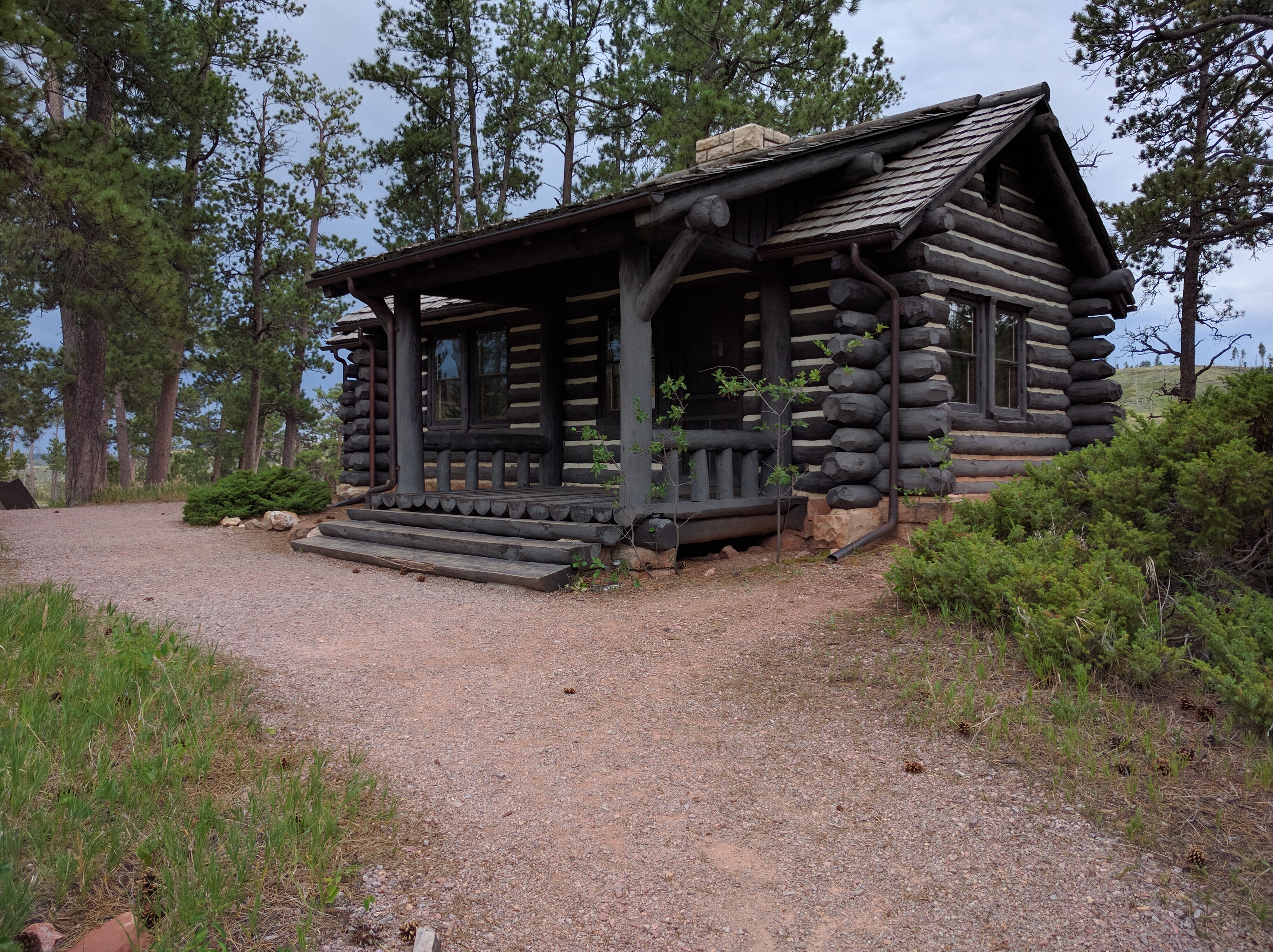
All cave access requires a guided tour, and for good reason. Beyond the lit tourist routes, the cave is absolute darkness, a maze where wrong turns could mean never finding your way back. The temperature holds steady at 49 degrees Fahrenheit year-round, regardless of the summer heat or winter blizzards above. Visitors descend by elevator from the visitor center, built over the modern entrance that the Conns helped select in the 1970s. Tour sizes are limited, and during summer months reservations often sell out. For those seeking a more historical experience, the Historic Lantern Tour uses the original 1900 entrance discovered by the Michaud brothers, passing a 1930s Civilian Conservation Corps ranger cabin on the way. Inside, the calcite crystals that gave Jewel Cave its name still sparkle in the lamplight, formations that took millions of years to grow in the quiet darkness. Food and drink are prohibited in the cave, and visitors are warned to stay with their guides. In the unmarked depths beyond the tours, explorers still push forward, adding to the mapped total year by year.
The View from Above
From altitude, the Black Hills appear as a dark island of pine forest rising from the surrounding prairie. Jewel Cave lies on the western edge of this formation, about 13 miles west of Custer. The visitor center is a small cluster of buildings along US Highway 16. The pine forest stretches in every direction, hiding the fact that hundreds of miles of passages honeycomb the limestone beneath. Wind Cave National Park lies to the southeast, and some scientists speculate the two cave systems might actually connect. The Black Hills hold secrets still, and Jewel Cave is the reminder that the most extraordinary places sometimes lie just out of sight.
From the Air
Located at 43.73N, -103.83W in the Black Hills of western South Dakota. Nearest major airport is Rapid City Regional (KRAP), approximately 40nm northeast. The monument sits at around 5,300 feet elevation, surrounded by Black Hills National Forest. From altitude, look for the dark forested island of the Black Hills rising from lighter prairie. The visitor center is along US Highway 16 between Custer and Newcastle, Wyoming. Wind Cave National Park is visible to the southeast.