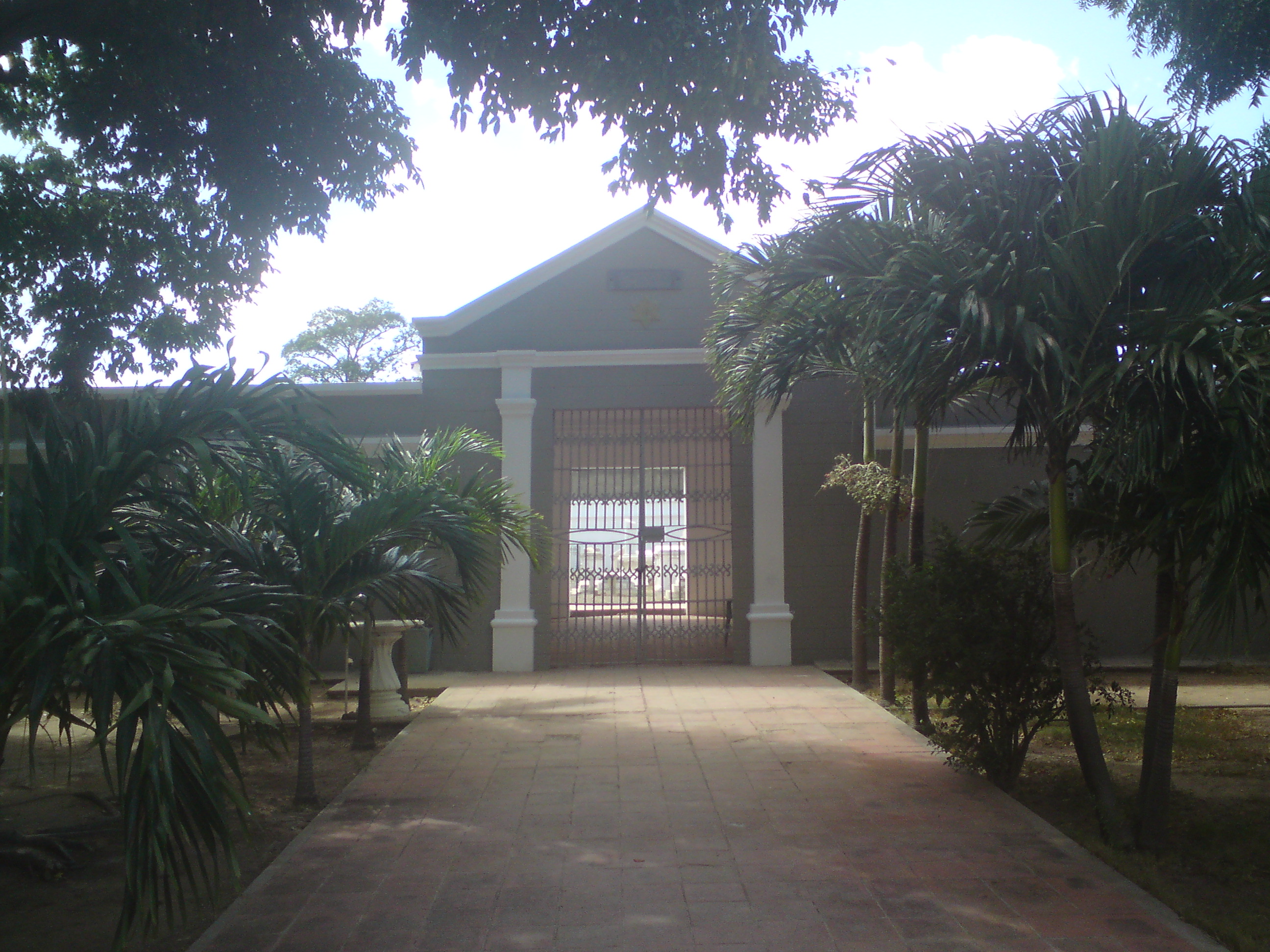
Jewish Cemetery of Coro
It started with a child. In 1832, Joseph Curiel and his wife Debora Levy Maduro needed to bury their daughter Hana. They bought a plot of land on the outskirts of Santa Ana de Coro, in the Pantano Abajo neighborhood between what are now Roosevelt Avenue and Zamora Street, and laid her to rest there. They could not have known they were founding the oldest Jewish cemetery in continuous use in the Americas. Nearly two centuries later, the tombs and mausoleums that followed Hana's grave still stand in this quiet corner of Falcon State, monuments to a community that crossed the Caribbean from Curacao and made a home on the Venezuelan mainland.
The Curacao Connection
The Jews who built this cemetery did not arrive from Europe directly. They were Sephardic -- descendants of the communities expelled from Spain in 1492, who had spent generations migrating through the Mediterranean, the Netherlands, and the Caribbean before reaching Venezuela. Curacao, the Dutch island barely 130 kilometers to the north, had become one of the most important Sephardic centers in the Western Hemisphere. By the early 19th century, trade between Curacao and the Venezuelan coast was flourishing, and in 1824 Spanish and Portuguese Jews from the island began settling in Coro. They brought commercial networks, religious traditions, and a determination to maintain communal institutions even in a small frontier city. The cemetery Curiel and Levy Maduro established was one of those institutions -- not just a burial ground, but a declaration that this community intended to stay.
Marble Against the Tropics
Walk through the cemetery today and the scale of the tombs surprises you. For a city of Coro's modest size and wealth, the mausoleums are unexpectedly grand -- carved stone and ornamental ironwork standing amid tropical vegetation, testaments to families who invested heavily in honoring their dead. The graves trace the arc of Sephardic prosperity in northern Venezuela. During the mid-19th century, trade with the Netherlands Antilles powered the community's growth, and the cemetery filled with the names of merchant families who had made fortunes connecting Caribbean commerce routes. Among the graves lies the Venezuelan poet Elias David Curiel, of Sephardic origin, whose literary legacy adds another dimension to a site that is already layered with meaning. Each headstone, inscribed in Hebrew and Spanish, records a life lived between two cultures, two languages, two worlds separated by a narrow sea.
Weathering the Storm
Time and climate have not been gentle. The cemetery was restored in the 1970s through a joint effort by the Israelite Association of Venezuela and the national government, but the challenges did not end there. In 2005, UNESCO placed Santa Ana de Coro on its World Heritage in Danger list. Heavy rains had been battering the city's historic constructions, and the cemetery -- built with materials never intended to withstand tropical downpours over centuries -- was among the structures at risk. The earthen and stone architecture that gives Coro its character is also its vulnerability. Every rainy season tests walls and foundations that have stood since the colonial era, and the cemetery's older tombs show the toll.
Preservation as Memory
Efforts to save the cemetery have drawn together unlikely partners. In 2009, the Caracas Center for Sephardic Studies, representing the Israelite Association of Venezuela, signed an agreement with Constructora Sambil -- a construction company owned by Salomon Cohen, from a prominent Jewish family -- to rebuild and restore the site. The collaboration underscores something the cemetery has always represented: the persistence of a community's identity even as its population shifts. Most of Venezuela's Jewish population has long since moved to Caracas and other major cities, but the cemetery in Coro remains, tended and restored by people who understand that a burial ground is more than a collection of graves. It is a record of who was here, who built something, who grieved and celebrated and carried traditions across an ocean. Hana Curiel's small grave, the first in this ground, still anchors the story.
From the Air
Located at 11.41N, 69.68W in the Pantano Abajo neighborhood of Santa Ana de Coro, Falcon State, Venezuela, between Roosevelt Avenue and Zamora Street. The cemetery sits on the outskirts of Coro's UNESCO-listed historic center. Nearest airport: Jose Leonardo Chirino Airport (SVCR). From the air, look for the colonial old quarter's dense grid pattern south of the Medanos de Coro sand dunes. The cemetery is a modest green-and-stone enclosure on the city's edge. Curacao is visible to the north across the Caribbean on clear days. Recommended viewing altitude: 2,000-3,000 feet AGL to distinguish the cemetery grounds within the urban fabric.