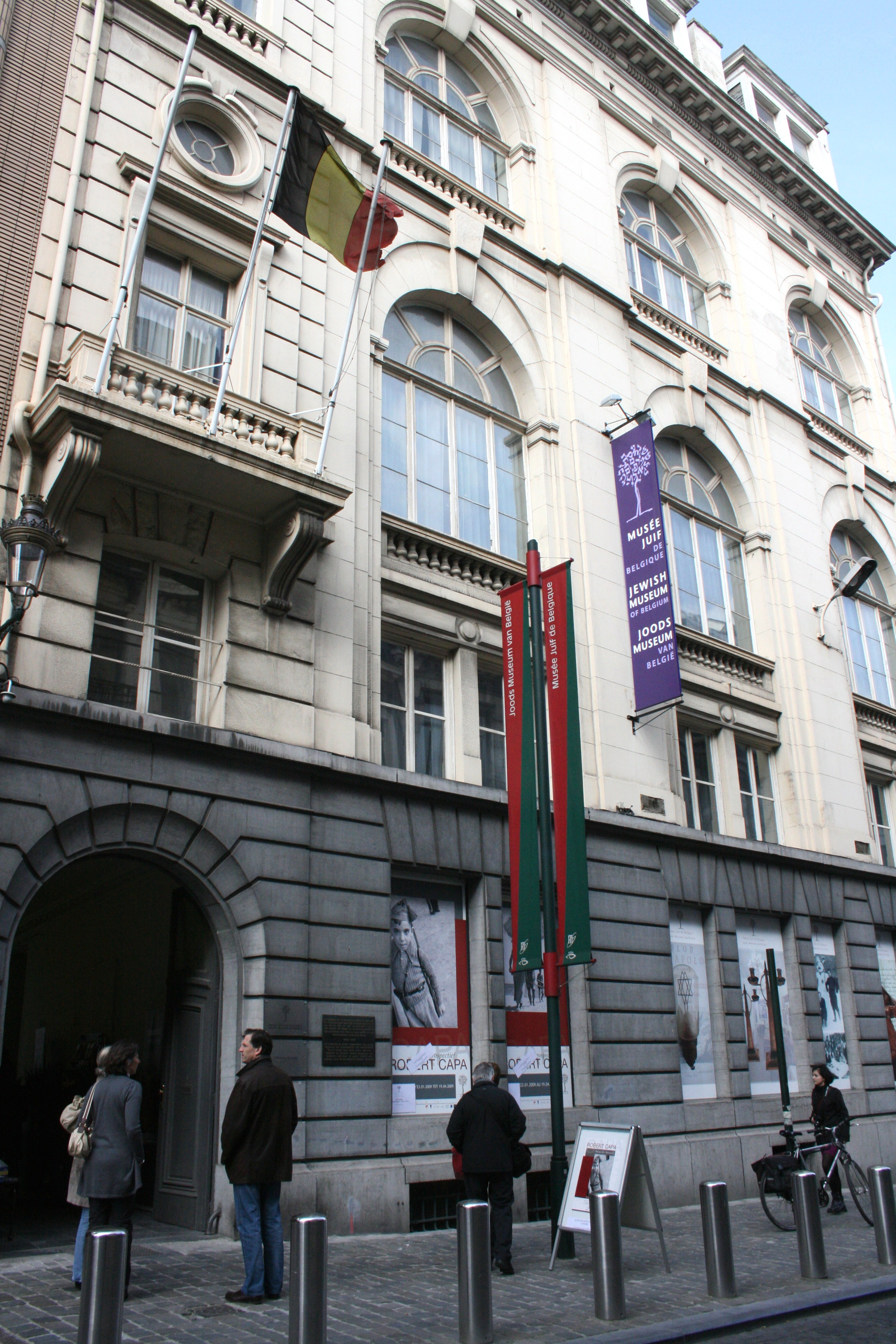
Jewish Museum of Belgium Shooting
Eighty-two seconds. The museum's security cameras recorded every one of them. On the afternoon of May 24, 2014, a man walked up to the Jewish Museum of Belgium in Brussels' elegant Sablon district, carrying a bag. He pulled a handgun and shot an Israeli couple in the entrance. He approached the reception desk and shot a Belgian employee. Then he produced an assault rifle and killed a French volunteer at her desk. He walked out, disappeared into the crowd, and was gone. Four people were dead, three instantly. The fourth would die two weeks later without ever regaining consciousness. It would later emerge that this attack, lasting less than ninety seconds, was the first operation conducted by the Islamic State on European soil.
The Victims
Emmanuel and Miriam Riva were a middle-aged Israeli couple from Tel Aviv, visiting Brussels on holiday. They died in the museum's entrance hall. Dominique Sabrier was a French volunteer in her sixties who was shot at her desk in a nearby room. Alexandre Strens, a Belgian museum employee in his twenties, was critically wounded at the reception desk; he never regained consciousness and died in hospital nearly two weeks later. The Rivas were buried in Tel Aviv on May 27, with Belgium's ambassador to Israel attending the ceremony. Strens, born in Morocco to a Jewish mother and Algerian Berber father, was laid to rest in a Muslim cemetery in Taza, Morocco. Their deaths occurred one day before the European Parliament elections, sending shockwaves through a continent already anxious about rising antisemitism.
The Hunt
Belgian police released CCTV footage showing a man of medium height and athletic build wearing a dark baseball cap. Six days later, Mehdi Nemmouche, a 29-year-old French citizen, was arrested during a routine drugs check at the Saint-Charles station in Marseille. He had just arrived on a coach from Amsterdam via Brussels. In his bag: two weapons matching those used in the attack, a white sheet bearing ISIS insignia, and video footage in which he claimed responsibility. Nemmouche had been born in Roubaix, near the Belgian border, and placed in foster care at three months old. Between 2007 and 2012, he served five years in French prisons for robbery, where he became radicalized. Upon release, he traveled to Syria and joined ISIS, becoming a jailor who guarded French hostages. French journalists Didier Francois and Nicolas Henin would later testify that Nemmouche, operating under the name Abu Omar, was one of their captors and torturers.
Justice in Brussels
The trial before the Brussels Court of Assizes began in January 2019 after years of delays. Nemmouche's defense attempted an extraordinary strategy: they claimed he had been framed by Israeli intelligence, asserting that the Riva couple were Mossad operatives liquidated by rival agencies. The jury rejected this theory entirely. Miriam Riva had indeed worked for the Mossad, but as an accountant with no connection to intelligence operations. On March 7, 2019, Nemmouche was found guilty of four terrorist murders. He was sentenced to life imprisonment with an additional 15-year period of judicial surveillance. His accomplice Nacer Bendrer, who had supplied the weapons after meeting Nemmouche in prison, received 15 years. Both were ordered to pay nearly one million euros in damages to the victims' families and the museum.
Ripples Across Europe
The attack marked a turning point in European security consciousness. Nemmouche was the first European foreign fighter to commit an attack after returning from Syria, establishing a pattern that would repeat with devastating effect in Paris in November 2015 and Brussels in March 2016. Investigators later discovered conversations on a computer belonging to Najim Laachraoui, one of the 2016 Brussels bombers, discussing plans to free Nemmouche from prison. The attack prompted calls for increased intelligence resources to track militants returning from Syria. Pope Francis condemned the shooting as a criminal act of antisemitic hatred. Israeli President Shimon Peres called on European leaders to act against antisemitism rearing its head across the continent. In Belgium, the museum reopened two months later, and the Jewish community continues its presence in a city that has hosted Jewish life for over eight centuries.
From the Air
The Jewish Museum of Belgium is located in Brussels' Sablon district at coordinates 50.841N, 4.353E, approximately 500 meters south of the Grand-Place. The Sablon area is identifiable from altitude by its distinctive church and the rectangular Place du Grand Sablon. Brussels Airport (EBBR) lies 11 kilometers to the northeast. The museum occupies a corner building in a dense urban area of antique shops and chocolate boutiques. The site falls within the pentagon formed by Brussels' inner ring road.