Jewish Museum of Turkey
In 1492, Spain expelled its Jews. Sultan Bayezid II of the Ottoman Empire, hearing this, is said to have remarked that Ferdinand and Isabella had impoverished their own kingdom and enriched his. He sent ships. Tens of thousands of Sephardic Jews crossed the Mediterranean and settled in Salonica, Smyrna, and the Bosphorus. They brought their language, Ladino, a form of medieval Spanish that some families in Istanbul still use at home five centuries later. They brought their professions: medicine, banking, glassmaking, printing. The Jewish Museum of Turkey, formally the Quincentennial Foundation Museum of Turkish Jews, was built to tell this story from the community's own perspective. It opened on November 25, 2001, in a restored synagogue in Karaköy.
The Zülfaris Synagogue
The building itself is part of the story. Records confirm a synagogue stood on this site by 1671, and its foundations suggest something earlier still, perhaps from the period of Genoese rule in Galata. The community knew it as Kal Kadoş Galata, the Holy Synagogue of Galata, but its popular name came from a Persian phrase, Zülf-ü Arus, meaning 'the fringe of a bride.' The current structure was rebuilt in the early 19th century, probably in 1823. Generations of Galata Jews married, mourned, and worshipped here. The marble frame around the Ehal, the holy ark, was donated in 1882 by Samuel Malki. Repairs in 1890 were funded by the Camondo family, the Sephardic banking dynasty whose name is still on the famous staircase a few streets away. The last wedding was held here in 1983. By 1985 the congregation had moved away and the building no longer functioned as a synagogue.
A Community Builds Its Museum
The Quincentennial Foundation was created in 1989 by 113 Turkish citizens, Jews and Muslims together, to mark five hundred years since the Sephardic arrival. The curator, Naim Güleryüz, proposed turning the abandoned Zülfaris into a museum. The Kamhi family financed the restoration. By November 2001 the doors opened. Visitors enter through an iron gate into a courtyard, where a metal sculpture by Nadia Arditti, called the Statue of the Rising Fire, honors Turkish Jews who fought and died in the Balkan Wars, the Caucasus, Gallipoli, the Italo-Turkish war, the War of Independence, and Korea. The octagonal main hall, where prayer once happened, now holds documents, fermans (imperial decrees), tallits, maps, and a copy of the 1923 Treaty of Lausanne, which recognized the Republic of Turkey and under which Turkish Jews relinquished the minority privileges they had held under the Ottomans.
From Birth to Wedding
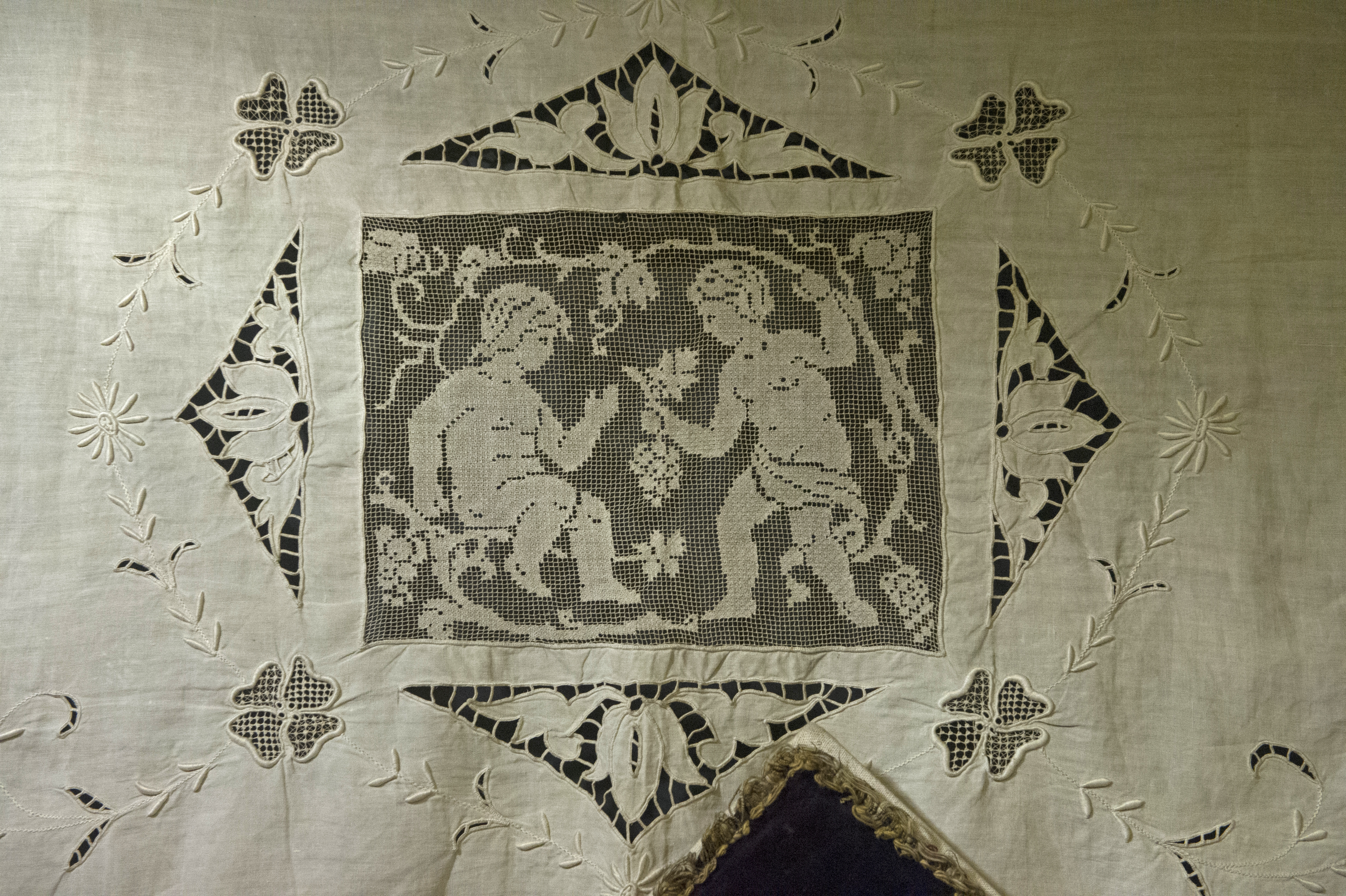
The lower ground floor is the ethnographic heart of the museum, organized chronologically through the rituals of a life. Photographs of circumcisions, wedding clothes embroidered with silver thread, jewelry from a hundred trousseaus, the small everyday objects that tell you who lived in a kitchen. Ladino songs play softly in the background. The balcony above, which served as the women's prayer section when the building was a synagogue, displays paintings of daily life in the Jewish quarters of Istanbul and Anatolia. There is a section on the Hahambaşı, the Chief Rabbinate of the Ottoman Empire, an institution that gave the community formal recognition under the millet system. There is also a panel honoring Turkish diplomats who saved Jews from the Holocaust by issuing protective documents in occupied Europe. Several have been recognized by Yad Vashem as Righteous Among the Nations.
Neve Şalom and the Modern Community
The neighborhood around the museum, Karaköy and Galata, is also where the active Jewish community still gathers. The Neve Şalom Synagogue, just a few minutes' walk uphill, has been the main Sephardic synagogue in Istanbul since it opened in 1951. It has been the target of three terrorist attacks, in 1986, 1992, and 2003, the worst being the November 2003 truck bombings that killed at least 23 people across both synagogues, including six Jews. Turkish Muslims and Jews mourned together. The community has grown smaller over the past century, from over 200,000 in the early 20th century to roughly 14,000 to 15,000 today, mostly Sephardic, mostly in Istanbul. Many emigrated to Israel after 1948, others to Western Europe and the Americas. Those who remain are still here, still speaking Ladino at home, still gathering at Neve Şalom and the Italian Synagogue and the smaller congregations.
Visiting
The museum sits at the foot of the Galata hill, in Karaköy, easy to combine with a morning at Galata Tower or an afternoon crossing the Galata Bridge to the historic peninsula. It is small. An hour, perhaps two, is enough to see everything. But the experience asks for more time than the floor space suggests. This is not history from above. It is history from inside the community, in the building where the community gathered, told with the kind of careful attention to ritual and family that only comes from people telling their own story. Photography of the ehal and the upper hall is generally permitted; the staff, often community members themselves, are happy to answer questions in Turkish, English, French, or Ladino.
From the Air
Located at 41.0268 degrees N, 28.9727 degrees E, in the Karaköy neighborhood of the Beyoğlu district, on the north side of the Golden Horn near its confluence with the Bosphorus. From above, look for the area just north of the Galata Bridge, below the Galata Tower. Istanbul Airport (LTFM) lies about 22nm northwest, Sabiha Gökçen (LTFJ) about 18nm southeast.