Jiddat al-Harasis
Pieces of the Moon are lying on the ground here. Not metaphorically -- actual lunar rock, blasted off the Moon's surface by ancient impacts, drifting through space, and landing in this 27,000-square-kilometer expanse of stony desert in south-central Oman. Jiddat al-Harasis holds the largest meteorite strewn field in the country, with 1,385 recorded specimens out of Oman's total of 3,116. Forty-one of them are confirmed lunar meteorites. One fragment, classified as a Martian meteorite, ended up embedded in a Swiss luxury wristwatch. But long before anyone came looking for space rocks, this flat, sun-hammered plateau between northern Oman and the Dhofar region was home to something equally improbable: life.
Rocks from Other Worlds
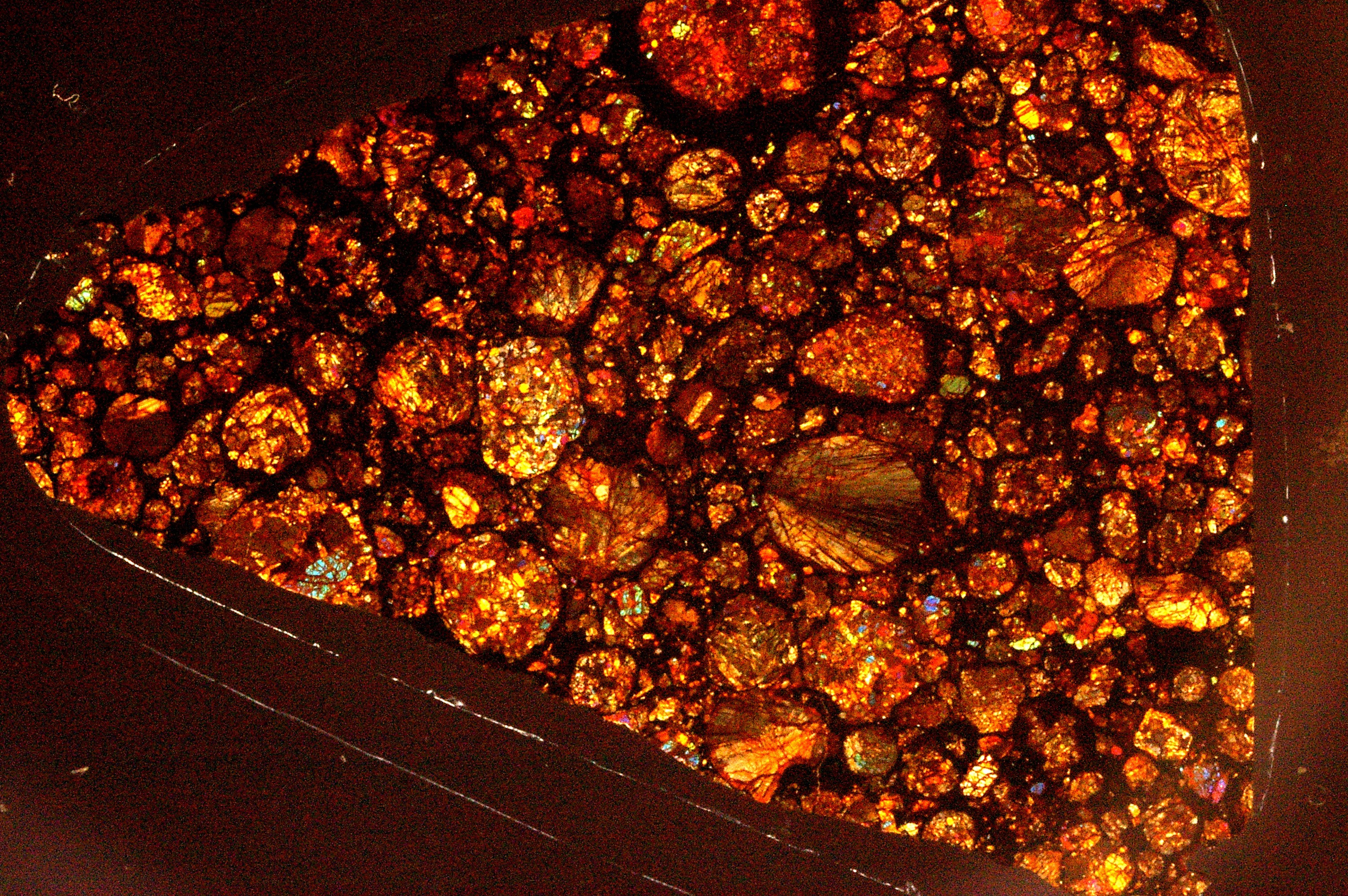
The desert's pale, stony surface acts as a natural collection tray. Meteorites that would vanish into vegetation or ocean elsewhere stand out against the flat gravel plains, preserved by the bone-dry climate. The Jiddat al-Harasis 348 sample, recovered in 2006 at Al Wusta, weighs just 18.4 grams -- a lunar feldspathic fragmental breccia described as a complete stone with no remaining fusion crust. It is a piece of the Moon's ancient highlands, launched by a meteorite impact powerful enough to reach escape velocity and eventually pulled into Earth's gravity well. The Martian specimen, Jiddat al-Harasis 479, took an even longer journey. Fragments of it now tick inside Louis Moinet Meteoris wristwatches, timepieces that cost millions and carry bits of another planet on their dials. The desert itself neither knows nor cares. It simply collects what falls.
Pseudo-Savannah in the Sand
Against all apparent logic, Jiddat al-Harasis supports a surprisingly diverse plant community. Botanists describe it as a "pseudo-savannah" -- acacia trees cluster in the desert washes where occasional rainwater collects, while shrubs and ephemeral grasses cling to pockets of accumulated sand between the rocks. Acacia tortilis and Acacia ehrenbergiana are the dominant trees, growing alongside ghaf, the hardy Prosopis cineraria that provides critical shade for desert wildlife. The shrub layer includes species found nowhere else: Ochradenus harsusiticus is endemic to this region. Lichen colonizes the dead branches of trees, and grasses of the genera Stipagrostis and Zygophyllum sprout after rare rains, briefly transforming patches of stone into something resembling grassland before the heat reclaims them.
The Oryx's Last Stand
The Arabian oryx once roamed this desert in numbers that justified a UNESCO World Heritage designation for the sanctuary established here. By 1996, the population had climbed to 450 animals -- a conservation success story decades in the making. Then poaching and habitat destruction reversed the gains with brutal efficiency. By 2007, only 65 individuals could be identified, among them just four breeding pairs. UNESCO took the extraordinary step of delisting the site, the first time a natural World Heritage property had ever lost its designation. The oryx were not the only inhabitants. Caracals, African wildcats, and honey badgers hunt across the plateau. The Arabian wolf, already rare, grows rarer. Hares and hedgehogs are common enough, but the larger predators face the same pressures that nearly erased the oryx. The desert that fell from space sustains life on borrowed time.
Wings Over the Gravel Plains
For a place that appears lifeless from altitude, the skies above Jiddat al-Harasis are remarkably busy. Twenty-two bird species breed here permanently, joined by 15 regular migrants and 104 additional species passing through during spring and autumn. The endangered houbara bustard appears in areas where saline and brackish springs seep to the surface, drawn to the same scarce water that anchors the acacia groves. During winter, the lagoons bordering the desert attract waders, gulls, terns, flamingoes, herons, and multiple species of duck -- a congregation that seems almost hallucinatory against the surrounding stone. The Harasis people, who gave the desert its name when they arrived in the 19th century as its first permanent inhabitants, share this austere landscape with a bestiary that includes grey monitor lizards, horned vipers, carpet vipers, false cobras, and Nubian ibex. What looks empty from above is anything but.
From the Air
Jiddat al-Harasis is centered near 19.78N, 55.85E in south-central Oman. The terrain is flat stony desert, featureless from high altitude but revealing subtle wadi networks and scattered acacia groves below 10,000 feet AGL. The Arabian Oryx Sanctuary (delisted) occupies the central portion. Nearest major airports are Muscat International (OOMS) to the northeast and Salalah (OOSA) to the south. Duqm Airport (OODQ) is closer, serving the developing port city to the east. Visibility is typically excellent, though haboobs (dust storms) can develop without warning.