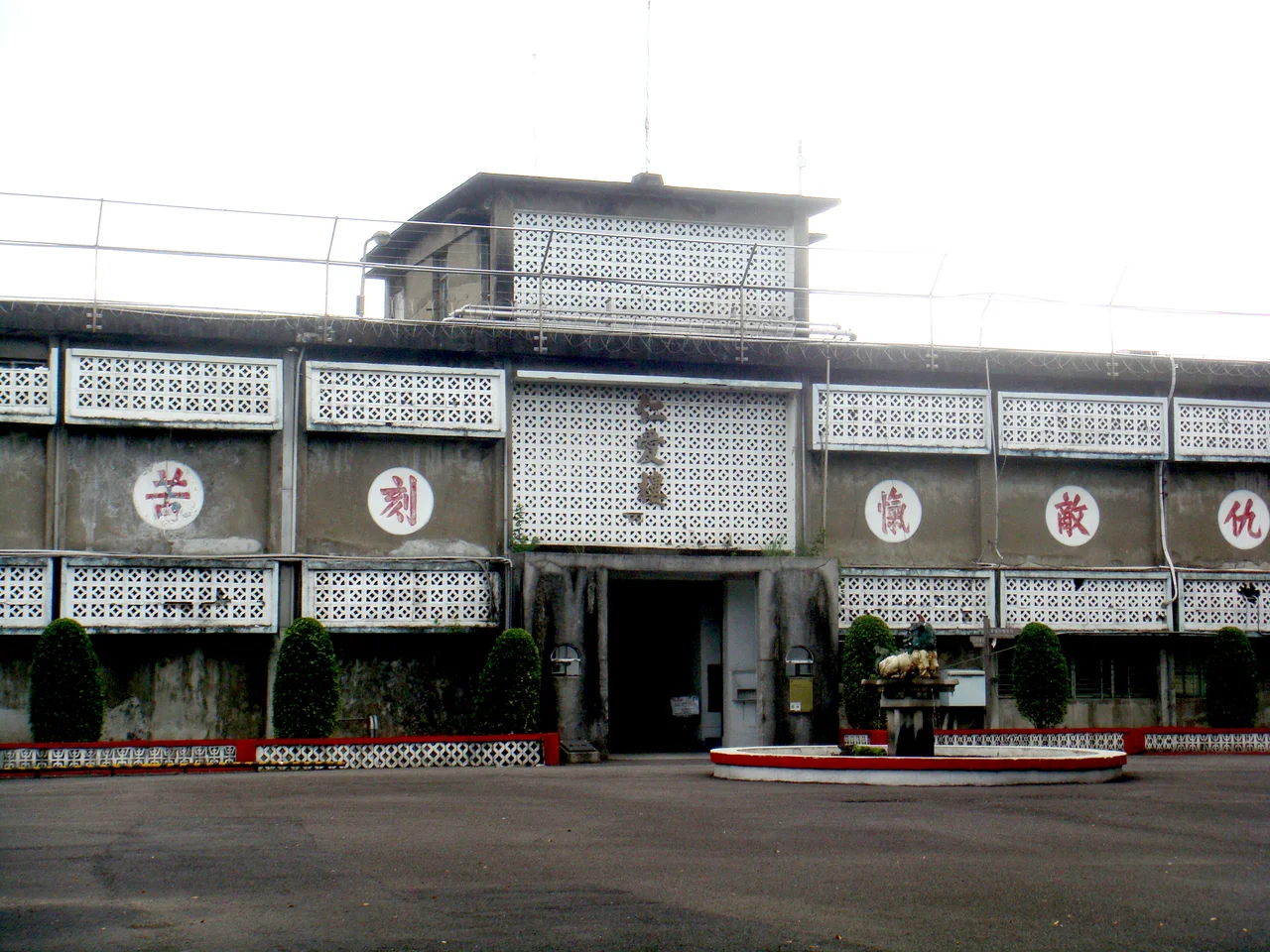

Jing-Mei White Terror Memorial Park
For more than two decades, people were brought here because of what they believed. They were students, workers, writers, lawyers, and activists — people who had spoken or organized or simply been associated with someone who had. They were held in the Jingmei Military Detention Center, tried in military courts on this same ground, and in some cases never returned home. The Jing-Mei White Terror Memorial Park in Xindian District, New Taipei City, now stands on that site — not to erase what happened, but to ensure it is not forgotten. Walking through it today means walking through a place where real people suffered for their beliefs, and where Taiwan has chosen to confront that history honestly.
The White Terror and What This Place Was
Taiwan's White Terror refers broadly to the period of authoritarian rule under the Kuomintang government that followed the February 28 Incident of 1947 and intensified under martial law, which lasted from 1949 to 1987 — one of the longest periods of martial law in the twentieth century. During those decades, thousands of people were detained, tried by military courts, imprisoned, and some executed for suspected communist sympathies or political opposition. The building in Jingmei served as a military school from 1957 to 1967 before being repurposed as a detention center and military court complex. It became one of the key sites in the machinery of political repression. People were brought here from across Taiwan, often held for extended periods while their cases moved through courts that offered few of the protections of civilian justice. The walls of this place heard things that for a long time were not permitted to be spoken aloud.
The People Who Were Held Here
Among the former prisoners of the Jingmei Military Detention Center were individuals who later became central figures in Taiwan's democratic transition. Annette Lu, who would go on to serve as Vice President of Taiwan from 2000 to 2008, was held here. Chen Chu, who would later become the first female mayor of Kaohsiung and a prominent rights advocate, was also detained at this site. Shih Ming-teh, a democracy activist who spent 25 years in total in prison across multiple incarcerations, passed through these facilities as well. They represent those who survived and eventually saw Taiwan become a democracy. Others were less fortunate. The memorial park carries the obligation to remember all of them — not as abstractions or political symbols, but as people who had families, futures, and a right to their own convictions.
From Detention to Memorial
The center was closed in 1991 as Taiwan consolidated its democratic transition. For years the site stood, its purpose resolved but its history unaddressed. The transformation into a memorial came in 2007, at the suggestion of Annette Lu — then serving as Vice President — who had been detained here herself. The act of returning, and of advocating for the site to become a place of memory rather than simply a decommissioned facility, carried its own particular weight. In early 2009 the site was renamed the Jing-Mei Human Rights Memorial and Cultural Park. In 2018, ownership passed to the newly established National Human Rights Museum, which manages it today under its current name. The renaming itself traces the arc of Taiwan's reckoning: from a closed detention center to a human rights institution formally embedded in the national cultural framework.
Bearing Witness
The memorial park preserves the physical structure of the detention center: the courtrooms where military judges decided fates, the cells where detainees waited, the corridors through which people moved without much agency over where they were going. Visiting means standing in rooms that are not recreations but the actual spaces where these things happened. That specificity matters. The park's mission is not simply to document a historical period but to make it present — to let people understand what it felt like to live in a society where speaking your mind could bring you here. It is accessible by foot from Dapinglin Station on the Taipei Metro, and it is the kind of place that asks something of its visitors. What it asks is to pay attention: to the names, the dates, the ordinary human details of lives interrupted and sometimes ended by the exercise of political power without accountability.
From the Air
The Jing-Mei White Terror Memorial Park is located at approximately 24.988°N, 121.532°E in Xindian District, New Taipei City, on the southern outskirts of the greater Taipei metropolitan area. From the air at 2,500 feet, the Xindian River valley provides a clear geographic reference, with the district occupying relatively low ground south of the main Taipei basin. Taipei Songshan Airport (RCSS) lies roughly 10 km to the north-northeast; Taoyuan International Airport (RCTP) is approximately 40 km to the northwest. Approach from the north along the river valley for a clear orientation of the site within its suburban surroundings.
Nearby Stories
- Dapu Incident 9.3 km away
- Shuanglianpi Wetland 18 km away
- Toufen 41 km away
- North Jiangsu Main Irrigation Canal 980 km away
- General Cliff Rock Paintings 1050 km away
- Sinking of MV Sewol 1061 km away
- Yellow Sea 1111 km away
- Twin Forts of Romblon 1358 km away