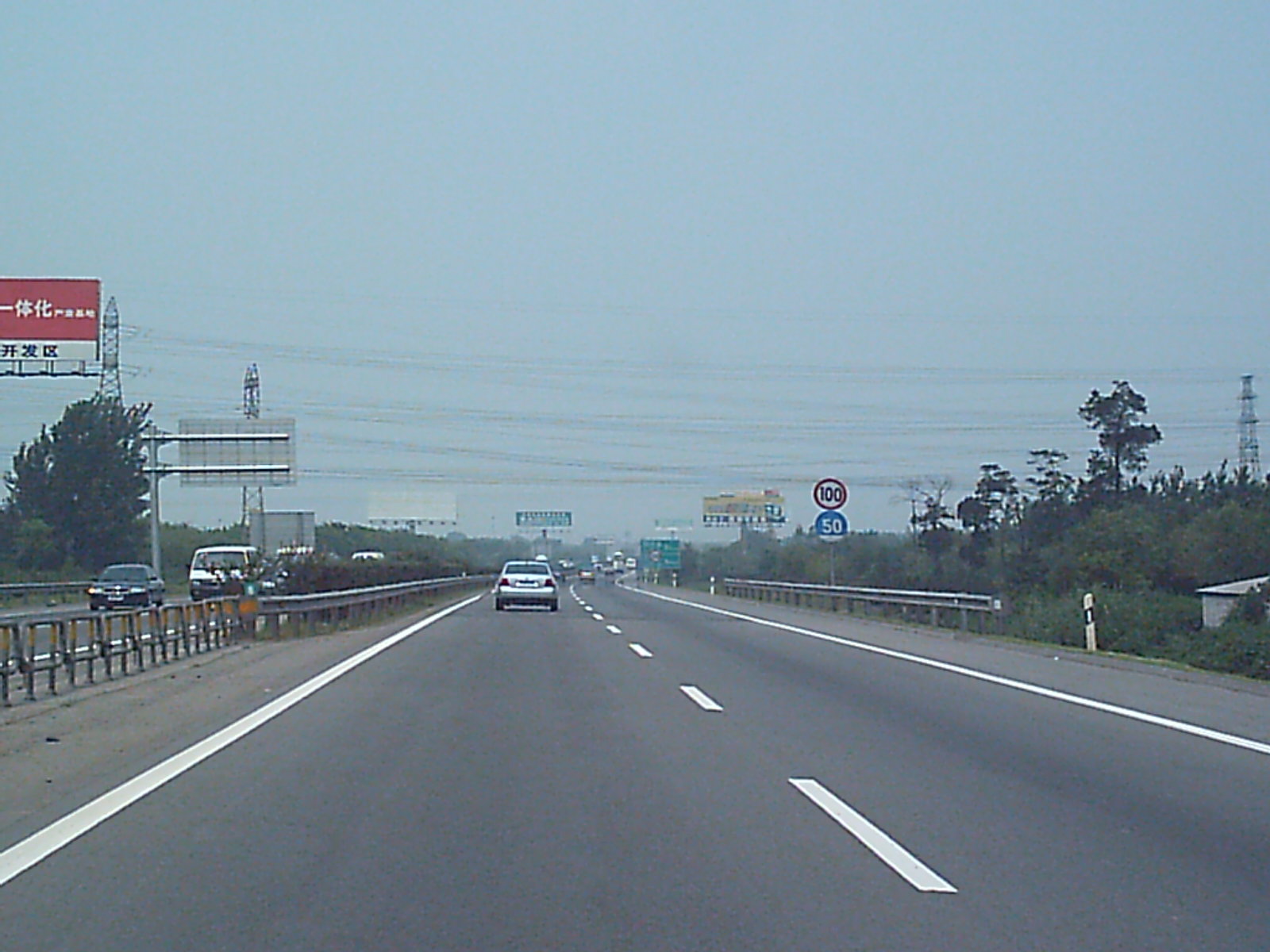
Jingjintang Expressway
They called it the golden expressway. When the Jingjintang Expressway opened on September 25, 1993, it was the first inter-provincial expressway in China built to modern standards, and the state media promoted it with relentless enthusiasm. Stretching 143 kilometers from Beijing through Hebei Province to the Tanggu District of eastern Tianjin, it slashed the drive between China's capital and its third-largest city to about an hour. A decade later, commuters had a different name for it: the road of death.
The First Modern Highway
China in 1993 was a different country for drivers. Fewer citizens held licenses, expressway traffic was light, and two lanes in each direction seemed generous for a road that ran over a hundred kilometers through the flat North China Plain. The expressway connected Beijing's Third Ring Road at Fenzhongsi to the Tanggu District and the Tianjin Economic and Technological Development Area, passing through Langfang in Hebei Province along the way. It now forms part of the G2 Beijing-Shanghai Expressway. Ten major exits and three service areas at Majuqiao, Xuguantun, and Dongli punctuated the route, and a networked toll system managed by Huabei Expressways collected fees from Dayangfang to Tanggu.
Golden Road to Gridlock
The expressway was designed for 50,000 vehicles per day. By 2004, the daily average had climbed to 59,000, and during peak periods, 130,000 vehicles jammed the road in a single day. The mathematics of two lanes and 143 kilometers became brutal. A single disruption in one lane could cascade into hours of standstill traffic stretching for kilometers, and with only ten exits along the entire route, there was nowhere to go. Heavy lorries made things worse. Two trucks overtaking each other could drop the effective speed limit from the posted 110 km/h to 60 km/h for every car behind them. The corridor between Beijing and Tianjin had become a vital economic artery, and the expressway was choking on its own success.
Fog, Darkness, and No Shoulders
The design flaws were structural. The hard shoulder measured just 2.4 meters in width, barely enough for a breakdown, and emergency bays were absent. Southeast of Beijing, fog rolled in regularly, reducing visibility on a road with no lighting beyond the Fourth Ring Road. On October 19, 2004, early morning fog triggered a chain of three accidents involving seven vehicles between Majuqiao and Caiyu, killing two people and injuring many more. These conditions were not aberrations; they were features of a highway built in an era when China's explosive growth in car ownership was still unimaginable. The Beijing section speed limit was eventually reduced to 90 km/h, with the Fenzhongsi-to-Shibalidian stretch dropping to 70 or 80 km/h.
The Corridor Multiplies
The solution was not to fix the road but to build more roads beside it. At least two additional expressways linking Beijing to Tianjin were constructed, including a route through Pinggu District connecting with the Jinji Expressway. The Jingjintang remained vital, but it was no longer alone in carrying the burden of one of the densest transportation corridors in China. Its story is a parable of modernization: the road that was supposed to prove China had arrived instead proved that China was growing faster than anyone had planned for. The golden expressway still runs, still collects tolls, still carries its tens of thousands of vehicles daily. The nickname it earned has outlasted the one the state media gave it.
From the Air
The expressway runs southeast from Beijing to Tianjin's Tanggu District, passing through Hebei Province. At 39.23N, 117.21E, the Tianjin section is visible as a straight line through the flat North China Plain. Tianjin Binhai International Airport (ZBTJ) is near the eastern terminus. From cruising altitude, the expressway is identifiable as a major linear feature connecting the Beijing and Tianjin urban areas.