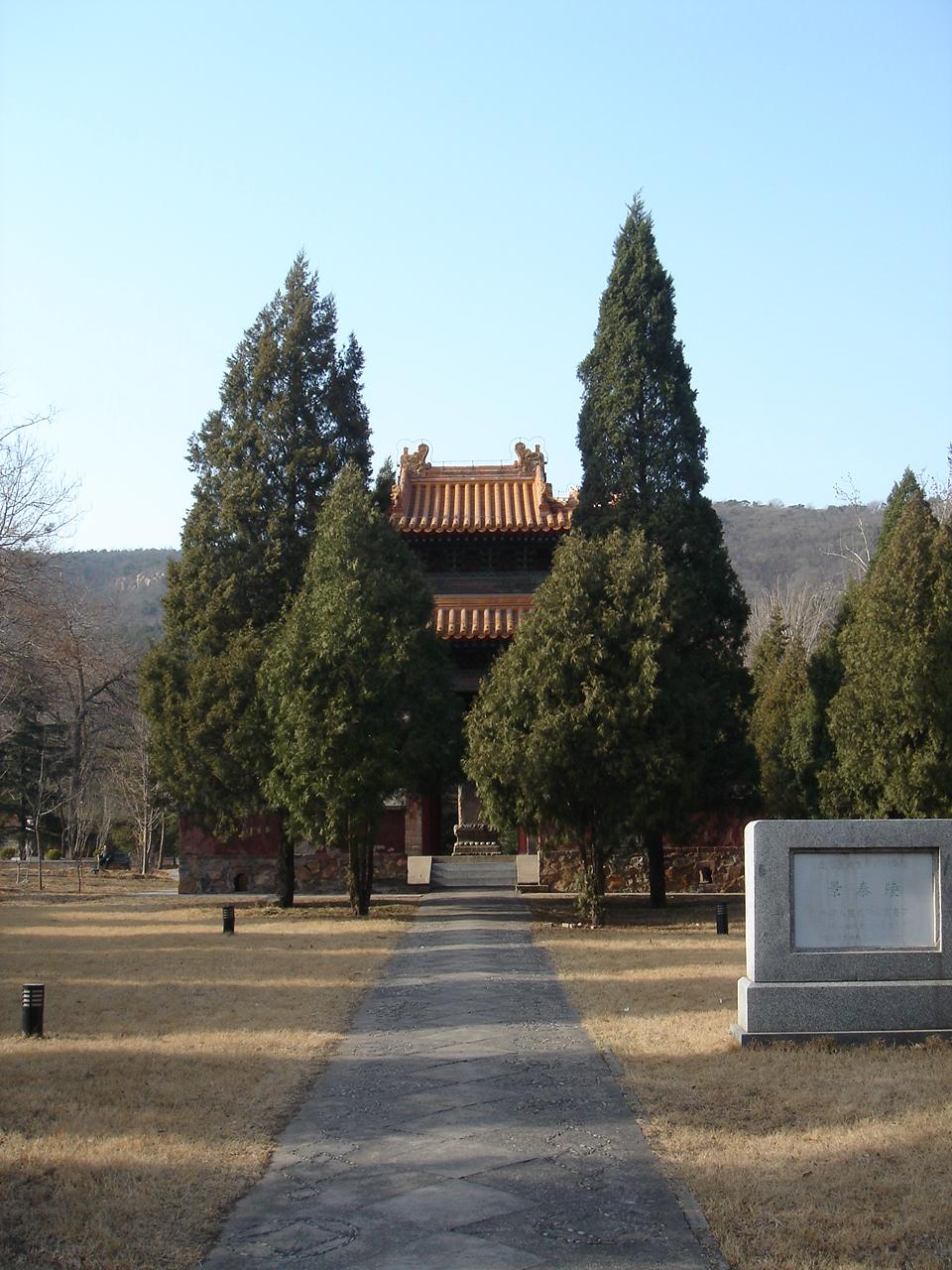
Jingtai Mausoleum
The Ming tombs north of Beijing hold thirteen emperors in a grand necropolis of sacred ways, stone animals, and underground palaces. One emperor is missing. The Jingtai Emperor, seventh ruler of the Ming dynasty, lies 17 kilometers northwest of central Beijing in a small, neglected tomb at the foot of the Western Hills -- cast out by his own brother and buried not as an emperor but as a prince. His story is one of the most bitter episodes of palace intrigue in Chinese history.
The Tumu Crisis and an Accidental Emperor
In 1449, the Mongols defeated a massive Ming army at the Battle of Tumu and captured the reigning emperor, Yingzong. With the emperor a prisoner and the capital exposed, the court needed a leader. The Jingtai Emperor, Yingzong's younger brother, was elevated to the throne. He stabilized the empire and organized the defense of Beijing against a Mongol advance that might have ended the dynasty. But his accession created an impossible situation: when Yingzong was eventually returned by the Mongols in 1450, there were two men with a claim to the throne. The Jingtai Emperor resolved this by placing his brother under house arrest in the Southern Palace, where Yingzong would remain for about six and a half years.
A Coup and a Broken Tomb
In 1457, while the Jingtai Emperor lay seriously ill, a group of officials launched a palace coup and restored Yingzong to power. The Jingtai Emperor died shortly afterward -- the circumstances remain debated by historians. His revenge-minded brother was thorough. The Jingtai Emperor had nearly completed an elaborate tomb at the Ming tombs complex, but Yingzong ordered it destroyed. Instead, the dead emperor was stripped of his imperial title, demoted to the rank of prince, and buried alongside Empress Wang in a modest grave north of Yuquan Mountain at the foot of the Western Hills. It was a calculated humiliation, designed to erase his brother from the imperial lineage.
Partial Rehabilitation
Erasure, however, proved difficult to sustain. During the reign of the Chenghua Emperor, Yingzong's own son, the Jingtai Emperor's tomb was upgraded to an imperial mausoleum and some measure of posthumous honor was restored. The gesture acknowledged a political reality: the Jingtai Emperor had, whatever his brother's resentments, legitimately ruled the empire for eight years. His original unused tomb at the Ming tombs site was eventually rebuilt in 1621 as the Qing Mausoleum, where the short-lived Taichang Emperor was buried. One brother's rejection became another emperor's resting place.
An Emperor Among Retirees
Today, the Jingtai Mausoleum is the smallest and most obscure of the Ming imperial tombs. Compared to the grandeur of the thirteen tombs in the main necropolis -- with their spirit ways, memorial arches, and underground chambers -- this is a diminished affair. The remains of the tomb are in poor condition, and the surrounding area now serves as a residential neighborhood for retired military personnel. It is a strange fate for an emperor who saved a dynasty: to be buried apart from his peers, in a tomb that has become a footnote visited by almost no one. The irony is that the Jingtai Emperor's exile in death mirrors his brother's imprisonment in life -- both men confined to a place they did not choose.
From the Air
Located at 40.00N, 116.24E in Beijing's Haidian District, north of Jingming Park and at the foot of the Western Hills. The mausoleum is modest and not easily distinguished from the air. Kunming Lake and the Summer Palace complex are visible nearby to the southeast. Beijing Capital International Airport (ZBAA) lies approximately 33 km to the northeast. The main Ming Tombs complex is about 35 km to the north, near the town of Changping.