Jiroft Culture
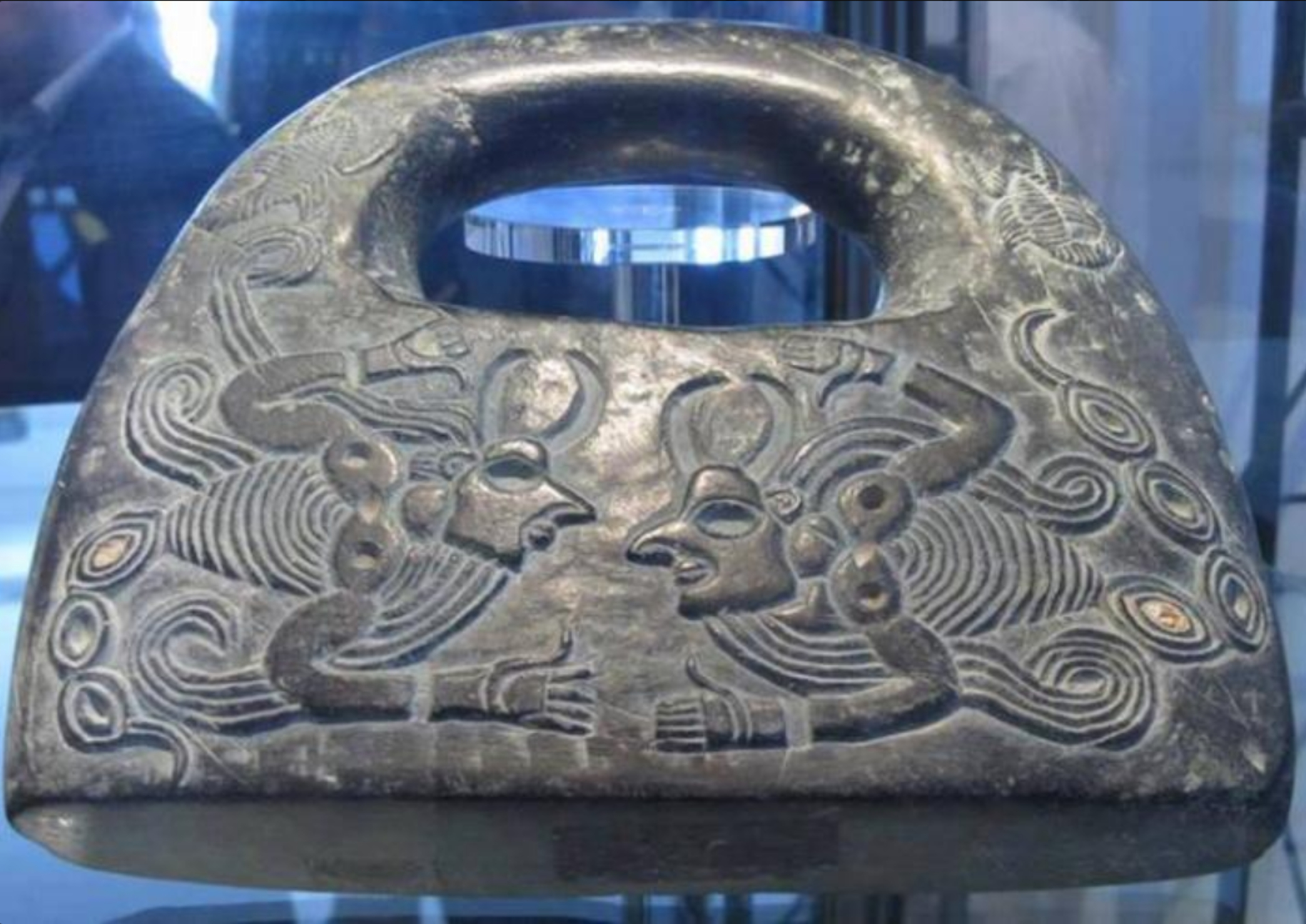
The chlorite vessels appeared on the international antiquities market without warning or provenance. Carved from soft greenish stone, they depicted figures wrestling serpents, eagles with spread wings, scorpions entangled in geometric borders -- imagery that matched nothing from Mesopotamia and nothing from the Indus Valley, yet clearly belonged to a tradition of considerable sophistication. The artifacts had been looted from the Halil River valley in southeastern Iran after severe flooding in 2001, and by the time professional archaeologists arrived, the black market had already dispersed hundreds of pieces across the globe. What they found when they began to dig suggested something that rewrites the map of the Bronze Age: a third great civilization, flourishing between the two poles of the ancient world that everyone already knew.
Between Two Known Worlds
The Jiroft culture -- also called the Intercultural style or Halilrud style -- is an early Bronze Age archaeological phenomenon centered in present-day Kerman and Sistan and Baluchestan provinces. Its proposed type site is Konar Sandal, a pair of massive mounds near the modern city of Jiroft. But the network extended far wider: associated sites include Shahr-e Sukhteh (the 'Burnt City' on the Afghan border), Tepe Bampur, Espiedej, Shahdad, Tal-i-Iblis, and Tepe Yahya. Yusef Majidzadeh, who led excavations at Konar Sandal from 2002 to 2008, was the first to argue that these scattered sites represented a single, independent Bronze Age civilization with its own architecture and language -- positioned between Elam to the west and the Indus Valley to the east, occupying a stretch of Iranian plateau that scholarship had long treated as empty space.
A Citadel Two Kilometers Wide
The scale of what Majidzadeh's team uncovered was difficult to dismiss. At Konar Sandal B, the southern mound, they found a two-story, windowed citadel with a base covering close to 13.5 hectares. Surrounding it lay more than two square kilometers of urban remains dating to at least the late third millennium BC, with the city's peak flourishing between 2500 and 2200 BC. Clay sealings from both stamp seals and cylinder seals were recovered, and in one trench a 'city seal' matched examples from Jemdet Nasr and Ur in southern Mesopotamia. Geophysical surveys conducted by French experts identified at least ten distinct archaeological periods in the region, with evidence buried up to eleven meters deep. This was not a peripheral village that traded with its neighbors. It was a planned urban center that administered territory, controlled production, and communicated in symbols that remain undeciphered.
The Intercultural Style
Long before anyone spoke of a 'Jiroft civilization,' the distinctive carved chlorite vessels had a name: 'intercultural style.' Since the 1960s, when similar pieces began surfacing at Tepe Yahya in the nearby Baft region, scholars recognized a pottery tradition that appeared across Mesopotamia and the Iranian Plateau without belonging clearly to either. The vessels' motifs -- intertwined animals, architectural facades, humanoid figures grappling with nature -- recurred from the Persian Gulf to the Indus. Majidzadeh's hypothesis proposed that this was not a borrowed or traded style but the signature aesthetic of a coherent, long-lived culture whose heartland was the Halil River valley. The chlorite itself came from local mines, and the sheer volume of production suggested Jiroft was not merely participating in Bronze Age trade networks but driving them.
Scripts, Skeptics, and Aratta
An inscribed brick fragment found at Konar Sandal B deepened the mystery. Its remaining two lines appeared to bear Elamite script characters, but other symbols found at the site -- termed 'geometric script' by the excavators -- have defied all attempts at decipherment. Some archaeologists have speculated that Jiroft's writing system may predate both cuneiform and hieroglyphics, though this claim remains highly contested. Majidzadeh went further still, proposing that Konar Sandal was the legendary Aratta, a kingdom of immense wealth described in Sumerian texts. Oscar Muscarella of the Metropolitan Museum of Art pushed back, criticizing sensationalist announcements and the slow pace of formal publication. Other scholars, including Daniel T. Potts and Piotr Steinkeller, offered an alternative identification: Marhashi, an obscure city-state that Mesopotamian records place east of Elam. Science magazine captured the tension in a 2007 headline: 'Ancient Writing or Modern Fakery?'
A Culture Without Borders
The Jiroft culture does not exist in isolation. To the east, in western Afghanistan, the Helmand culture occupied the same third-millennium time frame, flourishing between 2500 and 1900 BC at sites like Shahr-i Sokhta and Mundigak. Some scholars argue the two cultures may represent a single cultural zone stretching from the Iranian plateau into Central Asia, contemporaneous with the great flourishing of the Indus Valley Civilization. Whether Jiroft was the center of this world, one node in a decentralized network, or simply a provincial echo of Mesopotamian influence depends on whom you ask. What the evidence does show is that the blank spaces on the Bronze Age map were never really blank. Between the Tigris and the Indus, people built cities, carved stone, stamped seals, and pressed symbols into clay -- and we are only beginning to understand what those symbols meant.
From the Air
Located at approximately 28.80N, 57.77E in the Halil River valley, Kerman Province, southeastern Iran. The Jiroft culture sites span a wide area; the primary Konar Sandal mounds lie just south of the city of Jiroft. Nearest airport is Jiroft Airport (OIKJ). Kerman Airport (OIKK) is about 200 km north. Best viewed at 5,000-8,000 feet AGL to appreciate the spread of archaeological mounds across the irrigated river valley. The contrast between the green Halil River corridor and the surrounding brown desert is striking from altitude.