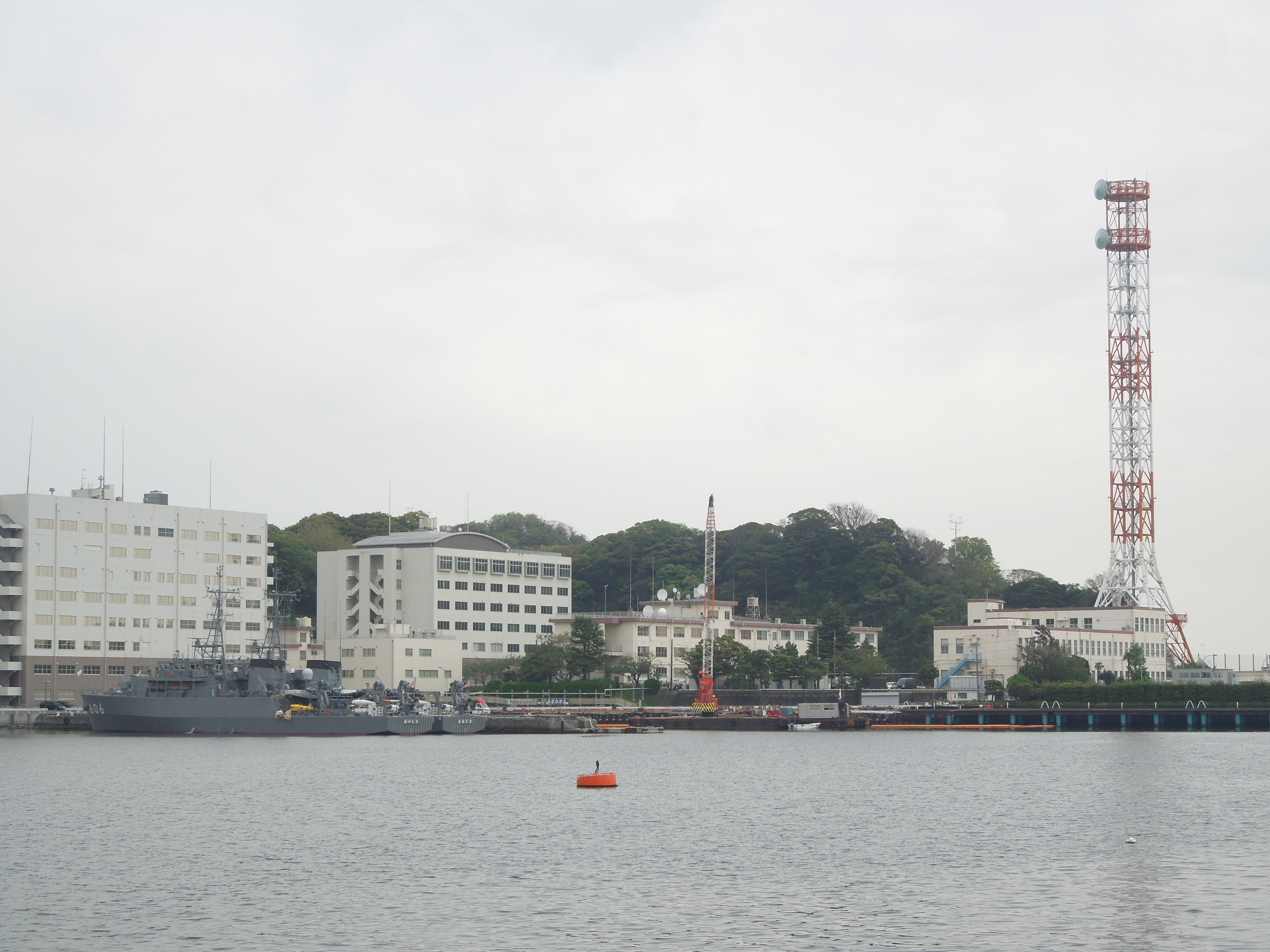
JMSDF Yokosuka Naval Base
Two navies share the same harbor. On one side of the piers at Yokosuka, Japan's Maritime Self-Defense Force berths its helicopter carriers and guided-missile destroyers. On the other, the United States Seventh Fleet maintains its largest forward-deployed naval facility in the western Pacific. This arrangement -- former enemies turned closest allies, their warships moored within sight of each other -- is the defining fact of the JMSDF Yokosuka Naval Base. Spread across multiple districts of Yokosuka City on the western shore of Tokyo Bay, the base is not one facility but many: piers and repair docks, submarine pens and ammunition depots, training schools and hospitals, all woven into the urban fabric of a city that has been synonymous with Japanese naval power since the 19th century.
Born from the Ashes of Empire
The JMSDF Yokosuka Naval Base traces its origins to April 26, 1952, when the Coastal Safety Force was carved out of the Japan Coast Guard at the site of the former Suirai Naval Academy. Japan's postwar constitution renounced war, but the reality of the Cold War demanded a maritime capability, and Yokosuka -- home to the Imperial Japanese Navy's most important facilities since the Meiji era -- was the natural choice. By October 1953, the Yokosuka District Force had relocated to Nishihemicho, its current headquarters. Over the following decades, the base expanded steadily: a supply station and factory were added in 1961, an explosive ordnance disposal unit the same year, and a music corps in 1974. The Yoshikura Pier, completed in 1980, gave the fleet modern berthing facilities, and the Hemi Dock followed in April 2010, providing a covered dry dock capable of servicing Japan's largest warships.
The Nerve Center of Japan's Fleet
Yokosuka is not merely a port -- it is the command hub for Japan's entire maritime defense structure. The Self Defense Fleet Command, headquartered in the Funakoshi District, controls the Fleet Escort Force, the Fleet Submarine Command, and the Mine Warfare Force. Fleet intelligence, research and development, and oceanographic anti-submarine warfare support all operate from Funakoshi as well. The Yoshikura District hosts the 1st Escort Flotilla and the 2nd Escort Flotilla with their destroyer squadrons, alongside the Communications Command and the JMSDF police force. Submarines of the 2nd Submarine Squadron operate from Kusugaura District, while the Taura District houses the 2nd Technical School, the Supply Headquarters, and the Diving Medical Experiment Corps. This dispersal across districts reflects both the base's organic growth over decades and the practical need to separate explosive ordnance, fuel storage, and submarine operations.
Deep-Sea Training and International Reach
Among the base's more unusual capabilities is a facility that simulates deep-sea water pressure at depths of 450 meters, used for training in underwater operations and testing equipment under extreme conditions. The facility draws visitors from allied navies including the United States, Thailand, and Vietnam, reflecting Yokosuka's role as a hub for international maritime cooperation in the Indo-Pacific region. The base's hospital, originally established in the Kurihama District in 1956 and later relocated to the Taura District in 1988, serves both JMSDF personnel and the broader Self-Defense Forces. Education and training remain central to Yokosuka's mission: the 2nd Technical School trains sailors in maritime engineering, while the Yokosuka Education Corps in the Takeyama District handles basic training.
When the Earth Shook
On March 11, 2011, the Tohoku earthquake and tsunami struck northeastern Japan with devastating force. Yokosuka's response was immediate and total: every operable ship at the base was dispatched to the Sanriku coast for disaster relief operations. Destroyers, supply vessels, and minesweepers raced northward to search for survivors, deliver supplies, and clear debris from ports along the shattered coastline. The deployment demonstrated that the base -- originally conceived as a defense against foreign threats -- had become equally vital as a domestic disaster response center. Yokosuka's strategic position at the mouth of Tokyo Bay means it can surge ships toward any point along Japan's Pacific coast within hours, a capability that proved its worth in the country's worst natural disaster in living memory.
Side by Side on the Bay
The most striking feature of Yokosuka remains its dual identity. The JMSDF facilities sit alongside the United States Fleet Activities Yokosuka, home port of the aircraft carrier USS George Washington and the headquarters of the US Seventh Fleet. Japanese and American sailors share the same harbor waters, and joint exercises are routine. This partnership, forged in the aftermath of World War II and deepened through decades of alliance, has made Yokosuka the single most important naval installation in the western Pacific. From its piers, Japanese and American warships deploy together into the East China Sea and the Philippine Sea, maintaining the maritime security architecture that has underpinned Pacific stability since 1945. The base that began as a Coast Guard offshoot in 1952 has become the beating heart of allied naval power in Asia.
From the Air
Yokosuka City at 35.286N, 139.654E, on the western shore of Tokyo Bay at the base of the Miura Peninsula. The naval facilities are spread across multiple districts along the waterfront and are clearly visible from 3,000-5,000 feet. US and Japanese warships are typically visible at piers. The Hemi Dock and Funakoshi District are prominent landmarks. Nearby airports include RJTT (Tokyo Haneda) approximately 20nm north, and RJTY (Yokota AB) approximately 40nm northwest. The Uraga Channel to the south and Yokohama port to the north provide visual references.