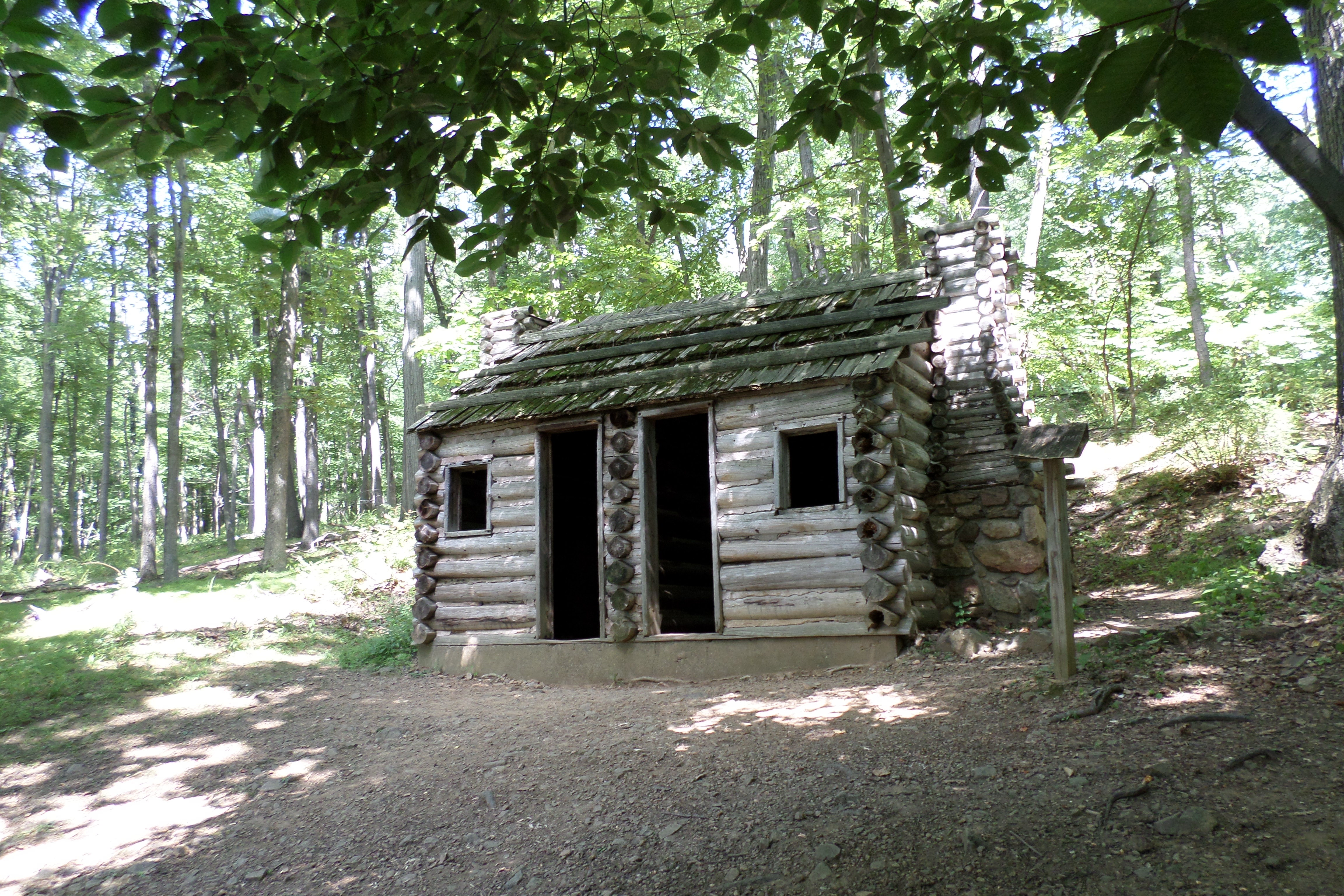
Jockey Hollow
Valley Forge gets the monument and the mythology. But the worst winter the Continental Army ever endured happened not in Pennsylvania but in the wooded hills of Morris County, New Jersey, at a place called Jockey Hollow. During the winter of 1779-1780 -- remembered simply as the Hard Winter -- more than 10,000 soldiers camped on farmland owned by Henry Wick and his neighbors, sheltering in over a thousand crude huts while snowdrifts buried the countryside and supply lines collapsed. It was colder, longer, and deadlier than Valley Forge, and it nearly broke the army.
The Wick Farm at War
Henry Wick owned 1,400 acres of timber and open field in what is now Harding and Mendham Townships. His property and his neighbors' land offered exactly what the Continental Army needed: distance from the British forces occupying New York, abundant timber for building shelters and feeding fires, and enough standing houses for generals and their staffs to quarter. General Arthur St. Clair and his aides moved into the Wick House, while the common soldiers felled some 2,000 acres of forest across Jockey Hollow to build their huts and keep from freezing. The Watchung Mountains provided a natural defensive barrier to the east, making the hollow a secure position even as it became a miserable one.
Colder Than Memory
The winter of 1779-1780 is believed to have been the harshest in recorded history for the region. Soldiers who had survived Valley Forge two years earlier said this was worse. Twelve men crowded into each small hut. Troops went barefoot in snow because shoes had worn through and replacements never arrived. The roads, unpaved and dependent on horsepower for supply transport, became impassable mud in the brief thaws and frozen ruts the rest of the time. Food was scarce. Pay was nonexistent. An estimated 100 soldiers died in the brigade hospital that winter and were buried in the fields north of the Wick House. The army that was fighting for freedom was, by any material measure, losing its capacity to fight at all.
The Mutiny That Almost Ended Everything
On December 21, 1780, Henry Wick died at Jockey Hollow. Ten days later, the crisis that had been building all winter exploded. On the evening of January 1, 1781, soldiers of the Pennsylvania Line -- unpaid, underfed, and convinced their enlistment terms had expired -- mutinied under the command of General Anthony Wayne. They intended to march to Philadelphia and demand their wages directly from the state legislature. The mutiny was the largest of the entire Revolutionary War. The soldiers marched to Princeton, where Pennsylvania's chief executive Joseph Reed negotiated a resolution. Some men agreed to remain in the army; others were discharged. The rebellion ended without bloodshed, but it exposed how close the Continental cause came to destroying itself from within.
What the Forest Remembers
Since 1933, Jockey Hollow has been part of Morristown National Historical Park, administered by the National Park Service. The Wick House still stands, restored and staffed by park employees in period dress. A kitchen garden maintained by the Northern New Jersey unit of the Herb Society of America grows beside it. Four replica huts on Sugar Loaf Hill, built in 1964, give visitors a sense of the cramped quarters soldiers shared. A 1932 marker commemorates the site of the Jockey Hollow Hospital, though later archaeology found no evidence of graves there. The forest has regrown over the stumps the soldiers left behind. Walking the trails today, through second-growth hardwoods where 2,000 acres of timber once fell to Continental axes, it takes effort to imagine what this place sounded like in January 1780 -- the crack of wood being split, the coughing of sick men in close quarters, the silence between snowfalls.
From the Air
Located at 40.761N, 74.543W in Harding and Mendham Townships, Morris County, NJ. The wooded hills of Jockey Hollow are part of Morristown National Historical Park. Visible at 2,000-5,000 ft AGL as a large forested area amid suburban development. Nearest airports: Morristown Municipal (KMMU) about 5 nm northeast, Somerset Airport (SMQ) about 10 nm south.