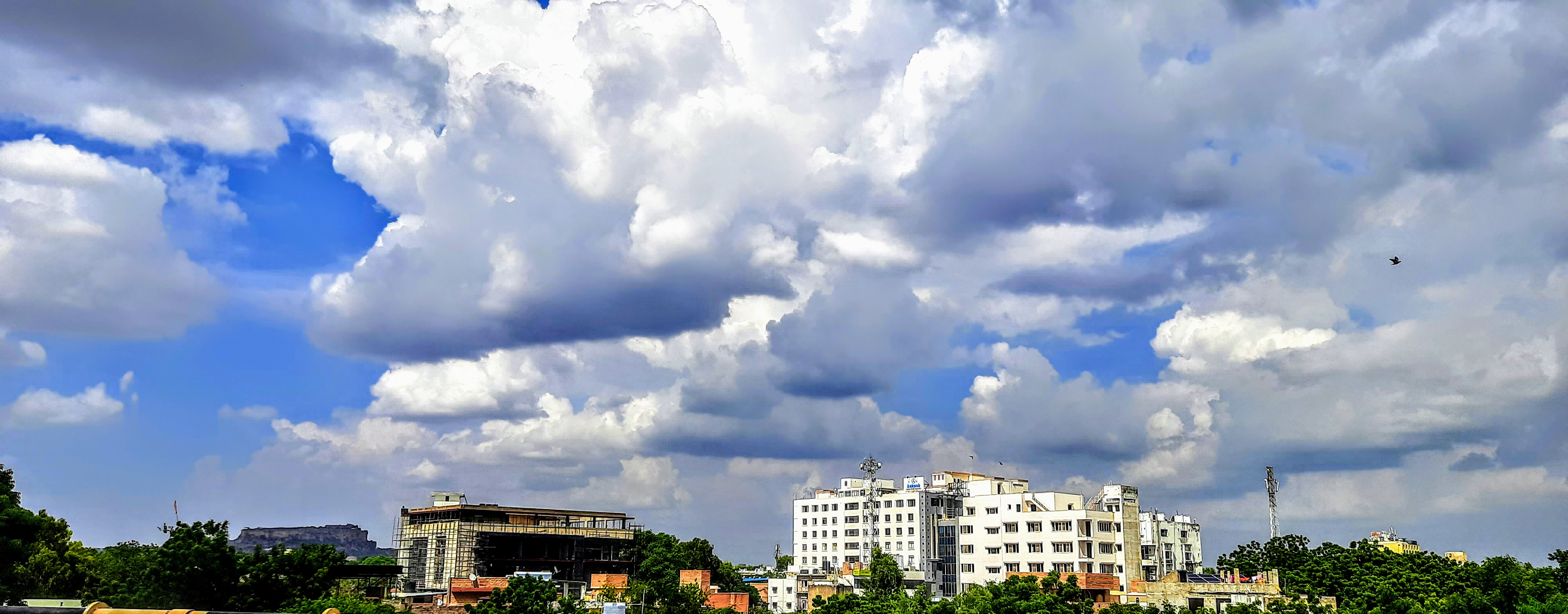
Jodhpur
They call it the Blue City. Rajasthan's second largest, home to 1.3 million people, Jodhpur spreads in indigo-painted houses beneath the impregnable walls of Mehrangarh Fort - former capital of Marwar state perched on the edge of the Thar Desert. Rao Jodha founded the city in 1459, and his descendants defended it through centuries of conflict. The fort never fell. Originally, the blue distinguished Brahmin houses from all others, but over generations the entire old city adopted the color. Look down from Mehrangarh and the blue blankets everything below. Jodhpur is Rajasthan's military history made visible.
Mehrangarh Fort
Mehrangarh rises from a 125-meter cliff above Jodhpur. Rao Jodha began construction in 1459, and successive rulers expanded it into one of India's most formidable fortifications. Cannon fire scarred the gates but never breached them. Behind those walls, rulers built palaces and filled them with accumulated treasures, now displayed in a museum. This is what Rajput power looked like when power meant defense.
Every visitor climbs to the fort seeking the same reward: the blue city spreading below, the Thar Desert stretching beyond, the dizzying sense of elevation after the ascent. A zip line now crosses the fort's approach - modernity's one addition to a place that remains purely traditional.
The Blue
Photographs of Jodhpur all feature the same stunning detail: houses painted in shades of indigo, block after block, creating a visual coherence unlike any other city on earth. Brahmins started it, painting their homes blue to mark their caste. Neighbors imitated them. Tradition carried the practice forward until the entire old city had turned blue, earning Jodhpur its famous nickname.
Practical reasons exist for maintaining the color. A mixture of lime and indigo protects walls and may repel insects. But practicality is secondary to identity. The blue is what makes Jodhpur instantly recognizable, what tourism promotes and residents proudly maintain.
The Old City
Beneath Mehrangarh, the old city clusters in streets too narrow for vehicles to enter. Working life continues here much as it has for centuries. Near the Clock Tower, Sardar Market concentrates commerce in organized lanes where each street specializes in a particular trade, following the ancient bazaar tradition. Before modernity spread beyond the walls, this was all of Jodhpur.
Getting lost here is inevitable. Maps are nearly useless in these winding lanes, but confusion leads to reward - an unexpected courtyard, a conversation with a shopkeeper, the deepest shades of blue in the entire city. Jodhpur's character concentrates most intensely in these old quarters.
The Desert Edge
Sit at the western edge of Jodhpur and the Thar Desert begins. This location made the city a commercial center for caravan routes crossing the wasteland. Today, tourists take the excursions - camel rides, village visits, journeys into emptiness that provide sharp contrast with the dense city behind them.
Desert proximity defines everything about Jodhpur's climate. Summers bring punishing heat. Wind carries sand into every crevice. Yet distance clears the sky into brilliant blue expanses. Living here is challenging. It is also what makes Jodhpur utterly distinct from India's greener, gentler cities.
The Royalty
Jodhpur's royal family has not disappeared. Descendants of the maharajas still live here, operating heritage hotels and managing centuries of accumulated wealth. Consider the Umaid Bhawan Palace, built by the last ruling Maharaja: one of the world's largest private residences, it serves simultaneously as royal home, museum, and luxury hotel.
Indian independence transformed what royalty means. Titles no longer hold power. Commerce must generate what land grants once provided. Yet heritage has found new currency through tourism, and the royal family understands this well. What Jodhpur's history created over centuries, tourism now sustains.
From the Air
Jodhpur (26.28N, 73.02E) sits on the edge of the Thar Desert in western Rajasthan at 230m elevation. Jodhpur Airport (VIJO/JDH) lies 5km from the city center with a single runway 05/23 measuring 2,775m. From the air, Mehrangarh Fort on its cliff stands as the dominant landmark. Below it, the blue-painted old city is unmistakable. To the southeast, the Umaid Bhawan Palace comes into view. Westward, the Thar Desert stretches to the horizon. Expect a hot desert climate with extremely hot summers exceeding 45C, mild winters, and very dry conditions overall. Monsoon rains arrive July through September but remain limited. Dust storms are possible.