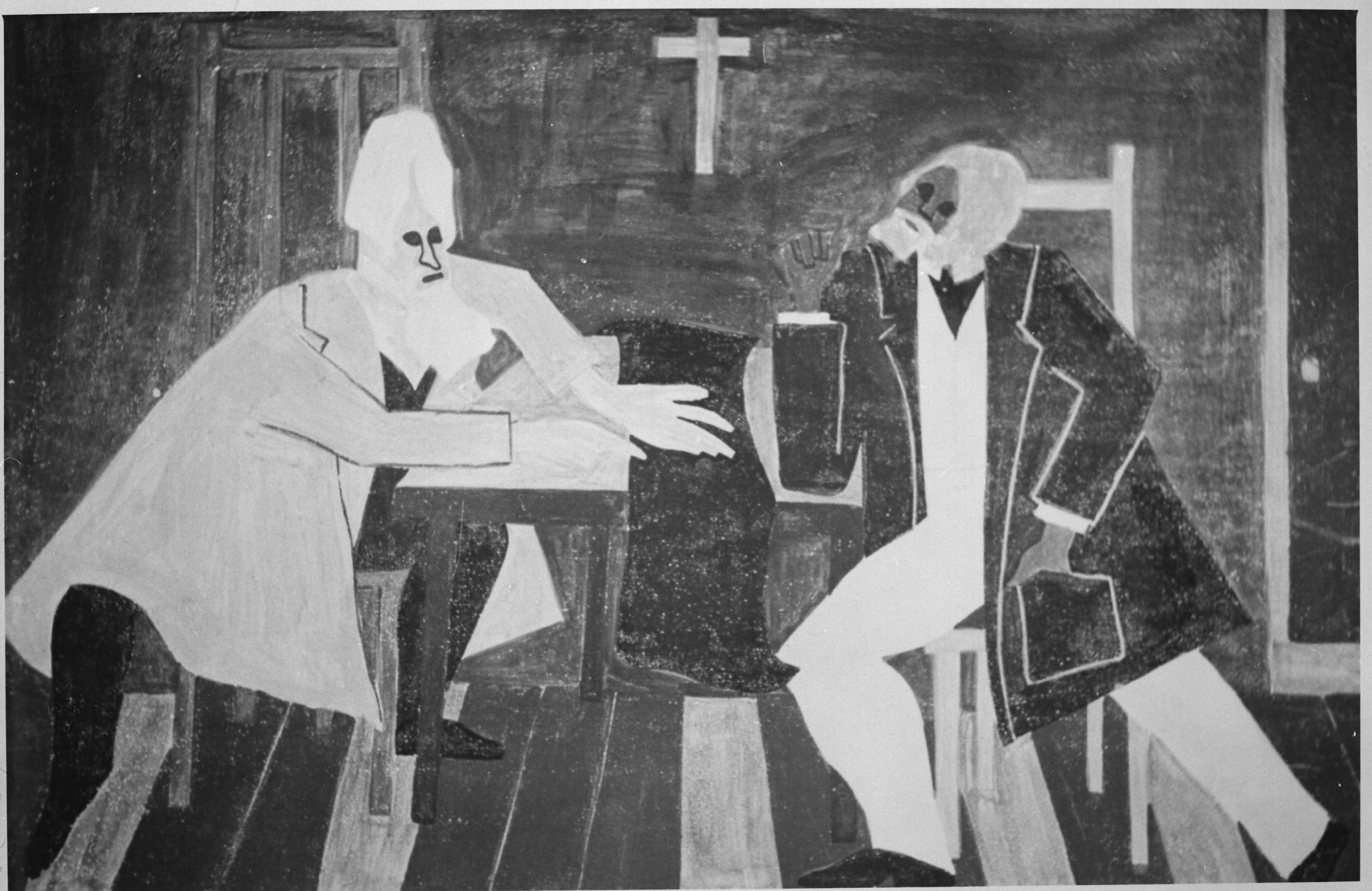
John Brown's Raid on Harpers Ferry
"There are moments when men can do more dead than alive." John Brown spoke those words to his small band of raiders in the cramped Kennedy Farmhouse, six miles north of Harpers Ferry, where they had been hiding for months. On the night of October 16, 1859, Brown led 21 men -- 16 white and 5 Black -- across the Potomac River bridge and into the sleeping town where the Shenandoah meets the Potomac. Their target: the United States Armory, a sprawling complex that manufactured small arms for the Army and housed an arsenal thought to contain 100,000 muskets. Their mission was not robbery but revolution. Brown intended to arm enslaved people and march south along the Appalachian spine, gathering a liberation army as he went. Frederick Douglass had warned him it was suicide. Brown went anyway.
The Farmhouse Conspiracy
For weeks before the raid, Brown's followers lived in near-confinement at the Kennedy Farmhouse, which served as barracks, arsenal, supply depot, and debate club all at once. Brown insisted they stay indoors during daylight to avoid suspicion, so raiders passed the time studying Plutarch's Lives, drilling, arguing politics, and playing checkers. Brown's daughter Annie served as lookout, later calling these the most important months of her life. His daughter-in-law Martha cooked for the group. Thunderstorms were welcomed because they masked the sound of nighttime drilling exercises. Northern abolitionist groups sent 198 Sharps carbines, nicknamed "Beecher's Bibles." Brown also ordered 950 pikes from a Connecticut blacksmith -- long spears intended for enslaved people untrained with firearms. He told curious neighbors the pikes were mining tools, a plausible cover in a region that had been explored for metal deposits.
Thirty-Six Hours of Chaos
The raid began smoothly. Brown's men cut the telegraph wires on both sides of the river, seized the lone unarmed watchman, and took control of the armory complex. A separate party captured Colonel Lewis Washington, great-grandnephew of George Washington, at his nearby estate, freeing his enslaved workers and seizing a sword purportedly gifted to George Washington by Frederick the Great. But Brown's plan depended on enslaved people flocking to his banner by the hundreds, and he had no way to spread word of the uprising. Nobody came. By Monday morning, townspeople had discovered the raiders, and local militia began converging on the armory. Brown and his remaining men barricaded themselves in the engine house -- the small brick firehouse that would become known as John Brown's Fort. By Tuesday morning, a company of U.S. Marines arrived under the command of Colonel Robert E. Lee, with Lieutenant J.E.B. Stuart serving as his aide. Stuart approached under a white flag and demanded surrender. Brown refused. The Marines battered down the door in three minutes.
The First Media Firestorm
The raid became the first national crisis reported by electrical telegraph. Reporters boarded the earliest train to Harpers Ferry after news reached the outside world at 4 p.m. on Monday, October 17. A Baltimore newspaper later catalogued 26 different terms used to describe the event -- "insurrection," "rebellion," "treason," "crusade" -- though "raid" was not among them at the time. The South saw confirmation of its deepest fears about Northern abolitionists. The North initially dismissed Brown as a fanatic. But then Brown began to speak. From his jail cell and at his trial, Brown's eloquent letters and testimony -- amplified by supporters including Henry David Thoreau -- transformed him from madman to martyr. By the time Virginia hanged him on December 2, 1859, church bells rang across the North. The pikes Brown had ordered became coveted souvenirs; enterprising mechanics manufactured counterfeits to meet demand.
Seeds of Civil War
Ten of Brown's raiders died during the assault; seven were captured, tried, and hanged. Five escaped. The cast of characters assembled at Harpers Ferry reads like a Civil War dress rehearsal. Robert E. Lee commanded the counterattack. Stonewall Jackson stood guard over the prisoners. J.E.B. Stuart carried the surrender demand. Edmund Ruffin, the Virginia secessionist who would fire one of the first shots at Fort Sumter, obtained Brown's pikes and sent them to the governors of every slave state, labeled: "Sample of the favors designed for us by our Northern Brethren." Ex-slave Shields Green had joined Brown after meeting him at Frederick Douglass's home, telling Douglass simply, "I believe I will go with the old man." Green was hanged. Douglass, who had refused to join, fled to Canada and then England to avoid arrest. Within eighteen months, the nation Brown had tried to shock into reckoning with slavery was at war with itself.
Where the Rivers Meet
Harpers Ferry sits in the narrow wedge where the Shenandoah River joins the Potomac, a dramatic confluence visible from miles away by air. The engine house where Brown made his last stand -- John Brown's Fort -- still stands in lower Harpers Ferry, though it has been moved twice since 1859. The Kennedy Farmhouse, where the conspiracy took shape, survives six miles north on the Maryland side. Harpers Ferry National Historical Park preserves much of the town where the raid unfolded. At least 80 people knew about Brown's plan in advance, yet a Quaker named David Gue who sent an anonymous warning to the Secretary of War was dismissed as a crackpot. The Secretary later said he could not believe "a scheme of such wickedness and outrage could be entertained by any citizen of the United States." History proved otherwise.
From the Air
The raid site is at 39.323N, 77.730W, at the dramatic confluence of the Potomac and Shenandoah rivers. From the air, the narrow point of land where Harpers Ferry sits is unmistakable, pinched between the two rivers with steep bluffs rising on all sides. The armory site is in the low ground near the rail line; John Brown's Fort stands in lower town near the river junction. The Kennedy Farmhouse is 6nm north across the Maryland border. Nearest airports: Eastern WV Regional Airport (KMRB) 12nm west, Frederick Municipal Airport (KFDK) 18nm east. Recommended viewing altitude: 3,000-5,000 feet AGL for the best perspective on the river confluence and surrounding terrain.