John Pennekamp Coral Reef State Park
Twenty-five feet below the surface of the Atlantic, a nine-foot bronze statue of Jesus Christ stands on a concrete pedestal, arms raised toward the shimmering light above. Divers descend to meet him at a spot called Dry Rocks, just off Key Largo in the Florida Keys, where the water is so clear that snorkelers on the surface can make out his upturned face. The Christ of the Abyss was placed here in 1965, a third casting of the original statue that stands in the Mediterranean near Genoa, Italy. It has become the most photographed underwater landmark in North America. But the statue is only the most dramatic feature of a park that extends not across dry land but across the ocean floor itself -- John Pennekamp Coral Reef State Park, the first underwater park in the United States.
Dynamite and Determination
By the late 1950s, the reefs along the Florida Keys were being destroyed. Souvenir hunters hammered corals from the rock. They chiseled out sponges and seahorses. Some used dynamite to blast loose chunks of reef for sale to tourists. The damage was accelerating, and the reef had no legal protection. Two men refused to accept that. Gilbert L. Voss, a marine biologist at the Marine Institute of Miami, understood the science -- that these reefs were irreplaceable ecosystems, the only living coral formations in the continental United States outside the distant Flower Garden Banks off the Texas coast. John D. Pennekamp, an editor at the Miami Herald, understood the politics. Pennekamp had helped establish Everglades National Park, had served as the first chairman of the Florida Board of Parks and Historic Memorials, and had consulted with the United States Fish and Wildlife Service. Together, Voss and Pennekamp mounted a campaign that succeeded where an earlier 1930s effort had failed. The park was established, and in 1963, it opened as a place where the reef would be protected rather than plundered.
The Living Reef
The park stretches roughly 25 miles along Key Largo's Atlantic shoreline and extends three miles into the ocean, following the prominent Hawk Channel passage. Within these waters, the reef system supports a density of life that rivals any tropical forest. At Molasses Reef, the park's most visited dive site, midnight parrotfish glide past walls of soft coral while yellowtail snapper hover in loose schools above the staghorn formations. Elkhorn coral -- Acropora palmata, with its broad, flat branches resembling the antlers of an elk -- grows in shallow water where sunlight penetrates strongly. Brain coral forms massive domes on the reef floor, their surfaces etched with the meandering grooves that give them their name. Blue tangs, sergeant majors, blue chromis, and bar jacks weave through the coral architecture. Caribbean reef sharks patrol the deeper edges at North Dry Rocks. The reef is not a static structure but a living organism, built and maintained by billions of tiny coral polyps that secrete calcium carbonate skeletons over centuries.
An Italian Gift in Tropical Waters
The Christ of the Abyss arrived in the Florida Keys through an unlikely chain of events. The original statue, Il Cristo degli Abissi, was placed in the Mediterranean Sea near Genoa in 1954, a memorial to Italian diving pioneer Dario Gonzatti. Italian scuba entrepreneur Egidio Cressi donated a third casting of the statue to the Underwater Society of America in 1961. Four years later, it was lowered into position off Key Largo at coordinates 25.12 north, 80.30 west. The bronze figure, encrusted now with fire coral and sea fans, stands in waters shallow enough for snorkelers to appreciate from above yet deep enough to reward a proper dive. Remarkably, the Italian and Florida statues face each other across the Atlantic -- a detail that was deliberate, linking two underwater sanctuaries separated by an ocean.
Above the Waterline
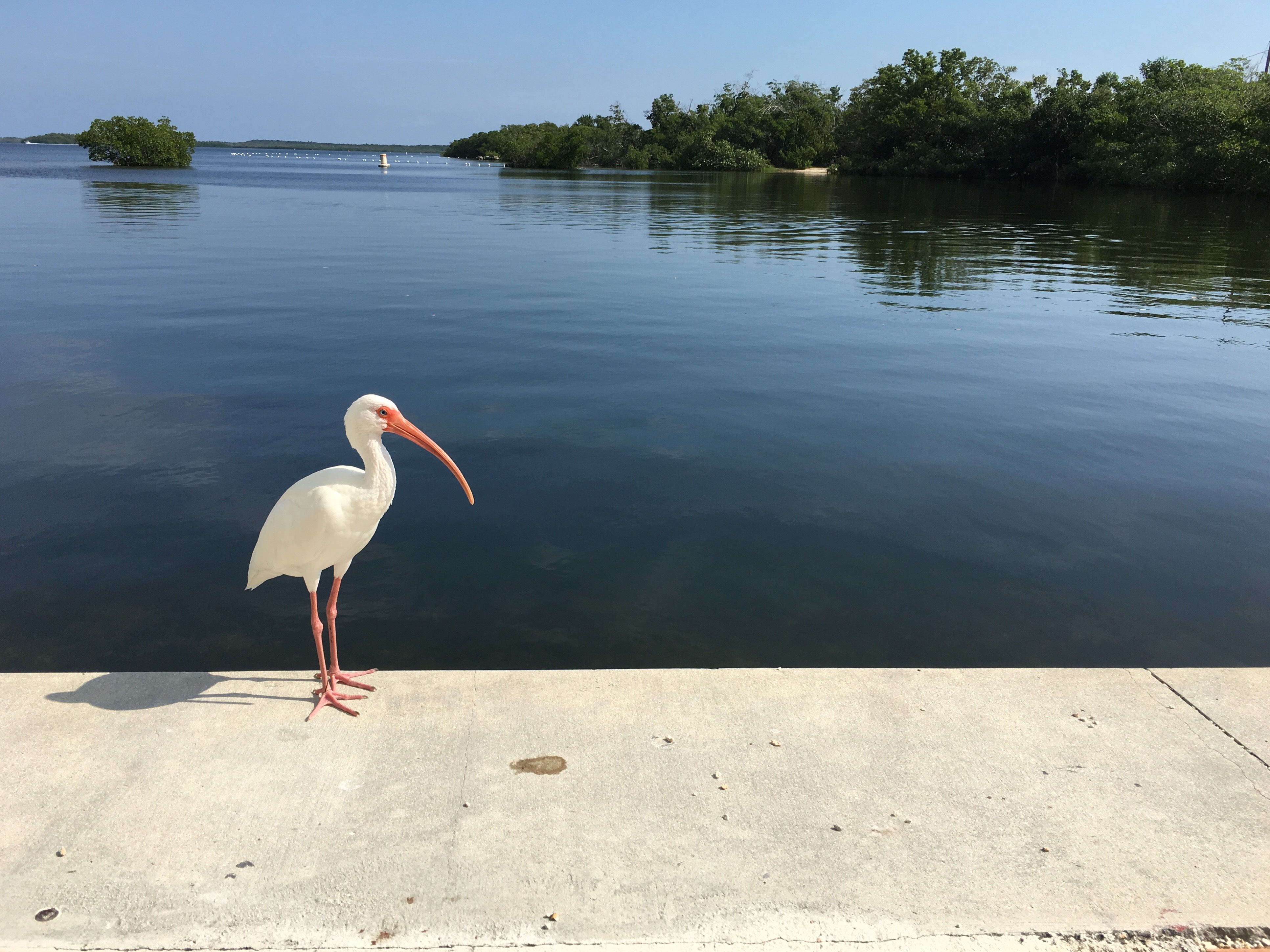
Not everything at Pennekamp lies beneath the waves. The park's shoreline preserves tropical hardwood hammocks -- dense, low-canopy forests of mahogany, gumbo-limbo, and wild tamarind that once covered most of the upper Florida Keys. Mangrove-lined waterways provide habitat for brown pelicans, great blue herons, and the occasional manatee. Canoe and kayak trails wind through these tidal creeks, offering a quieter counterpoint to the bustling dive boats. The park was added to the National Register of Historic Places on April 14, 1972, recognizing its significance not just as a natural wonder but as a pioneering conservation achievement. By 2004, it had become the most popular park in the entire Florida State Parks system, drawing more than a million visitors in a single fiscal year -- most of whom came not for the picnic areas or the hiking trails, but to slip beneath the surface and witness a coral reef that was almost lost to souvenir hunters and sticks of dynamite.
From the Air
Located at 25.12°N, 80.41°W on Key Largo in the Florida Keys. The park's reef line is visible from the air as a lighter blue band paralleling the shoreline about 3 miles offshore. Best viewed at 2,000-5,000 feet AGL. The nearest airports are Marathon (KMTH) approximately 35 nm southwest and Miami-Opa Locka Executive (KOPF) approximately 45 nm northeast. Homestead ARB (KHST) is also nearby. Clear skies recommended -- the reef structures and color gradations in the water are most visible on calm, sunny days.