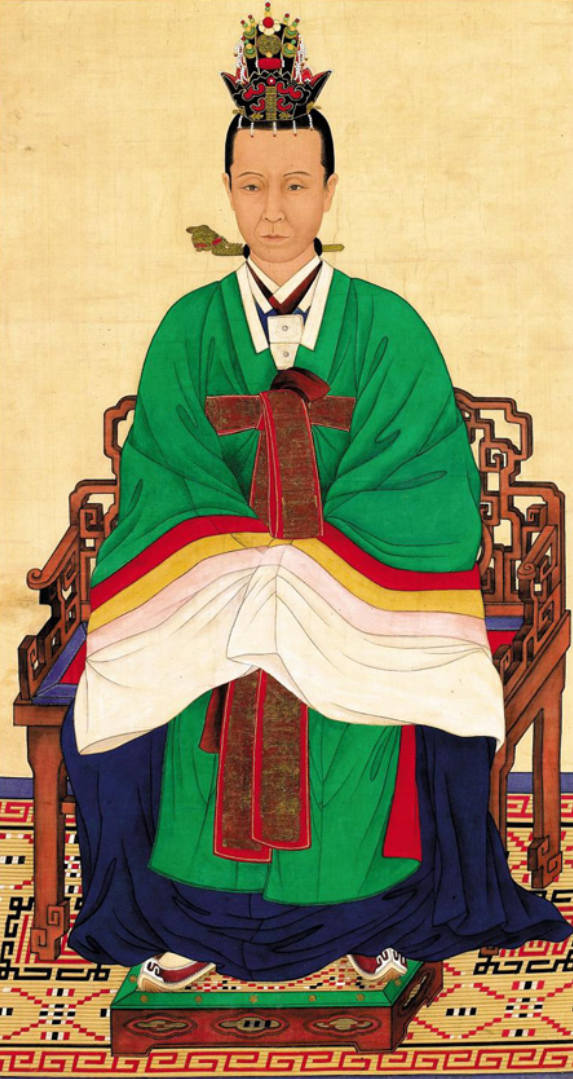
Joseon
The kingdom got its name from a vote. When General Yi Seong-gye overthrew the Goryeo dynasty in 1392 and needed to decide what to call his new realm, he narrowed it to two choices: Hwaryeong, his birthplace, and Joseon, a tribute to the ancient Korean kingdom of Gojoseon. He sent both options to the Ming emperor for endorsement. Joseon won. What began with that act of diplomatic naming would endure for 505 years, making it one of the longest-ruling dynasties in world history. From its capital in Hanseong, modern-day Seoul, the Joseon dynasty would shape the Korean language, codify its laws, define its social structures, and produce the cultural traditions that still mark Korean life today.
A Throne Won by Turning Around
Yi Seong-gye was supposed to invade China. In 1388, the crumbling Goryeo court, split between factions, ordered him to attack the Ming-controlled Liaodong Peninsula. Instead, he turned his army around at the Yalu River, marched back to the capital Kaesong, and deposed the king. It was not an impulsive decision. Yi had the support of Neo-Confucian scholars like Jeong Do-jeon, who saw the coup as a chance to replace a corrupt Buddhist aristocracy with a Confucian meritocracy. After four years of maneuvering, deposing two puppet kings, and eliminating loyalists, Yi took the throne himself as King Taejo. He moved the capital south to Hanseong, built Gyeongbokgung Palace, and established the institutional framework that would define Korean governance for half a millennium.
The Golden Age Under Sejong
If Joseon had one indispensable king, it was Sejong the Great, who reigned from 1418 to 1450. His accomplishments read like a civilization's highlight reel. He created Hangul, the Korean alphabet, in 1443, giving common people a writing system independent of Chinese characters. The scholarly elite rejected it, preferring classical Chinese, and Hangul would not overtake Hanja in everyday use until the 20th century. But Sejong saw further than his contemporaries. He also expanded Korea's northern borders by dispatching General Kim Jong-seo to drive back the Jurchens, roughly establishing the boundary that still separates North Korea from China. Under his reign, Korea saw breakthroughs in astronomy, agriculture, printing technology, and traditional medicine. He composed music for the royal ancestral rites at Jongmyo shrine, compositions still performed today.
Invasions That Nearly Ended Everything
The kingdom's middle period was defined by catastrophic invasions. In the 1590s, Toyotomi Hideyoshi launched two massive Japanese invasions, intending to use Korea as a stepping stone to conquer Ming China. Factional infighting at the Joseon court had left the military poorly prepared, and Japanese forces armed with Portuguese firearms overran Seoul and Pyongyang within months. The tide turned at sea, where Admiral Yi Sun-sin, commanding the innovative turtle ships, destroyed the Japanese invasion fleet and severed supply lines. Combined with guerrilla resistance on land and Ming Chinese reinforcements, the Koreans eventually pushed the Japanese out, but the peninsula lay devastated. Before recovery could take hold, the Jurchens invaded twice more, in 1627 and 1636, forcing Joseon into a humiliating tributary relationship with the new Qing dynasty. These twin traumas drove the kingdom toward the isolationism that would earn it the Western nickname "the hermit kingdom."
Renaissance and Decline
After the Manchu invasions, Joseon entered a remarkable period of peace lasting nearly 200 years. The Silhak, or Practical Learning, movement emerged among scholars who argued for agricultural reform, scientific inquiry, and engagement with the wider world. Kings Yeongjo and Jeongjo, reigning from 1724 to 1800, led a cultural renaissance. Jeongjo established the Kyujanggak royal library, opened government positions to previously excluded classes, and patronized arts and scholarship. But when Jeongjo died in 1800, the reformist momentum died with him. Power fell to royal in-law families, particularly the Andong Kim clan, who monopolized government positions and sold offices for bribes. Corruption spread, peasant rebellions erupted, and the kingdom that had once innovated Hangul and the turtle ship found itself unable to resist the modern warships arriving from Japan and the West.
The Long Shadow
Joseon's final decades were a cascade of humiliations. The 1876 Treaty of Ganghwa forced open Korean ports to Japanese trade. Empress Myeongseong, who had tried to counterbalance Japanese influence by turning to Russia and China, was assassinated by Japanese agents in 1895. King Gojong declared the Korean Empire in 1897 in a desperate bid for sovereignty, but the gesture came too late. Japan's victory in the Russo-Japanese War of 1905 left it unchallenged, and formal annexation followed in 1910. Yet Joseon's legacy proved more durable than the dynasty itself. The administrative provinces it established still shape Korea's regional identities. The Confucian social norms it codified still influence Korean family life, education, and respect for elders. And Hangul, that gift from a 15th-century king, became the script of an entire civilization.
From the Air
The Joseon dynasty was centered on Hanseong, modern-day Seoul, at approximately 37.57N, 126.98E. Key surviving landmarks include Gyeongbokgung Palace, Changdeokgung Palace, and the Jongmyo Shrine. Nearest airports are Gimpo International (RKSS) and Incheon International (RKSI). The former capital of Kaesong, where the dynasty began, lies approximately 60 km north in present-day North Korea.