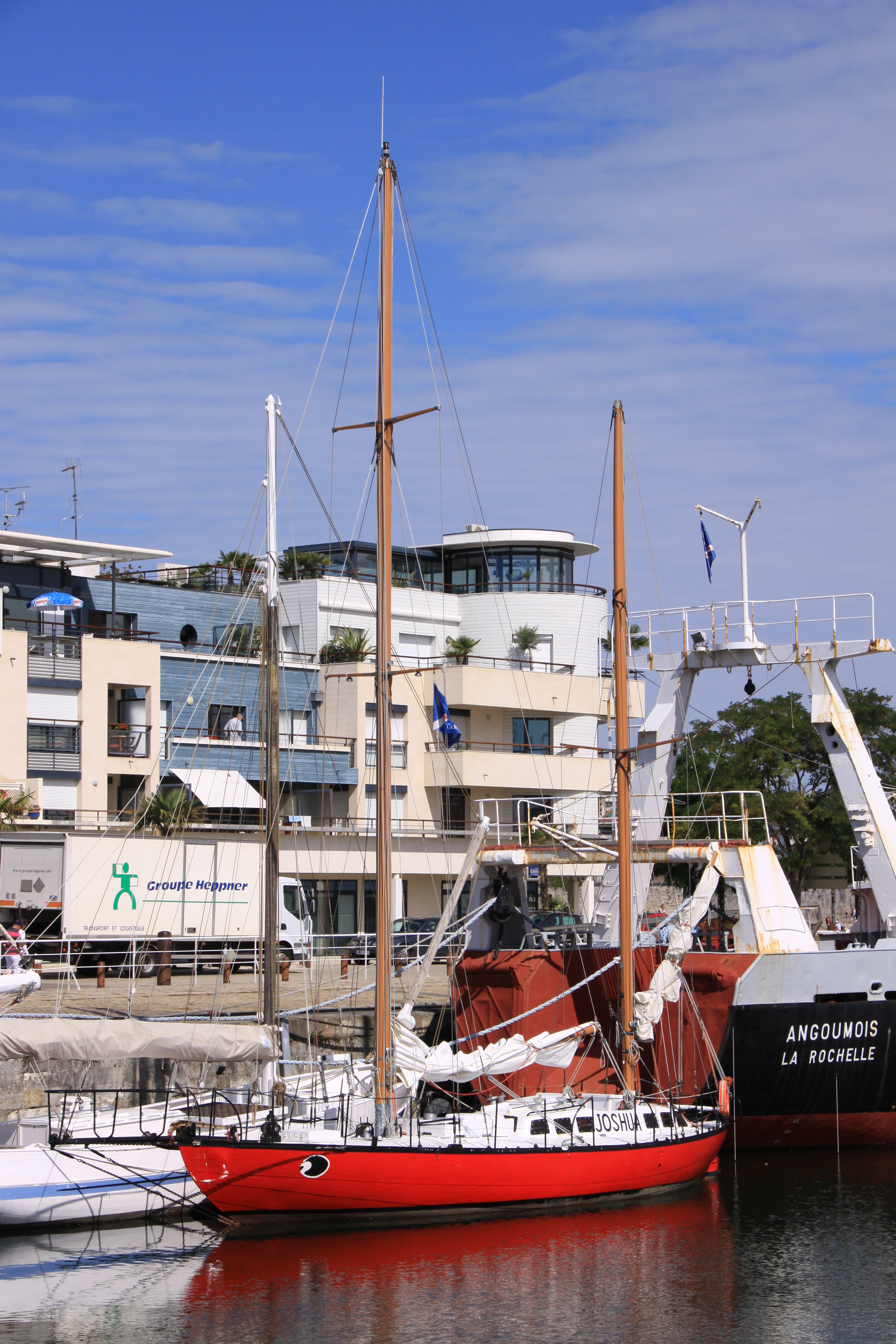
Joshua Slocum
The boy preferred the smell of salt air to shoe leather. Joshua Slocum was born on February 20, 1844, in Mount Hanley, Nova Scotia, where his father made boots for fishermen in the family shop. Joshua helped, but his attention was fixed on the Bay of Fundy, on the coastal schooners that came and went from the small ports near his home. At eight, his family moved to Brier Island at the mouth of the Bay, where his grandfather kept the lighthouse at Southwest Point. He tried to run away to sea multiple times, first succeeding at fourteen as a cabin boy on a fishing schooner, though he soon returned. In 1860, after his mother's death, sixteen-year-old Joshua left for good, signing on as an ordinary seaman bound for Dublin. He never looked back. Over the next four decades, Slocum would round Cape Horn, command merchant vessels across the Pacific, lose ships to wrecks and mutinies, defend against pirates, and ultimately sail alone around the entire world in a boat he rebuilt with his own hands.
A Life Measured in Ships
Slocum's career reads like an inventory of the Age of Sail's final chapter. From Dublin he crossed to Liverpool and joined a British merchant ship bound for China, rounding Cape Horn twice in two years. By eighteen he held his Second Mate certificate. He rose quickly to Chief Mate, then to his first command in 1869 - the barque Washington, which he sailed from San Francisco to Australia and back via Alaska. Over the next twenty years he mastered eight vessels: the Washington, Constitution, Benjamin Aymar, Amethyst, Pato, Northern Light 2, Aquidneck, and finally the Spray. He sailed thirteen years out of San Francisco, carrying cargo to China, Australia, the Spice Islands, and Japan. In Sydney in 1871, he married Virginia Walker, and over the next thirteen years they had seven children, all born at sea or in foreign ports. The sea was not just Slocum's profession but his home, his family's home, and eventually his grave.
Hurricanes, Pirates, and Smallpox
Slocum's maritime career was marked by disasters that would have ended most sailors' ambitions. In Alaska, the Washington wrecked during a gale - Slocum rescued his wife, crew, and cargo in open boats, a feat so impressive that the owners gave him command of the Constitution. In the Philippines, after the Benjamin Aymar was sold out from under him, he organized native workers to build a 150-ton steamer at Subic Bay and received the ninety-ton schooner Pato as partial payment - the first ship he could call his own. The Northern Light 2, a 233-foot clipper he called his best command, was plagued by mutinies. Then came the Aquidneck, aboard which his first wife Virginia died in Buenos Aires in 1884. His second wife, Henrietta, endured a hurricane days into her first voyage, a cholera quarantine, a pirate attack in which Slocum shot and killed one attacker, a smallpox outbreak that killed three crew members, and finally the ship's wreck in southern Brazil. The family sailed home to the United States in a small boat Slocum built himself, covering 5,510 miles in fifty-five days.
Alone Around the World
In Fairhaven, Massachusetts, Slocum rebuilt a derelict gaff-rigged sloop called the Spray, launching it in 1892. On April 24, 1895, he sailed from Boston. After visiting his boyhood home on Brier Island, he departed North America from Sambro Island Lighthouse near Halifax on July 3, 1895. He had planned to sail east through the Suez Canal, but piracy in the Mediterranean forced him westward, down to Brazil, through the Straits of Magellan, across the Pacific to Australia, through the Indian Ocean, around the Cape of Good Hope, and home. He navigated without a chronometer, using dead reckoning, a cheap tin clock, and noon-sun sights. The Spray could sail itself - its long keel and balanced rig allowed Slocum to lash the helm and leave it for days. He crossed the Indian Ocean without once touching the wheel. On June 27, 1898, he arrived in Newport, Rhode Island, having sailed 46,000 miles over three years, two months, and two days. He was the first person in history to circumnavigate the globe alone.
The Writer on the Water
Slocum's book, Sailing Alone Around the World, published in 1900, became an international bestseller and a classic of travel literature. Sir Edwin Arnold called it the most extraordinary book ever published. Slocum was invited to speak alongside Mark Twain at a dinner in December 1900. He hauled the Spray up the Erie Canal to Buffalo for the Pan-American Exposition in 1901. He visited President Theodore Roosevelt at Sagamore Hill, and Roosevelt's young son Archie sailed with him to Newport. When Slocum met Roosevelt again at the White House in 1907, the President remarked that their adventures had been a little different. Slocum answered: That is true, Mr. President, but I see you got here first.
Into the Unknown
By 1909, book revenues had dried up. Slocum prepared to sell his farm on Martha's Vineyard and planned a new adventure exploring the Orinoco, Rio Negro, and Amazon Rivers, with hopes of another book deal. In November 1909, he set sail from Vineyard Haven aboard the aging Spray for one of his usual winter voyages to the West Indies. He was never seen again. Slocum never learned to swim - he considered it useless, a view shared by many mariners of his era. In 1924, he was declared legally dead. A monument stands on Brier Island, Nova Scotia, not far from his family's boot shop. His name lives on in the Slocum River in Dartmouth, Massachusetts, in autonomous underwater vehicles designed by Scripps and Rutgers, and in the National Sailing Hall of Fame, which inducted him in 2011. The boy who ran from his father's boot shop became the most celebrated solo sailor in history.
From the Air
The article's coordinates place it near Cape Romain, South Carolina (33.06°N, 79.35°W), where Slocum and his family made landfall after their 5,510-mile voyage from Brazil in the self-built Liberdade in 1889. The South Carolina coast here is a maze of barrier islands, salt marshes, and tidal creeks - the kind of waterway Slocum navigated his entire life. Cape Romain National Wildlife Refuge is visible along the coast. Charleston International Airport (KCHS) is approximately 30 miles southwest. Georgetown County Airport (KGGE) is 25 miles northeast. The Intracoastal Waterway is visible as a distinct channel paralleling the coast. Best viewed at low altitude for the intricate shoreline; from higher altitudes, the contrast between dark maritime forest and bright sand beaches defines the coast.