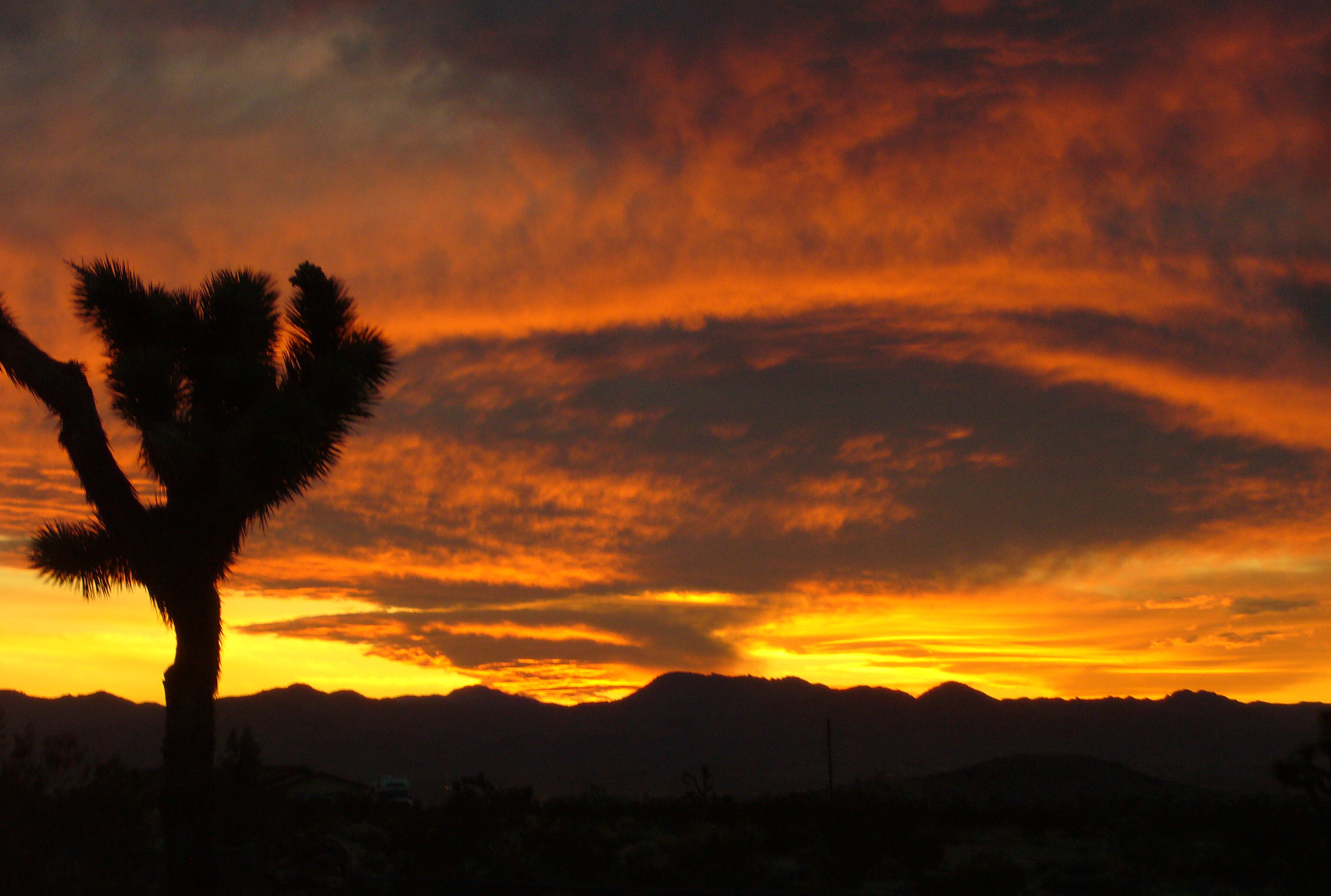
Joshua Tree: Where Two Deserts Meet and Music Found Its Muse
The Joshua tree is not a tree. It's a yucca, an oversized lily relative that grows only in the Mojave Desert, reaching heights of 40 feet with branches that twist in directions suggesting prayer - or madness, depending on your spiritual state. Mormon pioneers crossing the desert in the 1850s saw the trees' uplifted limbs as the prophet Joshua raising his arms toward the Promised Land. The name stuck to the trees and eventually to a national park where the Mojave meets the Colorado Desert, where jumbled boulder piles create a climber's paradise, where the night sky remains dark enough to awe, and where U2's 1987 album photographed amid the landscape became shorthand for a certain kind of American mysticism.
The Trees
Joshua trees (Yucca brevifolia) are endemic to the Mojave Desert, found nowhere else on Earth. They grow slowly - a few inches per year - and can live centuries. Their bizarre branching patterns result from yucca moth pollination; branches form only after flowering, and not every section flowers the same year. Climate change threatens them: the trees depend on cold winters that climate models suggest will disappear. New seedlings are rare at lower elevations; the species may be retreating upslope. The trees that define Joshua Tree National Park may not survive this century in the park that bears their name. Scientists debate assisted migration - moving seeds to cooler climates - but the trees can't move themselves. The prophet's arms may be reaching toward extinction.
The Rocks
The jumbled boulder fields of Joshua Tree draw climbers from worldwide. The granite monzogranite formed underground 100 million years ago; erosion exposed it, and weathering created the rounded shapes. The rock is textured and grippy, ideal for climbing. Thousands of routes have been established, from easy scrambles to overhanging testpieces. The bouldering - short problems without ropes - is particularly renowned. Hidden Valley, Jumbo Rocks, and Ryan Mountain offer concentrated climbing in scenery that looks like a giant's toy box scattered across the desert. The climbing community has inhabited the park for decades, generations of dirtbags living in campgrounds, developing routes, building a culture that values style and adventure over competition.
The Music
U2's 1987 album 'The Joshua Tree' was photographed by Anton Corbijn in and around the park. The iconic cover image - the band against a desert sky with a solitary Joshua tree - became one of rock's most recognizable images. The actual tree died in 2000, but the album's influence persisted. Musicians had long been drawn to the high desert: Gram Parsons died at the Joshua Tree Inn in 1973, his body allegedly stolen and burned at Cap Rock as he'd requested. The desert's isolation and strangeness attracted artists seeking escape from Los Angeles, an hour and a half away but a world apart. The park and the surrounding communities retain that counterculture energy - artists, musicians, seekers drawn to stark beauty.
The Night
Joshua Tree is designated an International Dark Sky Park. Los Angeles's glow is visible to the west, but the park's interior remains genuinely dark. The Milky Way arches overhead; on clear nights, thousands of stars are visible. Meteor showers bring crowds; new moon weekends fill campgrounds with astrophotographers. The park hosts star parties and night sky programs. The darkness is fragile - Palm Springs grows to the south, and light pollution creeps closer each year. But for now, the desert night remains what the desert night should be: vast, dark, and star-filled, offering the perspective that comes from seeing your planet as one among billions.
Visiting Joshua Tree
Joshua Tree National Park is located in southeastern California, accessible from Palm Springs (45 minutes) or Los Angeles (2.5 hours). The park has three entrances; the west entrance at Joshua Tree village provides immediate access to the best Joshua tree forests. Campgrounds fill during peak season; reserve ahead. The Cholla Cactus Garden (Colorado Desert side) offers a different desert experience. Keys View provides panoramic vistas from 5,185 feet. Skull Rock and Arch Rock are accessible via short walks. Climbing requires no permits; guides are available in Joshua Tree village. Summer temperatures exceed 100°F; spring and fall are ideal. Water is not available in the park interior; bring at least a gallon per person per day. The experience rewards early morning and evening - the light on the rocks, the silhouettes of Joshua trees, the desert's brief hours of temperate hospitality.
From the Air
Located at 34.13°N, 116.31°W in southeastern California where the Mojave and Colorado Deserts meet. From altitude, Joshua Tree National Park appears as a transition zone - higher, cooler Mojave Desert to the north (where the Joshua trees grow) descending to lower, hotter Colorado Desert to the south. The boulder piles that define the park's center are visible as jumbled masses against tan desert. Interstate 10 traces the park's southern boundary; the Coachella Valley and Palm Springs spread to the southwest. The San Andreas Fault zone lies just south. The park's angular shape follows no natural boundary. What appears from altitude as high desert transitioning to low desert is a climbing paradise, dark sky sanctuary, and landscape that has attracted seekers for as long as the strange trees have been growing.