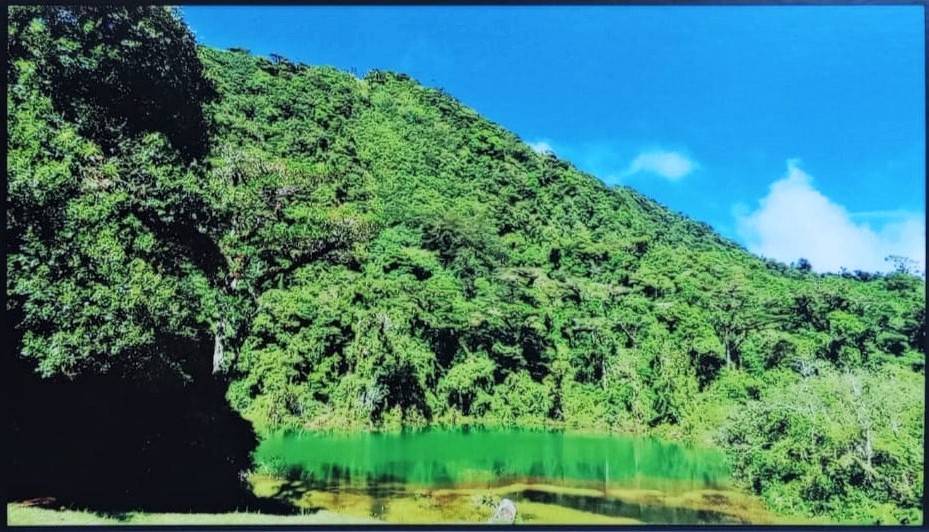
Juan Castro Blanco National Park
Locals call it Parque de Aguas - the Park of Waters - and the name tells you everything about what matters here. From the slopes of three volcanoes, rivers cascade down through 14,285 hectares of pristine jungle, their headwaters feeding communities across northern Costa Rica. Volcan Porvenir reaches 2,267 meters, Volcan Platanar stands active at 2,183 meters, and the dormant El Viejo rounds out the trio at 2,060 meters. Between them spreads a wilderness that hasn't changed much since the park's creation in 1992: no paved roads, no luxury lodges, no zip-line tours. Just dense green foliage, mountain springs, and the kind of backcountry solitude that vanishes a little more from the planet each year. The ranger station at the entrance marks the boundary between the accessible world and something older.
Where the Rivers Begin
The waters that give the park its nickname are everywhere. Aguas Zarcas, Rio Platanar, Rio Toro, Rio Tres Amigos, Rio La Vieja - each river born on these mountain slopes, each carving its own path through the jungle to the lowlands below. Rapids and waterfalls punctuate the backcountry trails, natural rest stops for hikers who've committed to the multi-day treks required to reach the park's interior. Lago Pozo Verde, a natural lake nestled in the volcanic terrain, offers one of the park's most sought-after destinations. The water is cold, the setting primordial. Pack out what you pack in - there are no facilities beyond that ranger station at the gate.
Jaguars in the Mist
At least 57 mammal species have been documented here, and the list reads like a greatest-hits album of Central American wildlife. Jaguars still hunt these forests, as do ocelots - two of the continent's most elusive predators sharing overlapping territories in the dense understory. Tapirs browse the vegetation, their prehistoric silhouettes unchanged for millions of years. Coatimundis forage in bands, sloths hang motionless in the canopy, and howler monkeys announce dawn and dusk with their guttural roars. The red brocket deer, endangered throughout its range, finds refuge here but remains so shy that most visitors will never see one. Twenty-two bat species emerge at dusk, including some found nowhere else in the region.
Quetzals and Curassows
Birdwatchers come for the 233 species, though many are migratory and timing matters. The resplendent quetzal nests in the cloud forest zones, its iridescent plumage and impossibly long tail feathers visible to those with patience and an experienced guide. The great curassow - a turkey-sized bird that looks like something from a fever dream - stalks the forest floor. Both species face threats elsewhere; both find sanctuary in Juan Castro Blanco's unbroken habitat. Orchid enthusiasts come for the flowers, naturalists for the complexity. The park spans multiple life zones as elevation changes, each band supporting different communities of plants and animals, each transition gradual enough that you notice only in hindsight how much has changed.
Getting There, Getting Around
The nearest commercial airport is San Jose's Juan Santamaria, about 100 kilometers south. From there, the drive takes two hours in dry conditions - west on the Inter-American Highway, north on Highway 141 through Grecia, then 80 kilometers to San Carlos village and the park access road. That last road is notorious even by Costa Rican standards; a 4WD truck isn't optional. Buses run to Grecia, and from there taxis will make the final 30-kilometer journey for around $100, factoring in the time, the road conditions, and the real possibility of a broken axle. The park entrance opens daily from 8 AM to 4 PM. Costa Rican citizens pay $1; foreign visitors pay $10. Inside, you hike - good boots, dry socks, long pants.
Trails Through Three Life Zones
The trail system offers something for everyone. Sendero Piedra Ventana leads to a natural stone window framing valleys and mountains - an easy, short walk that rewards with views. Sendero El Mirador climbs to an overlook where the Cordillera Central and Cordillera de Tilaran mountain ranges visibly converge. Sendero Laguna Hule winds through scenic terrain to Hule Lagoon, quiet enough for a picnic, remote enough to feel genuinely wild. Sendero El Chompipe challenges stronger hikers with altitude gains that reveal high-altitude ecosystems and vistas that extend across forests and valleys in every direction. A wheelchair-accessible paved trail near the entrance ensures the park's wonders aren't limited to the able-bodied. Nearby flower farms, their greenhouses stuffed with roses and orchids bound for foreign florists, offer a surreal contrast to the wilderness just uphill.
From the Air
Located at 10.28N, 84.33W in north-central Costa Rica, approximately 100km northwest of San Jose. The three volcanoes (Porvenir 2,267m, Platanar 2,183m, El Viejo 2,060m) are visible from altitude as forested peaks rising from surrounding agricultural land. Juan Santamaria International Airport (MROC/SJO) is the main gateway. The park covers 14,285 hectares of mostly unbroken forest canopy. From the air, look for the stark transition from cultivated lowlands to jungle-covered slopes. The park sits at the junction of the Cordillera Central and Cordillera de Tilaran ranges. Lago Pozo Verde may be visible as a small body of water in the volcanic terrain.