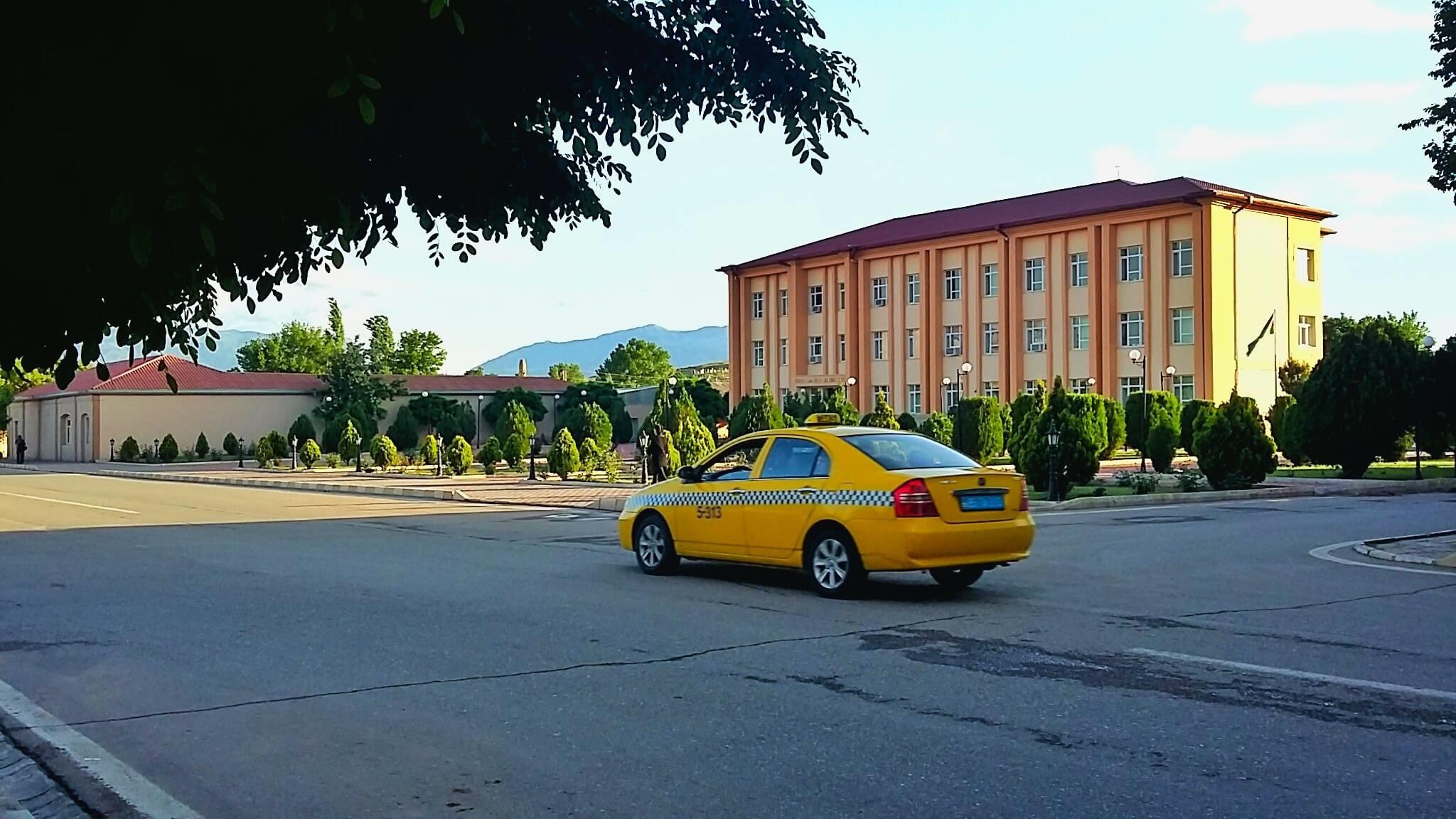
Julfa, Azerbaijan
Both Azerbaijan's hottest and coldest temperatures on record were measured here. Julfa exists at extremes -- geographic, climatic, and historical. This small city in the Nakhchivan exclave sits on the Aras River, separated from its Iranian namesake by a road bridge and a railway bridge. A few kilometers to the west, the ruins of Old Julfa mark the site of what was once one of the most important trading cities in the medieval Armenian world, a place so prosperous and so thoroughly destroyed that its name became a byword for catastrophe in Armenian literature.
A Crossroads of Empires
Medieval Armenian historian Movses Khorenatsi wrote that Julfa was founded by the Armenian king Tigranes using prisoners taken after defeating the Median king Astyages. Whether or not the founding legend holds, Julfa's location made its prosperity inevitable. Sitting along ancient trade routes connecting Persia, the Middle East, India, Russia, and the Mediterranean, the city flourished in the 15th and 16th centuries. An English preacher passing through in 1600 estimated a population of 10,000. The city's merchants were renowned, its craftsmen skilled, its churches numerous. Then in 1604, Shah Abbas I of Safavid Persia ordered it all destroyed. The inhabitants were given three days to leave or face massacre. About three thousand families were deported; many drowned attempting to cross the Aras. The town was burned to prevent anyone from returning.
Echoes in Stone and Exile
The deported Armenians of Julfa did not simply vanish. Many settled in Isfahan, founding the neighborhood of Nor Julfa -- New Julfa -- which became a center of Armenian culture in Persia. Back at the original site, the ruins of the medieval settlement endured for centuries: a massive bridge, two caravanserais, fortress walls, and several churches. Most significant was the enormous Armenian cemetery to the west, spread across three low hills, which held the world's largest collection of khachkar tombstones. A Jesuit missionary counted over ten thousand in 1648. In the 1970s, researcher Argam Aivazian documented 2,707 khachkars still standing or fallen across the cemetery's three hills, along with more than a thousand ram-shaped tombstones.
The Supply Line and the Conflict
Julfa's strategic position resurfaced during World War II, when the Persian Corridor ran through the city, funneling Allied supplies into the Soviet Union. After the war, the city settled into Soviet routine. But the conflict over Nagorno-Karabakh from 1988 to 1994 brought a new upheaval. The remaining Armenian population, already diminished by decades of emigration, was evacuated or forcibly deported to Armenia. Between 1998 and 2006, the ancient cemetery was completely destroyed. The European Parliament condemned the demolition; Azerbaijan barred inspectors from visiting. The poet Hovhannes Tumanyan and the historian Ghevond Alishan had written about the 17th-century fall of Old Julfa. The 21st-century destruction of its last physical remnants proved that Julfa's fate still resonates within Armenian consciousness.
The Border Today
Modern Julfa is a border town in the most literal sense. The Treaty of Kars in 1921 placed it within the Nakhichevan Autonomous Republic under Azerbaijan. Today the road and rail bridges connecting it to the Iranian town of Jolfa remain its most important infrastructure. The Nakhchivan exclave, separated from the rest of Azerbaijan by Armenian territory, depends on these crossings. Turkey is constructing a new railway from Kars province to the border, aiming to create a direct connection between Azerbaijan and Turkey. Julfa sits at this junction of old and new routes, much as it did when caravans carried silk and spices through the valley of the Aras.
From the Air
Located at 38.96N, 45.63E on the Aras River at the Azerbaijan-Iran border. The nearest airport is Nakhchivan International Airport (UBBN), about 50 km to the northwest. The Aras River is clearly visible from altitude as the international border. The road and rail bridges connecting Azerbaijan to Iran at Julfa are identifiable landmarks. The terrain is arid and mountainous, with the river valley cutting through steep ranges.