Juliana's Tokyo: The Dance Floor Where Japan's Bubble Burst
The feathers came out at midnight. White ostrich-plume fans, waved overhead in synchronized arcs by women in skin-tight bodycon dresses, became the signature image of Juliana's Tokyo -- a nightclub that captured something more than just a party. Opening on May 15, 1991, in the industrial waterfront district of Shibaura in Minato, Tokyo, this British-Japanese disco arrived at the precise moment when Japan's economic bubble had already burst on paper but not yet in the hearts of its people. For three wild years, Juliana's gave Tokyo a stage -- literally -- on which to dance through the denial.
A Joint Venture on the Waterfront
The club was the product of an unlikely partnership: the British leisure group Juliana's, led by Michael Wilkings and Mark Vlassopulos, and Nissho Iwai Corporation, one of Japan's powerful general trading companies (now part of Sojitz). Producer Masahiro Origuchi brought the concept to life in a cavernous Shibaura warehouse space. From day one, the formula was deliberate -- free admission for women dressed in provocative clothing, elevated dance platforms called otachidai, and a sound system that moved from Italo house to Belgian hardcore techno as tastes shifted. The business model worked spectacularly. At its peak, Juliana's drew thousands of visitors per night, becoming so iconic that a television show was dedicated entirely to the venue. The club also released a series of compilation CDs, primarily featuring techno, that sold over a million copies across six volumes.
Bodycon Nights on the Otachidai
What made Juliana's unforgettable was not the music but the dancers. Office ladies -- the salaried women of Japan's corporate world -- would leave their desks, change into body-conscious dresses, and climb onto the raised platforms to perform elaborately choreographed routines. The bodycon style, a Japanese adaptation of the tight-fitting fashion pioneered by designer Herve Leger, became synonymous with the club. Professional go-go dancers shared the stages with amateurs, but the boundary between the two blurred deliberately. The otachidai turned every woman into a performer, and the white feather fans became props in a nightly ritual of liberation. For many participants, Juliana's offered a rare space in buttoned-up corporate Japan where strict social hierarchies dissolved under strobe lights.
The Magazine Spread That Ended the Party
Juliana's undoing began in 1993 when a magazine promotion featured staged photographs of nearly naked dancers at the club. The images drew police attention and public backlash, forcing management to institute a dress code and ban the gyaru-style dancers from the elevated platforms -- the very thing that made the venue famous. The atmosphere shifted immediately. Tokyo's nightlife crowd moved to less restrictive venues, and the dance floor that once packed thousands began to thin. Noise complaints from Shibaura residents added further pressure. The owners spent $500,000 remodeling the club in an attempt to attract a different clientele, and there were plans for expansion to additional locations in Tokyo and Osaka. None of it worked. On August 31, 1994, Juliana's Tokyo closed its doors for good.
Afterglow of an Era
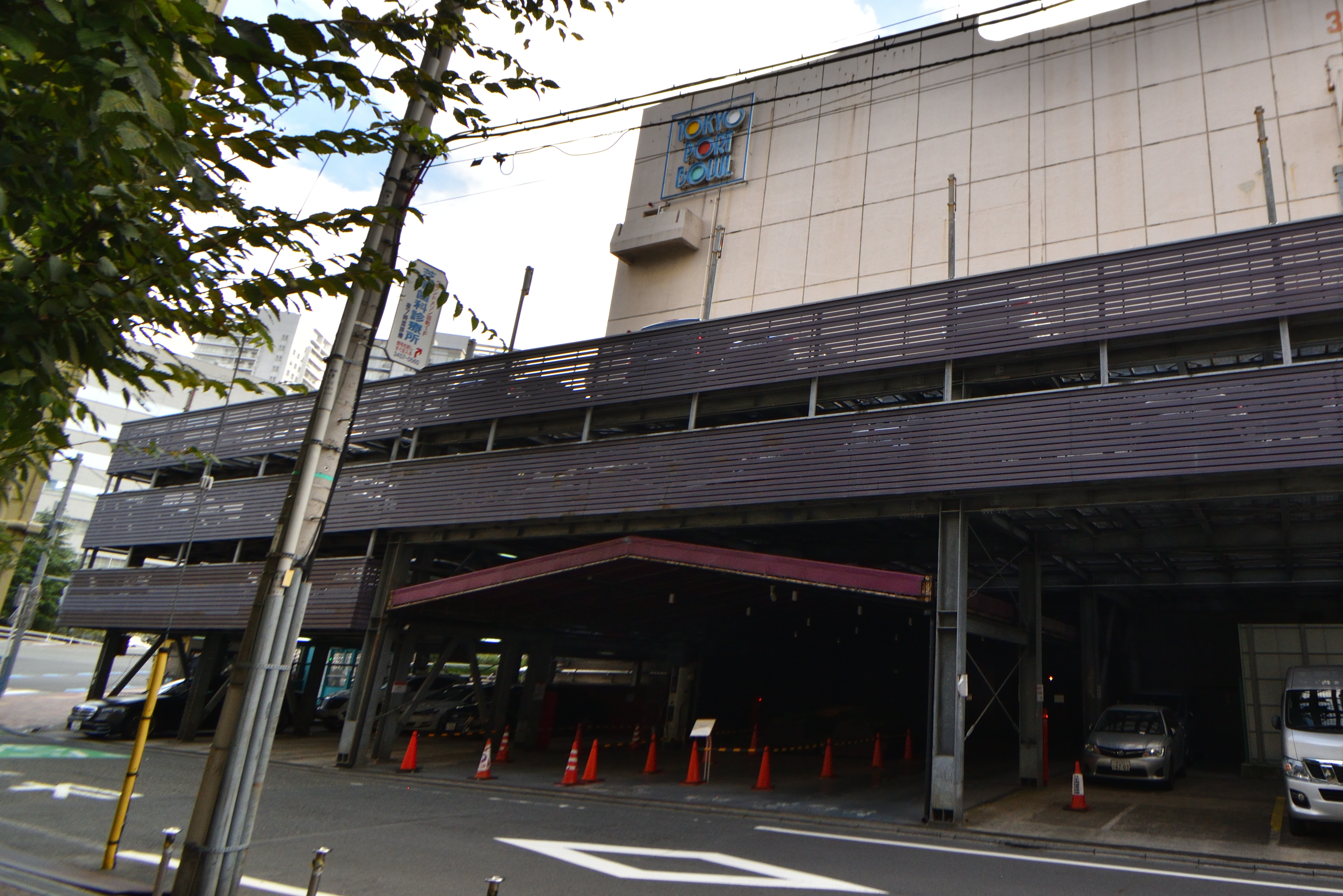
Juliana's existed for just three years and three months, but its cultural aftershock reached far deeper. The club has been referenced in manga, anime, and film, with the white feather fans appearing as a cultural shorthand for early-1990s Japan. Producer Masahiro Origuchi went on to found the Goodwill Group, pivoting from nightlife to nursing care. In 2015, the Shibaura building that once housed Juliana's was converted into office space by Sasaki Architecture, who installed floating walls inside the former dance hall. In 2018, a revival event called Juliana's was staged in Osaka, drawing nostalgic crowds eager to relive the experience. The original site in Shibaura still stands, its entrance recognizable to those who remember -- a quiet doorway on an industrial block where, for a brief and feverish stretch, Tokyo danced as if the money would never stop.
From the Air
Located at 35.646°N, 139.753°E in the Shibaura district of Minato, Tokyo, along the waterfront near Tokyo Bay. The site sits among the industrial and commercial blocks south of Hamamatsucho Station. From altitude, Shibaura is identifiable by the Rainbow Bridge and the reclaimed-land developments of Odaiba to the east. Best viewed at 2,000-3,000 feet AGL. Tokyo Haneda Airport (RJTT) lies approximately 6 nautical miles to the south. Narita International Airport (RJAA) is 35 nautical miles to the east.