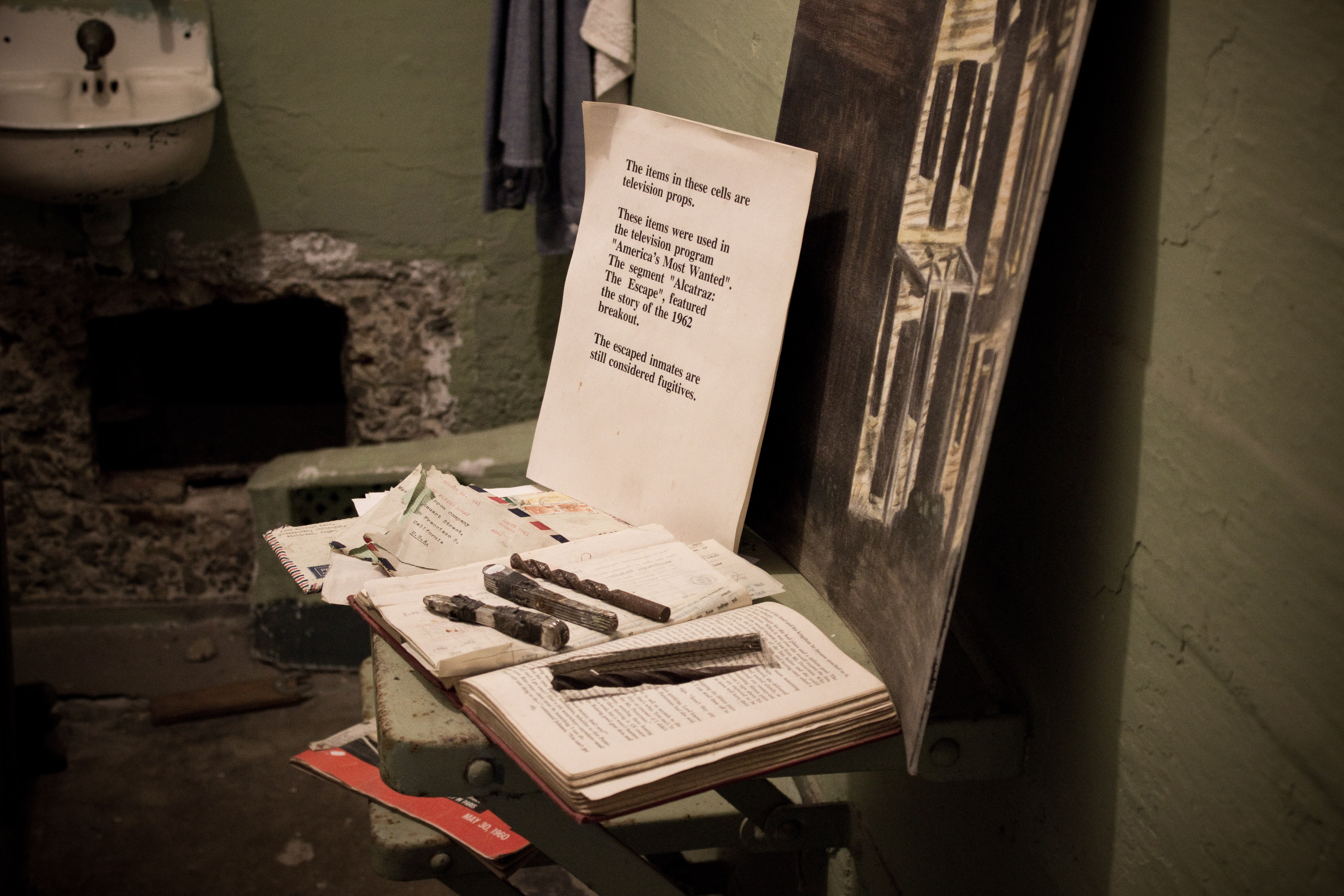
June 1962 Alcatraz Escape
At 7 A.M. on June 12, 1962, Officer Bill Long went to rouse an inmate who would not respond to the wake-up bell. When Long shook the sleeping figure, a head made of papier-mache, soap, and real human hair rolled onto the floor. Frank Morris and brothers John and Clarence Anglin had vanished from Alcatraz Federal Penitentiary sometime during the night. They left behind three carefully crafted dummy heads, a hole in the wall, and a mystery that remains unsolved more than six decades later.
Farm Boys and Foster Homes
John and Clarence Anglin grew up in a family of thirteen children in Donalsonville, Georgia. Their parents were seasonal farmworkers who moved the family to Ruskin, Florida in the early 1940s, where tomato fields provided steadier income. Each June they migrated north to Michigan to pick cherries. The brothers became skilled swimmers, amazing siblings by plunging into Lake Michigan while ice still floated on its surface. In 1958, they robbed the Bank of Columbia in Alabama and received 35-year sentences. Frank Morris had a different origin, orphaned at eleven and shuffled through foster homes. By adulthood he had been arrested for grand larceny, car theft, and armed robbery. All three ended up at Alcatraz, the maximum-security federal prison on an island in San Francisco Bay.
Six Months of Spoons
Over six months, the prisoners widened ventilation ducts beneath their sinks using discarded saw blades, metal spoons from the mess hall, and an electric drill improvised from a vacuum cleaner motor. Morris studied magazines for ideas. They crafted dummy heads from papier-mache, painted them with flesh tones from art supplies, and topped them with real human hair collected from the prison barbershop. A fourth conspirator, Allen West, worked alongside them but fell behind schedule. The night of June 11, after lights out at 9:30 PM, West discovered the cement he had used to reinforce crumbling concrete around his vent had hardened, trapping the grille in place.
Into the Dark Water
Morris and the Anglins placed their dummy heads in bed and squeezed through the vents into a service corridor. Guards heard a loud crash as they broke out of the shaft onto the roof, but the source was never investigated. The three descended by sliding down a kitchen vent pipe, climbed two barbed-wire fences, and reached the northeast shoreline near the power plant, a blind spot in the prison's searchlight coverage. They inflated a makeshift raft using a concertina stolen from another inmate and modified as a bellows. At approximately 11:40 PM, according to FBI records, they launched into the frigid waters of San Francisco Bay. West eventually escaped his cell but found only an unfinished raft left behind for him.
Gone Fishing
A massive search found a paddle floating off Angel Island and a wallet wrapped in plastic containing photos of the Anglins' relatives. The FBI concluded the men likely drowned in the bay's turbulent currents. Yet no bodies were ever found. For years, the Anglin family received unsigned Christmas cards, some marked "Jerry and Joe." One allegedly arrived in 1962 saying "To Mother, from John. Merry Christmas." Fellow inmate Clarence Carnes claimed to have received a postcard reading "Gone fishing," their code for a successful escape. In 2018, the FBI disclosed a letter received in 2013 claiming to be from John Anglin, asserting Morris died in 2008 and Clarence in 2011.
The Rock Goes Silent
A 2014 study by Delft University scientists concluded that if the prisoners left Alcatraz at exactly 11:30 PM, currents could have carried them to Horseshoe Bay north of the Golden Gate Bridge. Any other departure time would have made survival slim. In November 2025, YouTube creators Mark Rober, Johnny Harris, and Cleo Abram recreated the escape using period materials and handmade tools. They successfully reached a point near the Golden Gate Bridge, proving the escape was plausible. The U.S. Marshals Service case remains open. Morris and the Anglin brothers will stay on the wanted list until between 2026 and 2031, when they would turn 100. Alcatraz itself closed nine months after the escape, Attorney General Robert F. Kennedy ordering it shut on March 21, 1963, citing high operating costs and fifty years of salt water erosion.
From the Air
Alcatraz Island sits at 37.8267N, 122.4233W in San Francisco Bay, approximately 1.25 miles offshore from Fisherman's Wharf. The former prison complex is clearly visible from the air, with the main cellhouse, lighthouse, and warden's house prominent features. Angel Island lies 2 miles north. Fort Point and the Golden Gate Bridge are 2 miles west, the theoretical escape route. Best viewing at 1,500-2,500 feet. Nearby airports: Oakland International (KOAK) 10nm east, San Francisco International (KSFO) 13nm south. Note: Alcatraz is now a National Historic Landmark managed by the National Park Service.