Kabukicho
The theater was never built. In the late 1940s, plans for a grand kabuki stage in this bombed-out corner of Shinjuku gave the neighborhood its name, but construction never materialized. What rose instead was something no blueprint could have predicted: a dense, electric quarter of nightclubs, cinemas, host bars, and back-alley restaurants that would become the most famous entertainment district in Japan. Kabukicho -- the "Sleepless Town" -- owes its identity to a phantom.
From Swamp to Neon
Before the lights, there was water. The area was originally a swamp, and after the Meiji Period it became a duck sanctuary. The Yodobashi Purification Plant, built in 1893, filled in the ponds. By 1920, a girls' school stood where marshland had been, and residential blocks followed. Before World War II, the district became one of the few areas in Tokyo open to non-mainland property owners -- primarily from colonial Taiwan and Korea -- who operated lodging houses that were predecessors to the love hotels that would later define the area. The war flattened everything, and in the reconstruction that followed, overseas Chinese entrepreneurs reshaped Kabukicho entirely. Lin Yi-wen, founder of the Humax entertainment company, started with a single cabaret. By 2002, an estimated 70 percent of the land in Kabukicho was owned by foreign-born Japanese residents and their descendants.
The Characters Who Made the District
Kabukicho has always been built by individuals as much as by corporations. In the 1960s and 1970s, a portrait photographer walked the streets taking pictures of residents and selling prints back to them for a modest fee. His photographs of Kabukicho's citizens -- bartenders, hostesses, nightclub owners -- eventually reached the Metropolitan Museum of Art. In 1971, a former mattress salesman named Takeshi Aida opened Club Ai, the first host club in Kabukicho, launching an industry that would grow into a billion-yen enterprise. Then there is the Godzilla: in 2015, a life-size replica of the monster's head was mounted on a terrace atop the Toho Shinjuku Building, and it became an instant neighborhood landmark, peering over the neon streets below with the same bewildered fascination as the tourists staring up at it.
Shadow Side
The district's reputation has never been simple. In 2004, a Metropolitan Tokyo spokesperson estimated more than 1,000 yakuza operated in Kabukicho, controlling 120 different enterprises. A deadly fire in the Myojo 56 building in 2001 killed 44 people and prompted the installation of fifty closed-circuit cameras. The following years brought a joint public-private campaign to expel organized crime, police crackdowns on unlicensed clubs and brothels, and new laws targeting aggressive street solicitation by hosts. Bottakuri -- a bait-and-switch scam where patrons were lured in with low prices then hit with astronomical bills -- became a particular problem for foreign tourists. In one notorious case, nine patrons received a bar tab inflated by 172 drinks they never ordered. A 2015 crackdown reduced reported cases from over 1,000 in four months to just 45 per month.
Reinvention After Dark
Kabukicho refuses to hold still. The Tokyu Milano-za, which opened on December 1, 1956 with 1,500 seats, closed on New Year's Eve 2014. In its place rose the 48-story Tokyu Kabukicho Tower, which opened on April 14, 2023, stuffed with restaurants, entertainment venues, a cinema, and a hotel. Nearby, Shinjuku Golden Gai -- a labyrinth of over 200 tiny bars crammed into six narrow alleys -- has survived every wave of redevelopment, drawing everyone from local salarymen to international tourists. The district has also become one of the most depicted fictional settings in Japanese popular culture, appearing in manga like City Hunter and Gintama, films like Lost in Translation and Weathering with You, and the Yakuza video game series, where it is thinly disguised as "Kamurocho." Kabukicho endures because it keeps becoming something new while never quite letting go of what it was.
From the Air
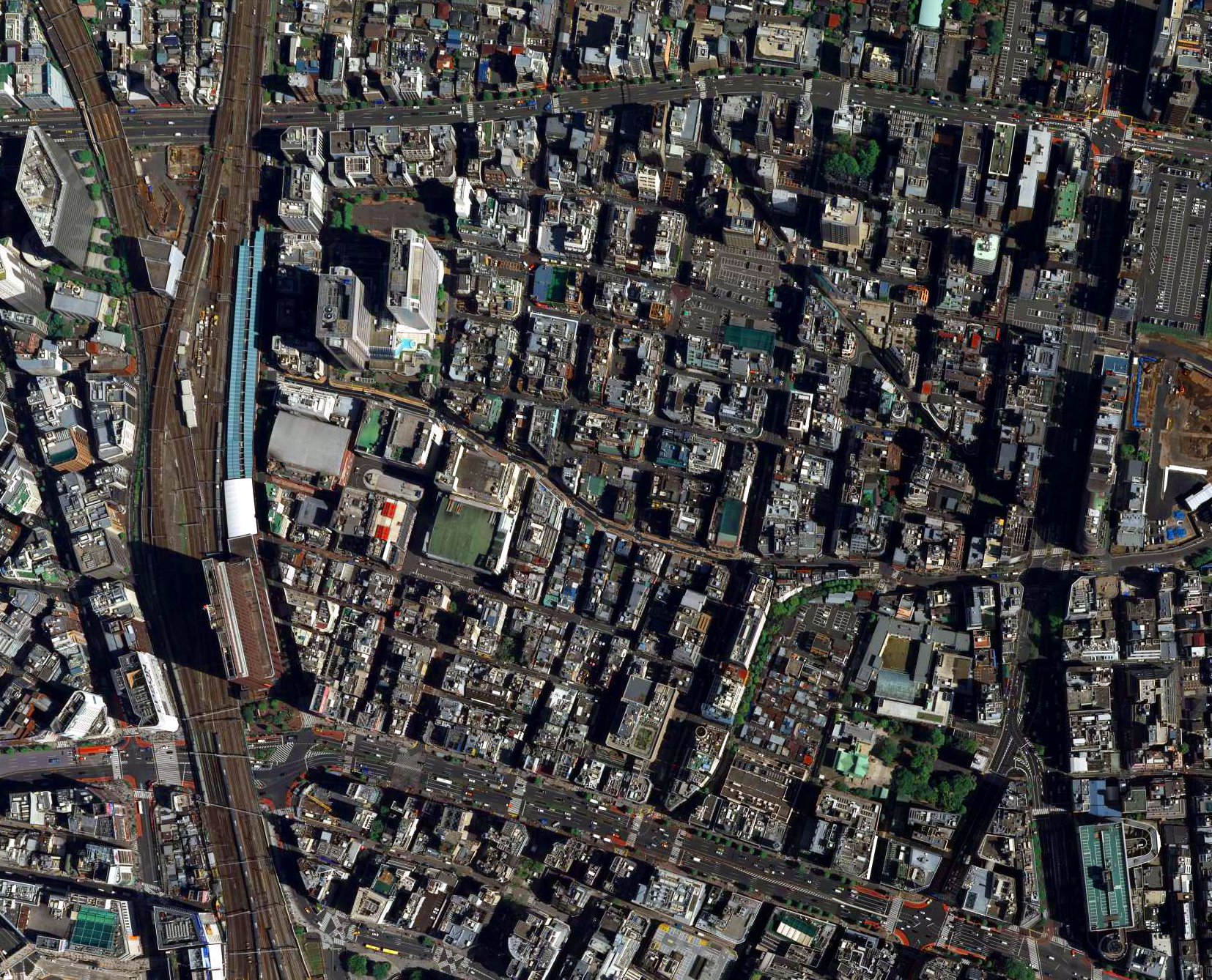
Located at 35.695N, 139.705E in Shinjuku, central Tokyo. The dense neon-lit blocks are immediately north of Shinjuku Station, the busiest rail station in the world. At night the district is recognizable by its intense lighting. Nearest major airport is Tokyo Haneda (RJTT), approximately 18 km south. Narita International (RJAA) is 70 km east. The Tokyu Kabukicho Tower is the tallest structure in the immediate area and serves as a visual reference point.