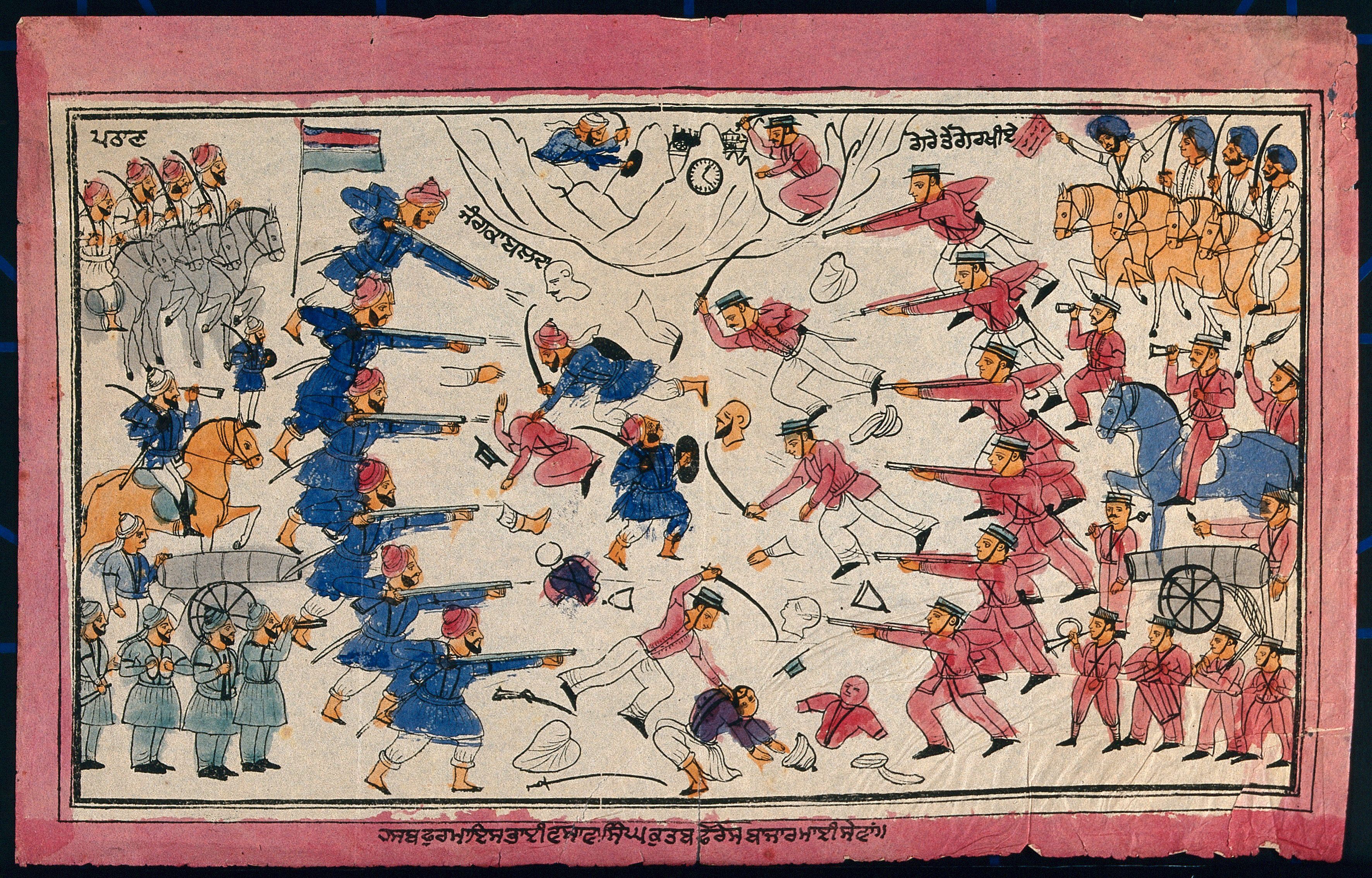
Kabul Expedition (1842)
One surgeon made it. Of the 4,500 soldiers and 12,000 camp followers who marched out of Kabul in January 1842 under a promise of safe passage, a single British army doctor and a handful of Indian sepoys reached Jalalabad alive. The rest were killed by Ghilzai tribesmen in the mountain passes, or taken prisoner, or simply froze in the Afghan winter. It was the worst military disaster in the history of the British East India Company, and it demanded a response. That response -- the Kabul Expedition of 1842, grandly termed the "Army of Retribution" -- would be less about strategy than about pride, and its final act would involve the British destroying Kabul's historic bazaar and then carrying a set of supposedly looted gates all the way back to India, only to learn they were fakes.
The Catastrophe That Started It
Britain's involvement in Afghanistan began with paranoia about Russia. In the late 1830s, convinced that Emir Dost Mohammed was courting Imperial Russia, the British invaded and installed their preferred ruler, Shah Shuja Durrani, who had been deposed thirty years earlier and was living as a pensioner in India. For a time, things held. Dost Mohammed surrendered in November 1840. But complacent British commanders drew down their forces even as resistance grew, and they stopped paying subsidies to the Ghilzai tribes who controlled the roads between Kabul and Peshawar. In November 1841, a popular uprising erupted in Kabul. The British political agent Alexander Burnes was murdered. The garrison commander, General Elphinstone, dithered while Dost Mohammed's son Akbar Khan took control of the insurrection. When the British envoy William Macnaghten tried to have Akbar Khan assassinated, Akbar Khan found out -- and killed Macnaghten at their next meeting. Elphinstone negotiated an evacuation under guaranteed safe passage. The guarantee was hollow.
Besieged on Three Fronts
With Elphinstone's column destroyed, Britain still held three garrisons in Afghanistan: Kandahar under General Nott, Ghazni on the road between Kandahar and Kabul, and Jalalabad under Brigadier Sale. Elphinstone, now a captive, sent orders for all three to evacuate under the terms of his capitulation. He would die in April, still in Afghan hands. Nott and Sale ignored the order. Colonel Palmer at Ghazni obeyed it, abandoning the defensible citadel for vulnerable city buildings -- a decision that proved fatal when Afghan forces attacked on March 6. After two and a half weeks of resistance, Palmer's troops surrendered. Sepoys who refused to convert to Islam were killed; the British officers and their families became prisoners. Meanwhile at Kandahar, Nott repelled an Afghan assault that breached the city gates, and at Peshawar, Major General George Pollock worked to rebuild the shattered morale of Bengal units demoralized by cold, inadequate clothing, and news of the slaughter.
Retreat by Way of Kabul
The new Governor General, Lord Ellenborough, wanted the whole affair finished cheaply. He ordered Pollock and Nott to retreat. But his generals and the government in London insisted on retribution, so Ellenborough found a linguistic solution: he told Nott he could retreat "by way of Kabul" -- a detour of over 300 miles in the wrong direction. Historian John William Kaye observed that no change had come over Lord Ellenborough's views, but a change had come over the meaning of certain words in the English language. Nott began his so-called retreat on August 9, advancing north with 6,000 men. He defeated 10,000 Afghans at Khelat-i-Ghilzai, captured Ghazni, and looted the city. Pollock's force, meanwhile, pushed through the passes from Jalalabad, defeating 15,000 tribesmen at Tezin. His soldiers passed through the kill zone of the January massacre, stepping over skeletons and unburied remains of Elphinstone's column. Despite orders for restraint, they burned villages and killed civilians along the way. Both armies reached Kabul in mid-September 1842.
Hostages, Bazaars, and Fake Gates
As the British closed in, the hostages' situation improved. Akbar Khan had moved them to Bamian, but when news of the Afghan defeats arrived, the captives -- thirty-five officers, fifty-one soldiers, twelve officers' wives, and twenty-two children -- negotiated their own release in exchange for payments. Pollock's cavalry found them already free. In Kabul, Pollock ordered the destruction of the city's historic covered bazaar, and while he gave instructions to spare the rest of the city, discipline collapsed. Widespread looting and destruction followed. Even the Qizilbashi -- Persian-speaking Shia residents who had opposed Akbar Khan -- and Indian merchants were ruined. Perhaps 2,000 Indian sepoys from Elphinstone's army, many missing limbs from frostbite, had survived in Kabul as beggars or enslaved people. Pollock freed some, but many were left behind when the army withdrew. As for the ornate sandalwood Somnath Gates that Ellenborough had specifically ordered recovered from Ghazni -- a whole sepoy regiment hauled them across the subcontinent, only for Hindu scholars to declare them fakes. They ended up at Agra, a monument to the expedition's absurdity.
The Lesson Nobody Learned
The British crossed the Sutlej River at Firozpur on December 23, 1842, where Ellenborough staged a grand military display. Many soldiers were too exhausted and too hollow to celebrate. Within three months, the British let Dost Mohammed return from India to resume his rule -- the same ruler they had invaded Afghanistan to depose. The First Anglo-Afghan War had cost thousands of lives, British and Indian and Afghan, achieved nothing lasting, and ended exactly where it began. British policy afterward was to avoid expeditions into Afghanistan for nearly forty years, a restraint that would itself eventually erode. From the air, the passes between Jalalabad and Kabul look almost gentle -- wide valleys between brown ridges. In January 1842, they were killing fields.
From the Air
Located at 34.53N, 69.18E in central Kabul. The expedition's key sites span the corridor from Jalalabad through the Khyber Pass to Kabul, visible as a chain of river valleys and mountain passes from altitude. Nearest airport is Kabul International Airport (OAKB). Elevation approximately 1,800 meters (5,900 feet). The Bala Hissar fortress is visible on the southern edge of the old city. The Khyber Pass lies approximately 150 km east along the road to Peshawar.