Kabwe Mine
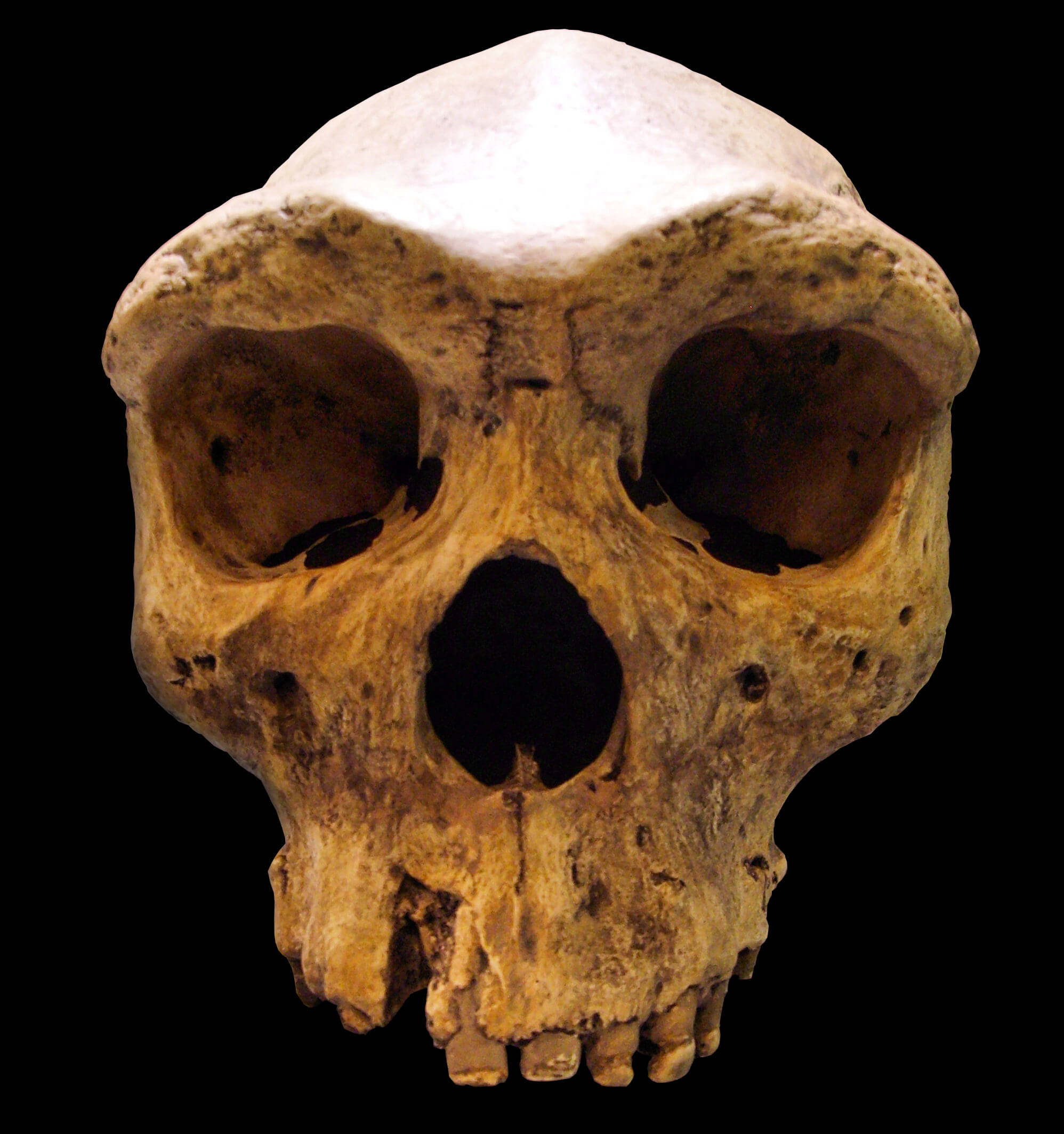
In 1921, two miners working underground at the Broken Hill mine in what was then Northern Rhodesia discovered a fossilized human skull in a cave. The bones were shipped to London, where Arthur Smith Woodward of the British Museum of Natural History named a new human ancestor: Homo rhodesiensis, later reclassified as Homo heidelbergensis. It was the first fossil of an extinct human relative ever found in Africa -- a discovery that reshaped the understanding of human evolution. The mine that produced this extraordinary find continued operating for another seven decades, extracting lead and zinc. When it finally closed in 1994, it left behind five million tons of toxic tailings and a town so contaminated that Time magazine would later name it one of the most polluted places on Earth.
The Skull and What It Means
The skull known as Kabwe 1 was found in a "bone cave" within the mine. Its heavy brow ridges and large brain case were unlike anything previously found on the African continent. Woodward's 1921 classification launched decades of debate about where this species sat on the human family tree. The skull remains at the Natural History Museum in London; the Zambian government has requested its return. Dating the fossil has proved difficult, partly because mining operations destroyed the geological context of the discovery site. Original estimates placed the skull at approximately 500,000 years old, but studies published in 2020 using uranium isotope analysis revised the date to closer to 300,000 years -- contemporaneous with the earliest known Homo sapiens fossils. That a mine yielding industrial metals also produced one of paleoanthropology's landmark specimens is an irony the site embodies completely.
Africa's Largest Lead Producer
The Kabwe mine operated from 1906 to 1994, and between 1925 and 1974 it was owned by Anglo American plc, one of the world's largest mining companies. During this period it was Africa's largest lead producer. The operation extracted lead and zinc from carbonate-hosted ore deposits, smelting the metals on site. Mining in Zambia provides over 40 percent of government revenue, and the industry that built the country's economy left Kabwe with a particular inheritance: contaminated soil, contaminated water, and contaminated air. The area was renamed from Broken Hill to Kabwe after Zambian independence in 1964, but the name change did not alter the chemistry of what the mine had deposited across the surrounding landscape. When the mine closed in 1994, approximately five million tons of tailings remained on the site, and no comprehensive cleanup was undertaken.
The Children of Kabwe
Lead poisoning affects children most severely. They are exposed through contaminated dust, and young children who put their hands in their mouths absorb it readily. The damage is neurological: impaired brain development, learning disabilities, behavioral problems. At high concentrations, lead poisoning causes seizures and death. Blood lead levels above 5 micrograms per deciliter are considered elevated by international standards; levels above 150 micrograms per deciliter are typically fatal. A 2011 World Bank-funded study found that lead contamination in soils around Kabwe communities reached 10,000 parts per million in some locations -- twenty-five times the CDC's limit of 400 ppm. Contamination was measured even on the grounds of a local health clinic. The people most harmed by the mine's legacy are those who had no connection to its profits: the families, and especially the children, who live in its shadow.
A Reckoning in Court
In October 2020, a lawsuit was filed in South Africa against Anglo American on behalf of lead poisoning victims in Kabwe. By January 2023, the case had reached the High Court of South Africa, where plaintiffs sought to certify it as a class action representing as many as 140,000 women and children. Anglo American maintains that it provided technical services at the mine and that the state-owned Zambia Consolidated Copper Mines accepted liability for contamination. The lawsuit could set a precedent for holding multinational corporations accountable for environmental damage in African courts. Meanwhile, cleanup has been minimal. In 2015, environmental groups funded soil removal and replacement at roughly 120 of the most polluted homes. By 2021, the Zambian government had provided some healthcare but had not addressed the toxic waste itself. Artisanal miners continue to work the site, and the government has licensed further reprocessing of the old tailings, releasing additional lead into communities still waiting for remediation.
From the Air
Kabwe mine is located at approximately 14.46°S, 28.44°E near the town of Kabwe in central Zambia, roughly 130 km north of Lusaka. From altitude, the mine's tailings and disturbed ground are visible as a pale, barren area adjacent to the town. Kenneth Kaunda International Airport (FLKK) in Lusaka is the nearest major airfield. The terrain is flat to gently rolling plateau at approximately 1,200 meters elevation. Visibility is generally good in the dry season.