Kaibara Domain: The Cursed Inheritance of the Oda Clan
In 1694, the lord of Uda-Matsuyama Domain in Yamato Province suffered a violent mental breakdown and murdered several of his closest retainers before taking his own life. The shogunate's punishment fell not on the dead man but on his son: Oda Nobuyasu saw his income slashed from 28,000 to 20,000 koku and was ordered to relocate to Kaibara, a forsaken patch of Tanba Province with no castle, no residence, and land ruined by years of flooding and drought. This was the second founding of Kaibara Domain -- and the beginning of a saga in which the descendants of Oda Nobunaga, Japan's most legendary warlord, would spend nearly two centuries fighting not rival clans but bankruptcy, peasant revolt, and the consequences of their own excess.
A Warlord's Brother Stakes a Claim
The first Kaibara Domain was born in 1598 when Oda Nobukane, younger brother of the great unifier Oda Nobunaga, was transferred from Ise Province to Tanba Province and granted 36,000 koku. The domain sat in what is now central Hyogo Prefecture, tucked into a valley in the rugged interior of western Honshu. Nobukane made a fateful gamble at the Battle of Sekigahara in 1600, siding with the losing Western Army against Tokugawa Ieyasu. Yet unlike most lords who backed the wrong side, he was allowed to keep his domain -- and afterward continued serving Toyotomi Hideyori at Osaka Castle. He died in 1614, just before the Siege of Osaka tore apart the last remnants of Toyotomi power. His son and grandson ruled after him, but when the third lord, Oda Nobukatsu, died without an heir in 1650, the shogunate abolished the domain entirely and absorbed it as direct government land.
A Grim Inheritance
When Oda Nobuyasu arrived at Kaibara in 1694, inheriting his father's disgrace, he found wasteland. The domain had been tenryo -- shogunate-administered land -- for over four decades, and no one had maintained the buildings or managed the floods. There was no castle, no administrative residence. Permission to construct a jin'ya, a modest fortified office, was not granted until 1713, nineteen years after the transfer. The domain was so impoverished that by 1696, barely two years into the new lordship, officials had to petition the shogunate for tax relief. Financial crisis became the defining feature of Kaibara. Successive lords dismissed retainers, slashed stipends, and borrowed heavily just to survive. The land itself seemed cursed -- too prone to flooding and drought to ever produce the wealth that 20,000 koku of rice revenue theoretically promised.
Mistresses, Revolts, and Reform
The fifth lord, Oda Nobumori, made a bad situation worse. His lavish spending on his mistress and his reckless meddling in political affairs pushed the domain's already-strained finances past the breaking point, sparking an uprising among his own retainers. Peasant revolts followed in 1824 and 1833, fueled by inflation and impossible tax burdens. It was not until the eighth lord, Oda Nobunori, that the tide began to turn. Nobunori imposed strict fiscal austerity and invested in education, constructing a han school to train the domain's samurai class. His successor, Oda Nobutami, continued these reforms and found himself drawn to the growing sonnno joi movement -- the call to revere the emperor and expel foreign influence. Kaibara became an early supporter of the imperial cause, and when the old order crumbled in the Meiji Restoration, the final lord, Oda Nobuchika, became an imperial governor before relocating to Tokyo. In 1871, Kaibara Domain became Kaibara Prefecture, and the feudal era was over.
What Remains
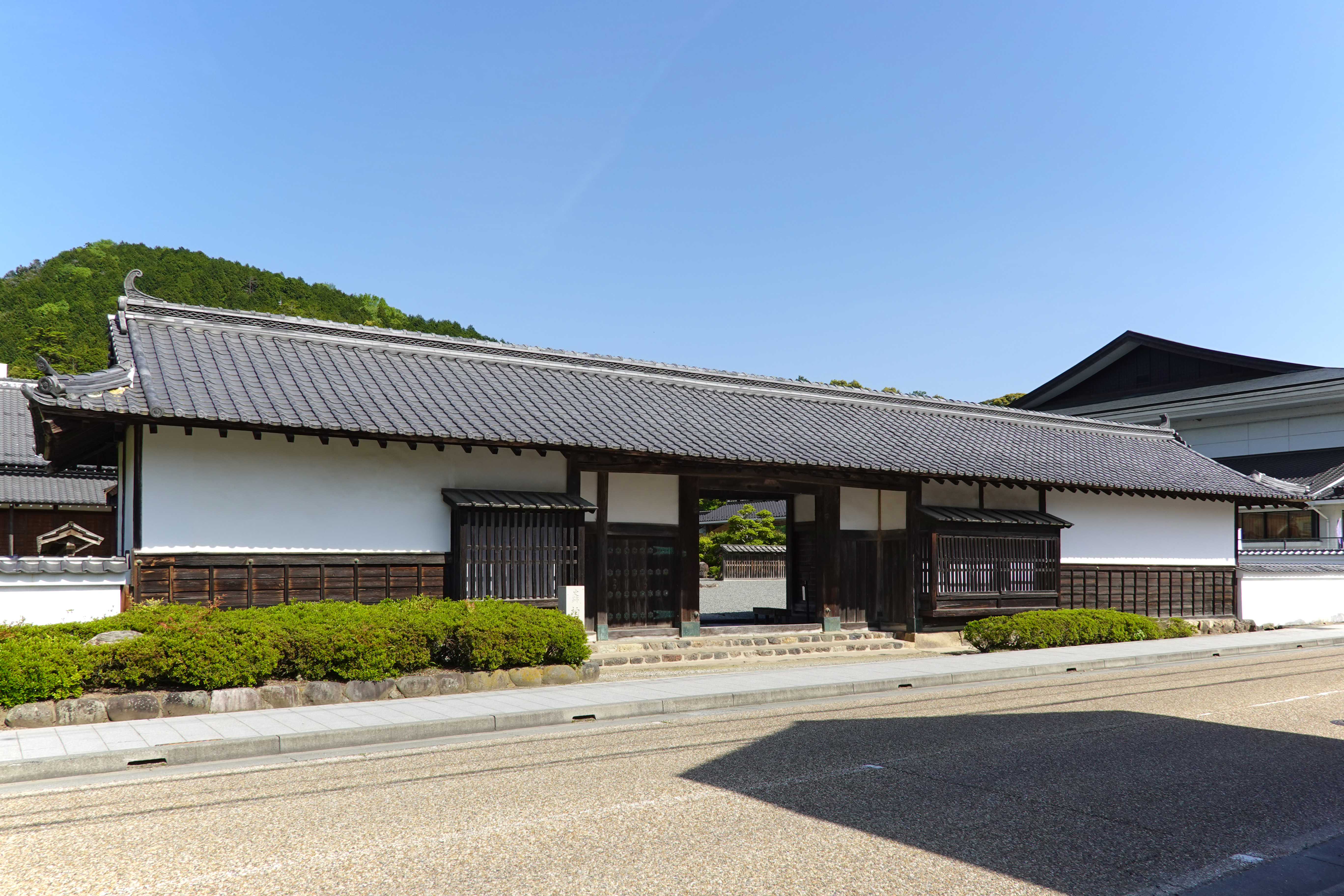
The jin'ya that took nineteen years to build and survived only a century was largely dismantled after the Meiji Restoration. Today, roughly one-fifth of the original structure stands, and most of the site is occupied by an elementary school -- children learning where samurai once administered a struggling domain. The front gate, a nagayamon dating from the original 1714 construction, still survives. The site was designated a National Historic Site in 1971. The domain's legacy lives on in two annual festivals. The Oda Festival features a procession of over 100 participants in samurai armor, marching through Kaibara's streets to the beat of war drums and the call of conch shells. The Tamba Kaibara Hina Meguri fills the town with colorful Hina dolls, including spectacular hanging displays handmade by local women -- dolls that once sat in closets, now celebrating the history of a place that refused to be forgotten.
From the Air
Located at 35.13°N, 135.08°E in the Tanba region of central Hyogo Prefecture, Japan. The site sits in a valley surrounded by forested mountains in the interior of western Honshu. From altitude, the town of Kaibara is visible as a small settlement along the Kako River valley. The nearest significant airport is Kobe Airport (RJBE), approximately 60 km to the south. Osaka Itami Airport (RJOO) is roughly 55 km to the southeast. Best viewed at 3,000-5,000 feet AGL to appreciate the valley setting and the mountainous terrain of Tanba Province that made this domain so strategically isolated.