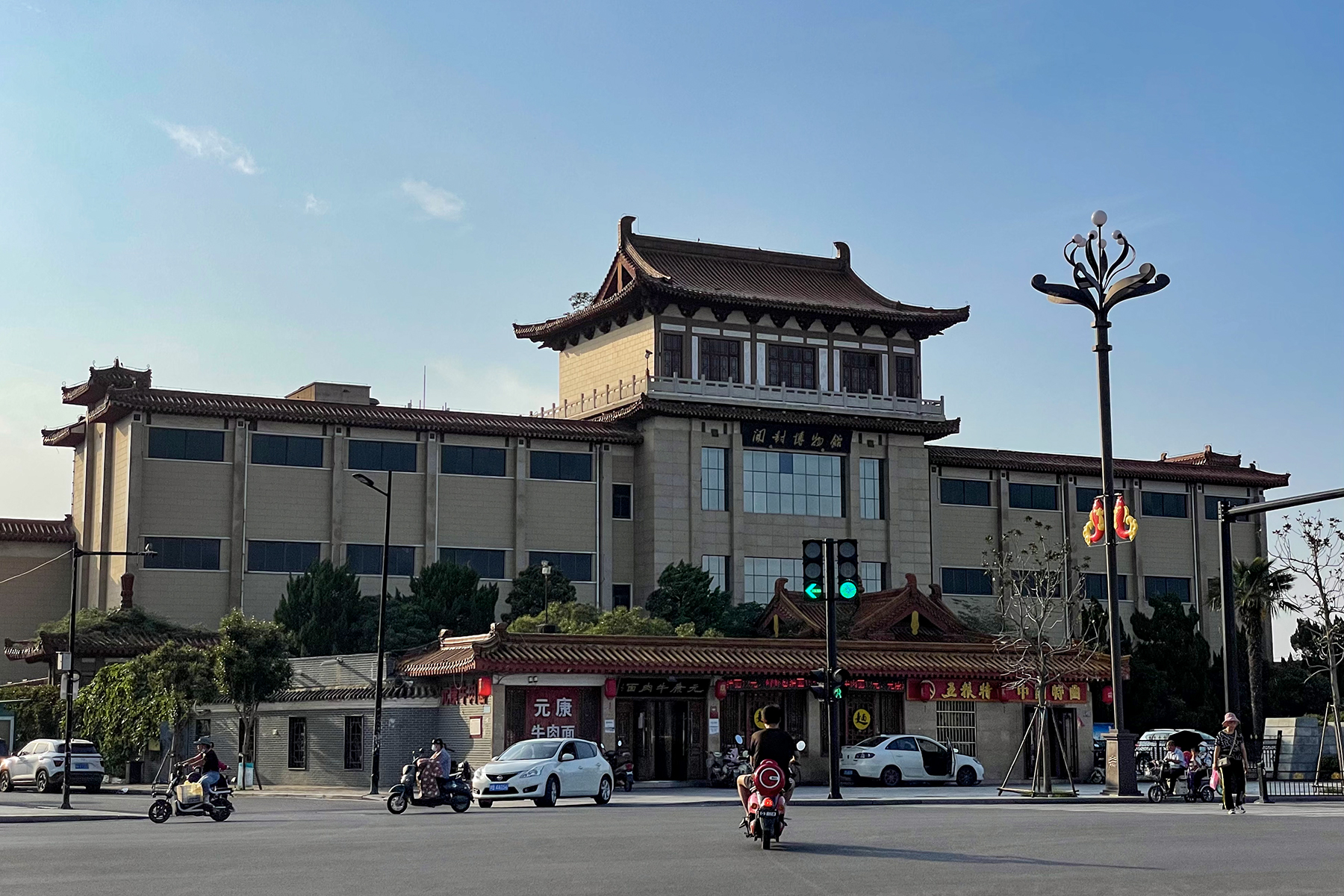
Kaifeng Museum
Seven dynasties chose Kaifeng as their capital. That kind of history does not sit quietly in the ground -- it accumulates, layer upon layer, each era burying the last beneath silt from the Yellow River's floods. Kaifeng Museum exists to surface those layers. Established in 1962 with artifacts inherited from the Henan Museum when it relocated to Zhengzhou, the collection now holds more than 80,000 objects spanning bronze, ceramic, calligraphy, painting, and stone carving traditions that trace this city's arc from imperial splendor through catastrophe and rebuilding.
Born from a Departure
When the Henan Museum moved its headquarters from Kaifeng to the provincial capital Zhengzhou, it left behind both staff and a portion of its holdings. From this inheritance, Kaifeng Museum took shape in March 1962, focused specifically on social history. For two decades it operated from the old museum premises before preparations began in 1984 for a purpose-built structure. The new building at No. 26 Yingbin Road opened on China's National Day in 1988, positioned beside Bao Gong Lake. Its main building was designed in the shape of the Chinese character for mountain -- shan -- with a traditional hipped-gable roof covered in yellow glazed tiles. The central hall rose four floors, flanked by exhibition wings of two and three stories, totaling thirteen rooms across more than 10,000 square meters of floor space.
A Collection Across Millennia
The museum's strength lies in the breadth of its holdings. Warring States bronze ding vessels sit alongside celadon chamber pots from the Southern and Northern Dynasties period. Jade dragon ornaments carved more than two thousand years ago share gallery space with provincial banknotes issued during the Republic era. A copy of Emperor Huizong's Painting of Auspicious Cranes evokes the artistic heights of the Song dynasty, when Kaifeng -- then called Bianliang -- was the largest and most cosmopolitan city on Earth. Stone-carving corridors of 500 square meters run along the north and south sides of the old building, providing space for works too large or too heavy for conventional display. In 2008, the museum earned designation as a National second-grade institution.
A New Home by the Lake
By 2014, the old Yingbin Road building could no longer accommodate the growing collection or the standards expected of a modern museum. Construction began on a new facility along Zhengkai Avenue in Kaifeng New Area, east of Zhongyi Lake. The old museum closed its doors on April 21, 2016, and the collection migrated to the completed structure nearby. The new building provided expanded exhibition halls, modern climate control for fragile artifacts, and improved accessibility for the growing number of visitors drawn to Kaifeng's heritage. For a city that has been buried by floods, conquered by invaders, and rebuilt more times than most places have existed, the museum serves as both archive and argument -- proof that what Kaifeng has endured is worth remembering.
From the Air
Located at 34.80N, 114.25E in central Kaifeng, Henan province. The museum sits in Kaifeng New Area near Zhongyi Lake. The nearest major airport is Zhengzhou Xinzheng International (ZHCC/CGO), about 80 km west. From altitude, Kaifeng's grid of lakes and parks -- including Bao Gong Lake and Dragon Pavilion -- are visible landmarks in the flat Yellow River plain.