Kakuda Space Center
Twice a year, the residents of Kakuda -- a small city of rice paddies and persimmon orchards in southern Miyagi Prefecture -- open their calendars to something extraordinary. JAXA's Kakuda Space Center throws open its gates, and locals stroll past liquid hydrogen test stands and cryogenic fuel systems as casually as visiting a neighborhood festival. It is a peculiarly Japanese juxtaposition: the rural and the cosmic, separated by nothing more than a chain-link fence. Behind that fence, engineers have been perfecting the fire that lifts satellites, space probes, and astronauts into orbit since 1965.
From Branch Lab to Rocket Forge
The story begins in 1965, when Japan's National Aerospace Laboratory established the Kakuda Branch Laboratory on a stretch of land far enough from population centers to muffle the roar of rocket engine tests. The location was deliberate -- nestled in the Tohoku countryside, the site offered both isolation and access to the scientific talent flowing from nearby Sendai's universities. In 1978, the National Space Development Agency constructed the Kakuda Rocket Development Center on the same campus, and the facility's mission sharpened: develop and refine liquid-fuel rocket engines capable of competing on the world stage. When Japan's three separate space agencies merged to form JAXA in October 2003, the center was formally renamed the Kakuda Space Propulsion Technology Research Center in 2005, but everyone still calls it Kakuda.
Engines That Reached Orbit
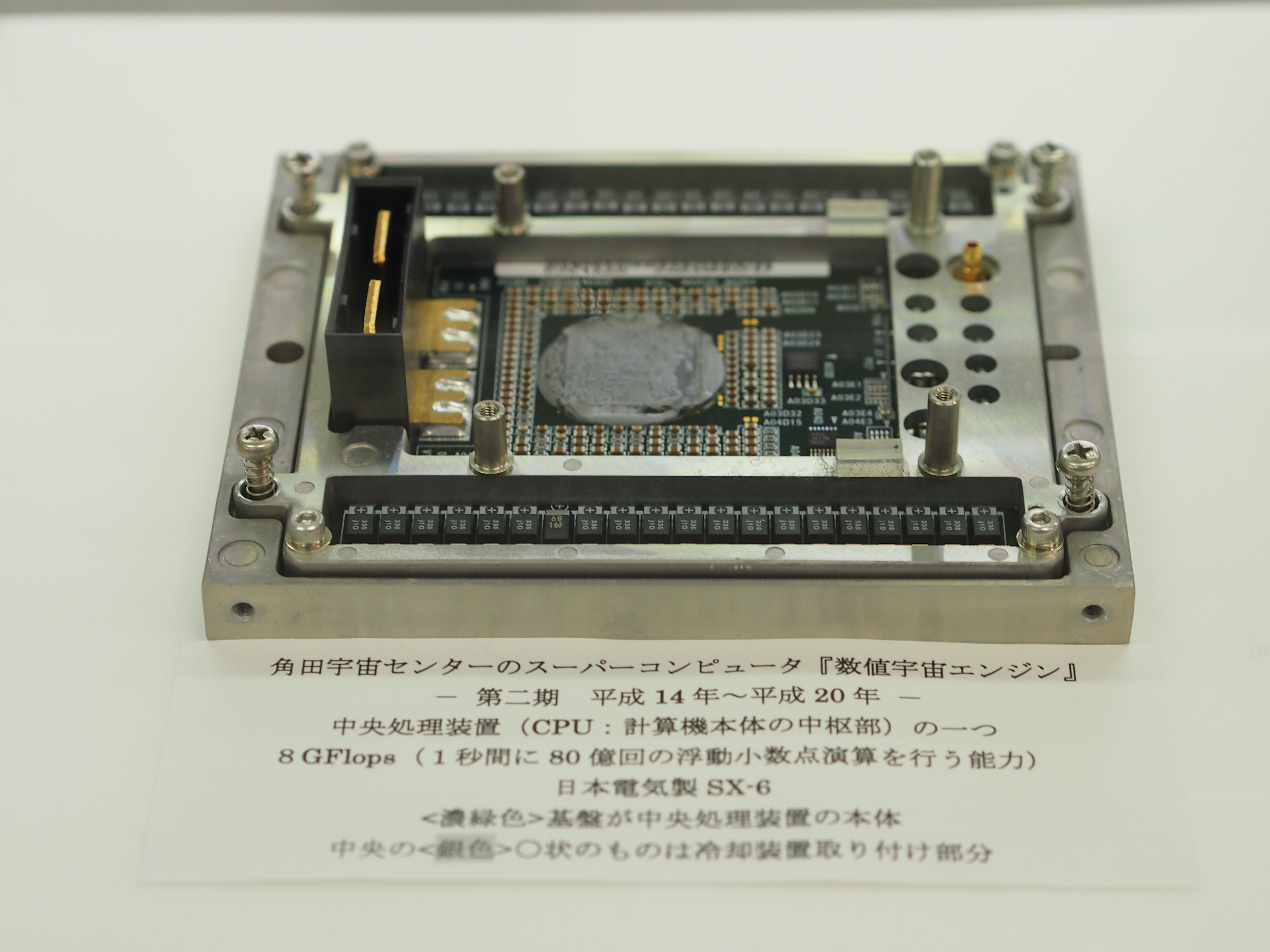
Kakuda's signature achievements are written in fire. The LE-5 engine, a liquid hydrogen and liquid oxygen upper-stage powerplant, was developed here and became the heart of Japan's H-I rocket program. Its successors, the LE-5A and LE-5B, powered the second stages of the H-II and H-IIA launch vehicles, delivering 137 kilonewtons of thrust with the ability to restart in the vacuum of space. The first-stage LE-7 and its improved variant, the LE-7A, were also born at Kakuda -- staged combustion cycle engines producing 1,098 kilonewtons of thrust that lifted the H-IIA through 50 successful missions before the vehicle's retirement in June 2025. Every rumble from Kakuda's test stands represented months of engineering refinement, each firing measured in fractions of seconds and degrees of temperature.
A Campus Built for Extremes
The facilities read like a catalog of controlled violence. A liquid hydrogen rocket engine test facility where fuel burns at temperatures exceeding 3,000 degrees Celsius. A high-pressure liquid oxygen turbo pump test stand that subjects components to forces that would shred ordinary metal. A rocket engine high-altitude performance test facility that simulates the vacuum of space at ground level. A ramjet engine test facility for air-breathing propulsion research. A high-temperature shock tunnel for hypersonic flow studies. From the late 1980s, Kakuda also pushed into scramjet technology -- engines designed to breathe air at speeds above Mach 5 -- and advanced materials research for reusable space engines, work that continues to inform Japan's next-generation launch vehicle programs.
The Quiet Side of the Space Race
Unlike the spectacle of a launch pad, a rocket engine test center operates in relative anonymity. There are no countdown clocks broadcast on television, no crowds gathered on beaches to watch. The work is iterative, painstaking, and largely invisible -- a single engine component might be tested hundreds of times before it qualifies for flight. Yet Kakuda has quietly become one of Asia's most important propulsion research hubs. In recent years, JAXA established the Kakuda Public and Private Co-creation Propulsion System Development Center, known as K-CROP, opening the facility's test infrastructure to private-sector companies developing their own liquid rocket engines. It is a recognition that the future of spaceflight will not be built by governments alone, and that Kakuda's test stands -- seasoned by decades of controlled detonations -- are too valuable to reserve for a single agency.
From the Air
Located at 38.038N, 140.761E in the flatlands south of Sendai, Miyagi Prefecture. The facility is approximately 20 nautical miles south-southwest of Sendai Airport (RJSS). From cruising altitude, look for the industrial campus amid the agricultural landscape of the Abukuma River valley. Kakuda Airfield lies nearby. The city of Sendai and its coastal plain are visible to the north-northeast. Best viewed at 3,000-5,000 feet for facility detail, though the surrounding agricultural grid pattern is distinctive from higher altitudes.