Kala Art Institute
It started with one etching press and a hot plate. In 1974, two printmakers who had studied together at Atelier 17 in Paris - the legendary workshop where Krishna Reddy and Stanley William Hayter taught the art of viscosity printing - set up shop on Wilmot Street in San Francisco's Japantown. Archana Horsting and Yuzo Nakano called their venture Kala Art Institute, and their ambition far exceeded their equipment. They wanted to build an international community arts space where printmaking, photography, and book arts could thrive outside the university system. Half a century later, Kala operates from two locations in Berkeley, serves between 25,000 and 35,000 people a year, and has become one of the Bay Area's most enduring incubators of artistic practice.
The Atelier 17 Connection
Kala's roots reach back to one of the twentieth century's most influential printmaking workshops. Atelier 17, founded by the British artist Stanley William Hayter in Paris in 1927, became a crucible for experimental printmaking techniques. When Hayter relocated the workshop to New York during World War II, it attracted artists including Jackson Pollock, Mark Rothko, and Louise Bourgeois. Horsting and Nakano studied there under Hayter and Krishna Reddy, the Indian-born artist who pioneered simultaneous color printing from a single plate. The techniques they absorbed - layered intaglio, viscosity printing, the meticulous craft of pulling an image from an etched surface - became the foundation of what they would build in California. They carried the Atelier 17 ethos across the country and planted it in the Bay Area.
From Japantown to the Ketchup Factory
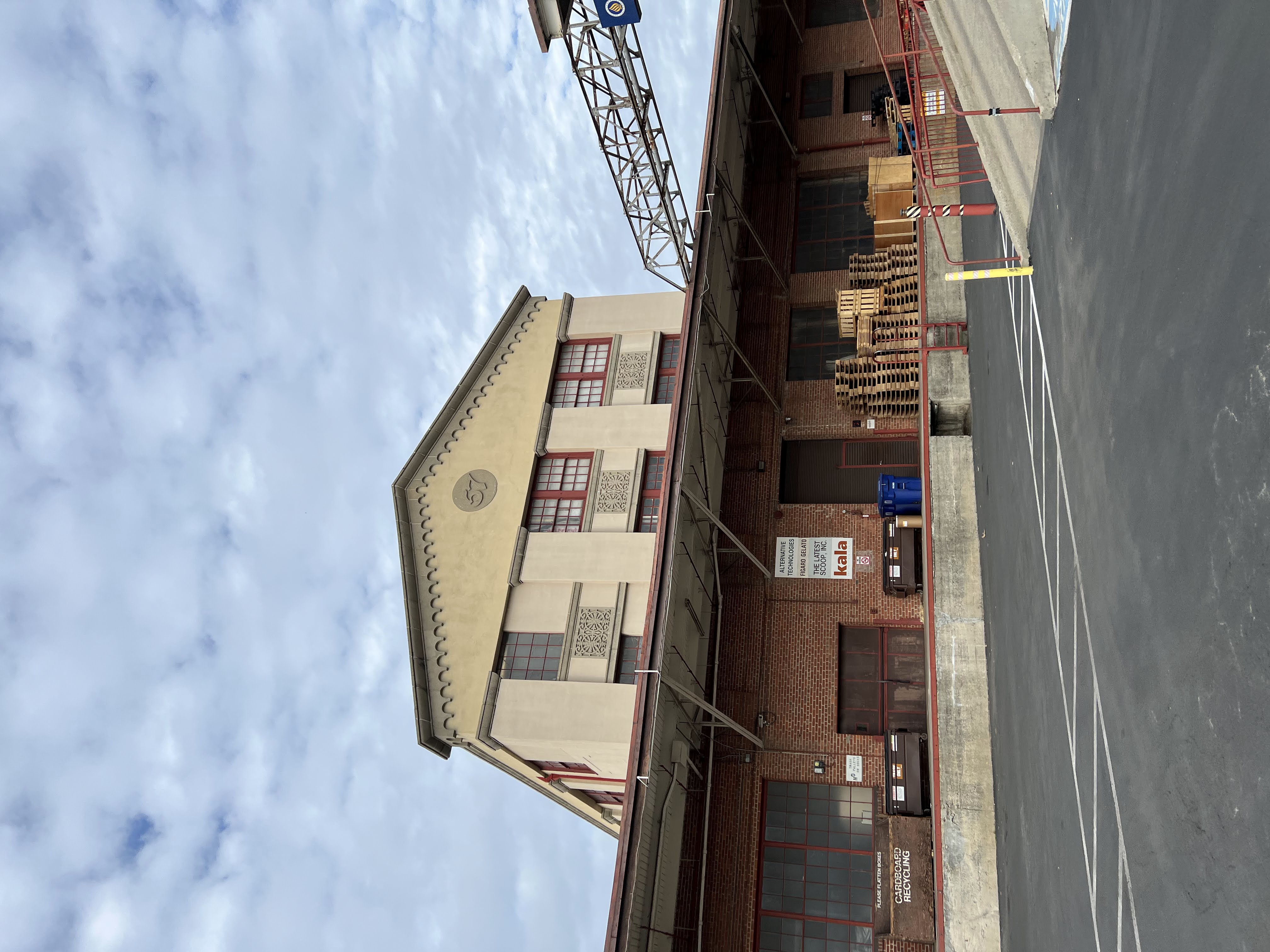
The move from San Francisco to Berkeley transformed Kala from a scrappy studio into a genuine institution. The institute eventually settled into a converted ketchup factory - an industrial building with the high ceilings and robust floors that heavy presses demand. The space offered room for multiple printmaking stations, darkrooms for photography, and dedicated areas for book arts including letterpress and bookbinding. In 2009, Kala expanded further, opening a 2,200-square-foot gallery at 2990 San Pablo Avenue. The gallery gave the institute something it had lacked: a public-facing space where the work produced in the studios could be exhibited, discussed, and sold. For a nonprofit operating in one of the most expensive real estate markets in the country, each square foot was hard-won.
The Artists Who Came Through
A roster of Kala's associated artists reads like a cross-section of Bay Area art's most inventive minds. Squeak Carnwath, known for her layered paintings that merge text, pattern, and color, worked at Kala. So did Peter Voulkos, the ceramicist who shattered the boundary between craft and fine art in the 1950s and 1960s. William T. Wiley brought his wry, conceptual approach to printmaking. Bella Feldman, a sculptor who worked in welded steel, and Sonya Rapoport, a pioneer of digital and interactive art, both found a creative home in the institute's studios. In 2009, the Oakland Museum of California recognized this legacy with an exhibition called "Evolution of Print: Artists of Kala," displayed at Oakland International Airport, bringing the institute's work to travelers who might never set foot in a Berkeley gallery.
Ink, Paper, Community
What distinguishes Kala from a typical art school is its layered model. It functions simultaneously as a community arts center offering classes in etching, letterpress, and bookbinding; an artist residency program that brings creators from around the world to work in its studios; and a gallery that exhibits and promotes the resulting art. The classes serve beginners who have never touched an etching needle alongside experienced printmakers who need access to professional-grade equipment. The residency program provides studio space, community, and the kind of sustained creative time that is increasingly difficult for artists to find. Together, these programs create an ecosystem where emerging artists learn from established ones, where process is valued as much as product, and where the ancient craft of pulling an image from a plate remains vibrantly alive.
A Half-Century of Pressing On
Printmaking has never been a fashionable art form. It lacks the scale of painting, the immediacy of photography, the spectacle of installation art. The tools are heavy, the chemicals are harsh, and the learning curve is steep. To sustain a nonprofit printmaking institute for fifty years in a city where rents relentlessly climb requires a particular kind of stubbornness - the same stubbornness, perhaps, that makes a printmaker pull a hundred impressions to get one right. Kala Art Institute endures because Horsting and Nakano understood something fundamental: artists need places to work, and those places need to be protected. In a region that has repeatedly reinvented itself around technology, Kala remains committed to the decidedly analog proposition that pressing ink into paper is a form of knowledge worth preserving.
From the Air
Kala Art Institute is located at 37.8532N, 122.2877W in Berkeley, California, along the San Pablo Avenue commercial corridor. The building is not a distinct aerial landmark, but San Pablo Avenue runs as a clear diagonal through the Berkeley-Oakland grid. Nearest airports: Oakland International (KOAK) approximately 10 nm south, and Buchanan Field (KCCR) roughly 16 nm northeast. The UC Berkeley campus is visible approximately 1 nm to the east-southeast. Bay Area conditions are typically clear, with summer marine fog possible from the west.