Kalasha Valleys
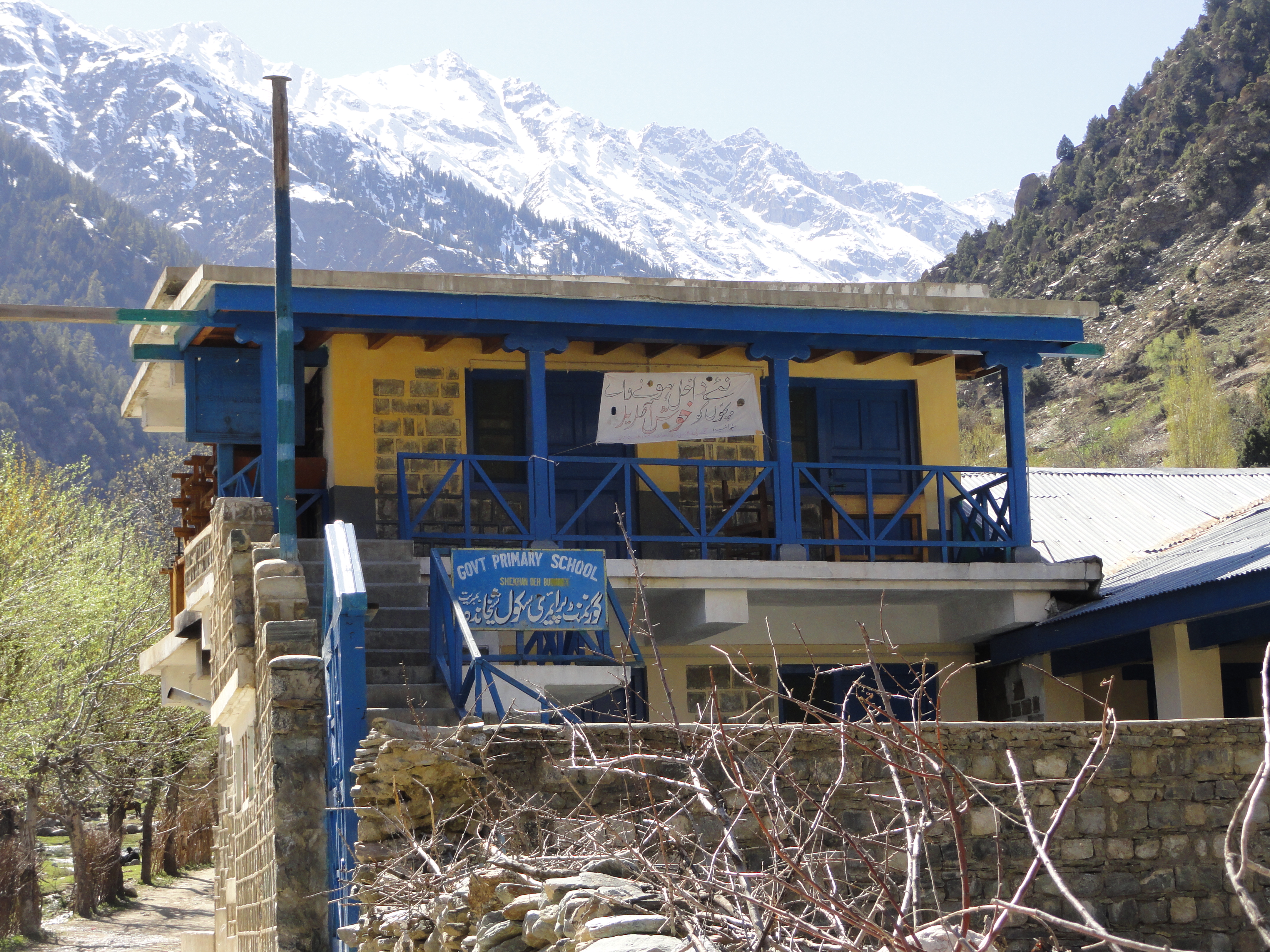
The road from Chitral narrows to a track, then to a ledge. On one side, the Hindu Kush rises in walls of grey limestone. On the other, a river churns through a gorge far below. After about 40 kilometers of this, the mountains open just enough to reveal something unexpected: walnut orchards, terraced fields, and wooden houses with carved balconies clustered along the valley floor. This is Bumburet, the largest of three valleys -- Bumburet, Rumbur, and Birir -- that together form the homeland of the Kalasha people. Numbering roughly 3,000 to 4,000, they are Pakistan's smallest ethnoreligious group, practitioners of an ancient animist faith in a country of over 220 million Muslims. They have lived in these valleys for centuries, and the valleys have kept them.
Gods in the Gorges
Kalasha religion defies easy categorization. Scholars describe it as a surviving form of ancient Indo-Iranian belief, with elements that echo the Vedic traditions of pre-Islamic South Asia. The Kalasha worship multiple deities and nature spirits, offer animal sacrifices at outdoor altars, and believe that the natural world -- rivers, mountains, juniper forests -- is alive with spiritual power. Their sacred spaces are not mosques or temples but open-air shrines marked by carved wooden effigies of ancestors. The religion has no written scripture; it passes through oral tradition, through songs and stories shared at festivals and around hearth fires. In a region where conversion to Islam has reshaped nearly every neighboring community, the Kalasha faith persists -- diminished but unbroken, sustained by geography as much as by conviction.
Three Festivals, Three Seasons
The Kalasha calendar turns on three major festivals. Zhoshi, held from May 12 to 16, celebrates the arrival of spring with dancing, singing, and offerings of thanks for new growth. Uchaw, in late August, marks the ripening of grapes and the season of abundance -- cheese is made, wine is pressed from mulberries, and the valleys fill with the sounds of celebration. The grandest is Chawmos, a winter festival stretching from December 7 to 22 that welcomes the new year. During Chawmos, the valleys are deep in snow, and the Kalasha gather for feasting, dancing, and the drinking of mulberry wine that is central to their communal life. These festivals are open to outsiders, and they draw visitors from across Pakistan and beyond. But they are not performances staged for tourists. They are the living pulse of a community that measures time not by the Gregorian calendar but by the rhythms of planting, harvest, and snowfall.
Valleys as Fortress
Geography explains the Kalasha's survival. The three valleys sit at elevations between 1,600 and 2,300 meters, tucked into the southern gorges of the Hindu Kush along the Afghan border. To the west, passes rise to nearly 4,500 meters before dropping into Afghanistan's Nuristan Province, whose people once shared the Kalasha faith before converting to Islam in the late 19th century. The valleys are narrow, steep, and difficult to reach -- qualities that discouraged both armies and missionaries. Even today, the road from Chitral is unpaved, and jeeps navigate switchbacks with the mountains on one side and a sheer drop to the river on the other. This isolation has been the Kalasha's greatest protection, though it has also limited economic development. Tourism now forms a significant part of the local economy, and the tension between welcoming visitors and preserving traditions is one the community navigates daily.
A Culture Under Pressure
The Kalasha were once far more numerous. Over the past century, their population has declined as conversions to Islam, intermarriage, and emigration have steadily reduced their numbers. Some conversions have been voluntary; others have come under social and economic pressure from the surrounding Muslim majority. In the northern reaches of Rumbur valley, Afghan-origin Kalasha who converted to Islam have settled on traditionally Kalasha lands, creating friction within the community. The Pakistani Taliban have at times threatened the valleys, and the broader security situation in Khyber-Pakhtunkhwa has complicated life for this small minority. Yet the Kalasha continue. Young people learn the old songs. Women wear the distinctive headdresses -- elaborate arrangements of cowrie shells, beads, and bright fabric -- that mark Kalasha identity. The language, Kalasha-mun, an Indo-Aryan tongue closely related to the neighboring Khowar language, is still spoken in homes and at festivals. Survival, for the Kalasha, is not a metaphor. It is the daily work of a people determined to remain who they are.
From the Air
Located at 35.70N, 71.69E in the Hindu Kush mountains of northern Pakistan, near the Afghan border. The three valleys -- Bumburet, Rumbur, and Birir -- are narrow gorges running roughly north-south at 1,600-2,300m elevation, surrounded by peaks reaching 4,500m+. Nearest airport: Chitral Airport (OPCH) approximately 40 km northeast. The valleys are best spotted by following the river gorges south from Chitral. Terrain is extremely mountainous; maintain safe altitude above 6,000 feet AGL minimum.