Kalashnikov Concern
In 1807, the arsenal produced seven long guns, five pistols, and six backswords. Two centuries later, the factory on the same stretch of the Izh River produces 95 percent of all small arms in Russia and exports to more than 27 countries. The Kalashnikov Concern — known until 2013 as the Izhevsk Machine-Building Plant — is not just a weapons manufacturer. It is the industrial heartbeat of Izhevsk, a city in the Udmurt Republic whose identity has been inseparable from firearms production since Emperor Alexander I signed the decree that brought the arsenal into being.
Iron, River, and Imperial Decree
The story begins with geography. Izhevsk already had ironworks, and chief mining engineer Andrey Deryabin recognized that building an arms factory on the bank of the Izh River would solve the problem of raw material supply in one stroke. By imperial decree on June 10, 1807, the arsenal was established, and Deryabin, along with architect Semyon Dudin, drew up a master plan for its development. Workers came from the local population — Russian and Udmurt agricultural laborers who were required to settle at the arsenal and work there. Neighboring villages had to supply carts, horses, and harnesses. Deryabin also brought in foreign experts to train Russian craftsmen. Production began immediately, even as construction continued. Within a few years, the factory was arming Russian soldiers fighting Napoleon. By 1814, output had reached 10,000 guns and 2,500 backswords per year, and by 1830 the arsenal was producing 25,000 long guns annually.
The Name That Changed Everything
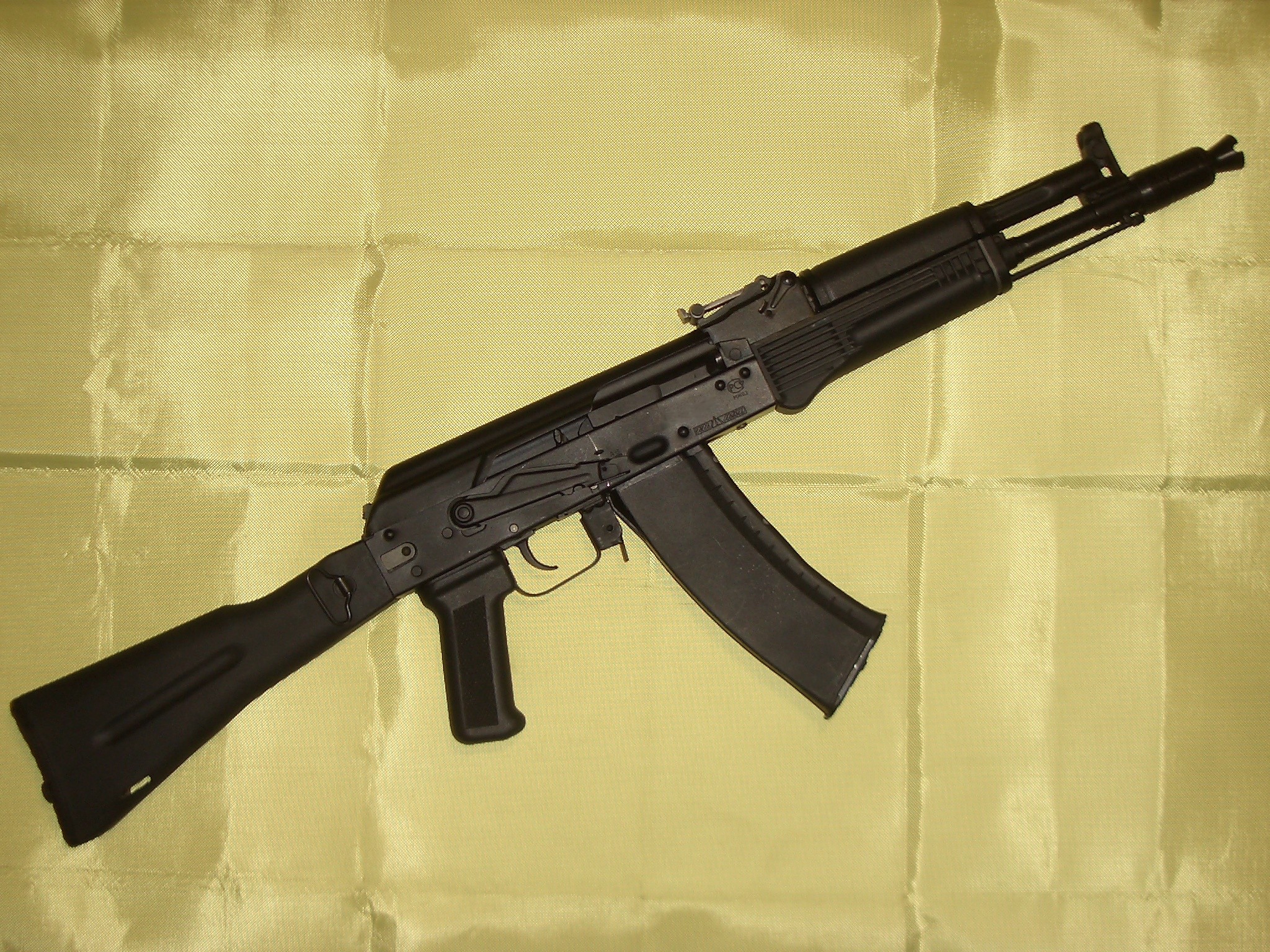
The factory's fame rests on a single surname. Mikhail Kalashnikov's AK-47, adopted by the Soviet Army in 1949, became the most widely produced and recognized firearm in human history. But Kalashnikov did not stop there. The AKM, the AK-74, the RPK light machine gun, and the PK belt-fed machine gun all followed, each designed at the Izhevsk plant. Fellow designer Yevgeny Dragunov added to the factory's reputation with his SVD sniper rifle in 1963, a semi-automatic weapon that became the Soviet squad's precision tool and launched a global trend in sniper rifle design. The plant's product catalog reads like a textbook of Cold War infantry weapons: the SKS carbine, the Makarov PM pistol, the Saiga-12 shotgun, the Vityaz-SN and PP-19 Bizon submachine guns. Most trace their lineage back to the AK platform — reliable, cheap to manufacture, and simple enough that a conscript could field-strip one in the dark.
Sanctions, Strategy, and Reinvention
In July 2014, the Kalashnikov Concern was sanctioned by the United States and the European Union following Russia's annexation of Crimea. The timing was painful: Europe and America had been the concern's largest markets for civilian firearms. Forced to pivot, Kalashnikov opened five new markets and began selling civilian products to ten additional countries. The concern also launched its "Strategy 2020" plan, emphasizing technical modernization and reduced costs. In 2017, the state-owned Rostec corporation transferred majority ownership to private investors, retaining only a 26 percent stake. The company diversified beyond firearms. In 2018, it unveiled the CV-1 electric car prototype, styled after the Soviet-era IZh 2125 "Kombi," claiming a range of 350 kilometers on a single charge. A four-door electric quadricycle, the UV-4, followed. By 2024, Kalashnikov was producing drones, guided artillery projectiles, remote-controlled weapon stations, and military robots.
An Arsenal City in the Twenty-First Century
Today the Kalashnikov Concern operates as a holding company with headquarters in both Izhevsk and Moscow's Khamovniki District. It encompasses two major subsidiaries: the original Kalashnikov Concern (formerly Izhmash), which produces combat weapons, aircraft guns, and precision munitions, and the Izhevsk Mechanical Plant (Izhmekh), which focuses on civil and service weapons, power tools, and industrial equipment. Three brand divisions divide the output: Kalashnikov for military products, Baikal for hunting firearms, and Izhmash for sporting weapons. Production has surged in recent years. The concern reported a 40 percent increase in weapons production in 2022, a ten-year record in deliveries in early 2023, and completion of the 2024 state order for small arms ahead of schedule. In January 2026, it began supplying the Russian Army with electric motorcycles and scooters — a far cry from the seven muskets Deryabin's workers turned out in 1807, but built on the same riverbank.
From the Air
The Kalashnikov Concern's main manufacturing complex is located in Izhevsk at approximately 56.84°N, 53.18°E, along the Izh River in the Udmurt Republic, Russia. Izhevsk Airport (USII) is the nearest airfield. The factory complex is a prominent feature of the city's industrial landscape, visible from moderate altitudes as a large riverside facility. Izhevsk itself is a city of approximately 650,000 people situated between the Volga basin and the Ural Mountains.