Kalaupapa National Historical Park
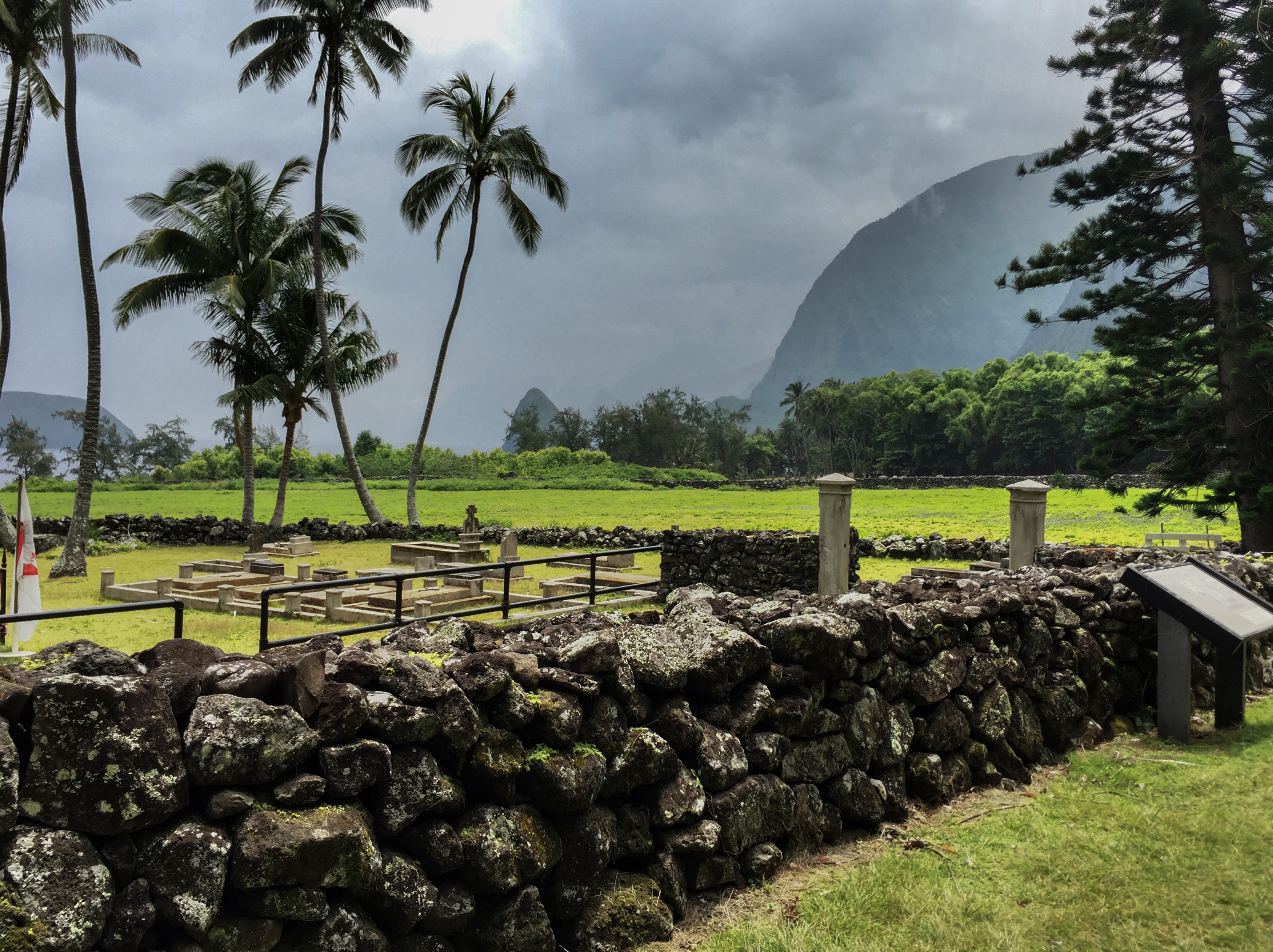
Kalaupapa is a place of profound sorrow and extraordinary grace. This isolated peninsula on Molokai's north shore, walled by 1,700-foot sea cliffs and surrounded by treacherous ocean, served as Hawaii's leprosy colony from 1866 to 1969 - a century during which over 8,000 people were torn from their families and exiled here to die. Most arrived by boat, never to leave, their names and identities dissolved by a disease that terrified the world and a policy that treated its victims as less than human. Yet within this prison emerged communities of resilience and care. Father Damien, a Belgian priest who arrived in 1873, transformed both the physical conditions and the world's awareness of the settlement, eventually contracting the disease himself and dying among his people in 1889. Today a handful of elderly survivors remain, choosing to live out their lives in the place that was forced upon them but became home. Their memories, protected by the National Park Service, bear witness to suffering, faith, and the human capacity to create meaning in the most desolate circumstances.
The Disease and the Fear
Hansen's disease - known historically as leprosy - had existed for millennia, but reached epidemic proportions in Hawaii during the 1860s, apparently introduced by Chinese laborers. The disease attacks nerves and skin, causing disfigurement that made its victims objects of horror in cultures worldwide. With no cure, no treatment, and no understanding of how the disease spread, authorities panicked. King Kamehameha V signed the Act to Prevent the Spread of Leprosy in 1865, establishing the policy of forced segregation that would continue for over a century. The Kalaupapa Peninsula - accessible only by sea or a precipitous mule trail down the cliffs - provided natural isolation. The first patients were essentially dumped there with minimal supplies and left to survive or die. Many died quickly; others built communities in the face of abandonment.
Father Damien
Jozef De Veuster, a Belgian Catholic priest who took the name Damien, arrived at Kalaupapa in 1873 and never left. What he found was a community in despair: inadequate housing, minimal medical care, social structures broken by the disease's progression. Damien built churches, organized construction of proper houses, dressed wounds, dug graves, and treated his parishioners as full human beings when the world had declared them otherwise. He became their advocate, their carpenter, their nurse, their priest. In 1884, he announced his own diagnosis with the words 'We lepers' - a phrase that made headlines worldwide and focused attention on conditions at the settlement. He died in 1889 at age 49, his body ravaged by the disease. Pope Benedict XVI canonized him as Saint Damien in 2009. His original church, St. Philomena, still stands at Kalawao.
A Century of Exile
The policy of forced segregation continued long after science understood that Hansen's disease was mildly contagious and, by the 1940s, curable with antibiotics. Children were taken from parents, spouses separated, pregnant women had their babies removed at birth. Names were changed; identities erased. Yet within these brutal conditions, communities formed. Patients married each other, built houses, planted gardens, formed bands, played baseball. The settlement at Kalaupapa on the peninsula's leeward side grew while the original Kalawao site declined. Churches of multiple denominations served the community. Life continued in the shadow of death and abandonment. When the quarantine was finally lifted in 1969, many patients chose to remain - this prison had become their home, the only community that accepted them. The State of Hawaii promised they could stay for life.
The Living Memorial
Kalaupapa National Historical Park was established in 1980 to preserve the settlement's history and honor its residents. But this is not a conventional park. A small number of former patients still live here, most in their eighties or older, and their privacy and wishes govern all visitation. No one under 16 is permitted. Photography of residents is forbidden. The peninsula remains administratively separate from the rest of Molokai. Visitors must arrange permits and tours through the commercial operator run by a settlement resident. The experience is deeply moving: the churches where patients worshipped, the cemeteries where thousands lie in often-unmarked graves, the hospitals that eventually provided care, the views of cliffs that both imprisoned and protected. When the last residents pass, the park will shift to fuller historic interpretation. For now, it remains a living community.
Visiting Kalaupapa
Access requires effort befitting the site's gravity. Most visitors hike or ride mules down the Kalaupapa Trail from 'topside' Molokai - a three-mile descent with 26 switchbacks dropping 1,700 feet. Commercial flights from Honolulu and Hoolehua land at the tiny airstrip. There are no roads connecting Kalaupapa to the rest of Molokai. All visitors must join the guided tour operated by settlement residents; independent exploration is prohibited. The tour visits both the leeward Kalaupapa Settlement and windward Kalawao with its churches and Father Damien's original grave site. Lunch is included; bring water and layers for changeable weather. Accommodations and food services don't exist for visitors; this is a day trip only. The emotional weight of the place is substantial - prepare to be moved by a story of suffering, faith, and human resilience in one of America's most isolated and sacred landscapes.
From the Air
Located at 21.18°N, 156.96°W on a peninsula on Molokai's north shore. The Kalaupapa Peninsula is dramatically visible from altitude as a flat protrusion at the base of spectacular 1,700-foot sea cliffs - among the world's highest. The airstrip is visible on the peninsula. The settlement appears as a small cluster of buildings. Access is only by air, sea, or the steep trail visible switchbacking down the cliffs. Molokai Airport (MKK) at Hoolehua serves 'topside' Molokai. Honolulu (HNL) is 25 miles southeast across the channel.