Kalba
Kalba was once its own country. For fifteen years, from 1936 to 1951, this small coastal settlement on the Gulf of Oman was recognized by the British Empire as a sovereign Trucial State -- one of the sheikhdoms that would eventually merge into the United Arab Emirates. The reason had nothing to do with Kalba's size or military power. It had to do with an airstrip. The British needed a backup emergency landing strip for Imperial Airways flights, and recognizing Kalba's ruler as a Trucial leader was the price they paid for landing rights.
Four Thousand Years on the Creek
Long before the politics of empires reached Kalba, people lived along this creek. Shell middens dating to the fourth millennium BCE have been found here, along with extensive remains of the Bronze Age Umm Al Nar culture. Petroglyphs at nearby Khatm Melaha add another layer of ancient presence. The Portuguese captured the town in the 16th century, calling it Ghallah, and incorporated it into their chain of fortified cities controlling access to the Persian Gulf and the Gulf of Oman. When J. G. Lorimer surveyed the area in 1906, Kalba still went by its Portuguese name and consisted of roughly 300 palm-frond houses sheltering Naqbiyin, Sharqiyin, Kunud, and Abadilah tribespeople, along with Baluchis and Persians. Ten boats traded with ports in the Gulf and India.
The Fifteen-Year Kingdom
Kalba's brief sovereignty was a product of imperial pragmatism and local rivalries. Said bin Hamad Al Qasimi had been ruling the town from Ajman, leaving an enslaved man named Barut to manage daily affairs. When he returned in the 1920s, the British recognized him as a Trucial Ruler in 1936 in exchange for emergency airstrip access. His sudden death in April 1937 while visiting Khor Fakkan triggered a succession crisis. His son Hamad was twelve years old. Aisha, Said's daughter who had married the deposed ruler of Sharjah, rushed to Kalba to organize the town's defenses and reinstalled Barut as regent. The British rejected this arrangement, appointing their own preferred regent.
Blood Over Borders
Kalba's reincorporation into Sharjah in 1951 did not end its troubles. Constant disputes with neighboring Fujairah simmered for decades. After the UAE was founded in 1971, a land dispute erupted into open fighting in 1972. By the time the newly created Union Defence Force intervened, 22 people had been killed and a dozen more seriously wounded. Sheikh Rashid of Dubai mediated, and a settlement was announced on July 17, 1972. The violence underscored how raw the boundaries between the emirates remained, even after federation.
Mangroves and Clock Towers
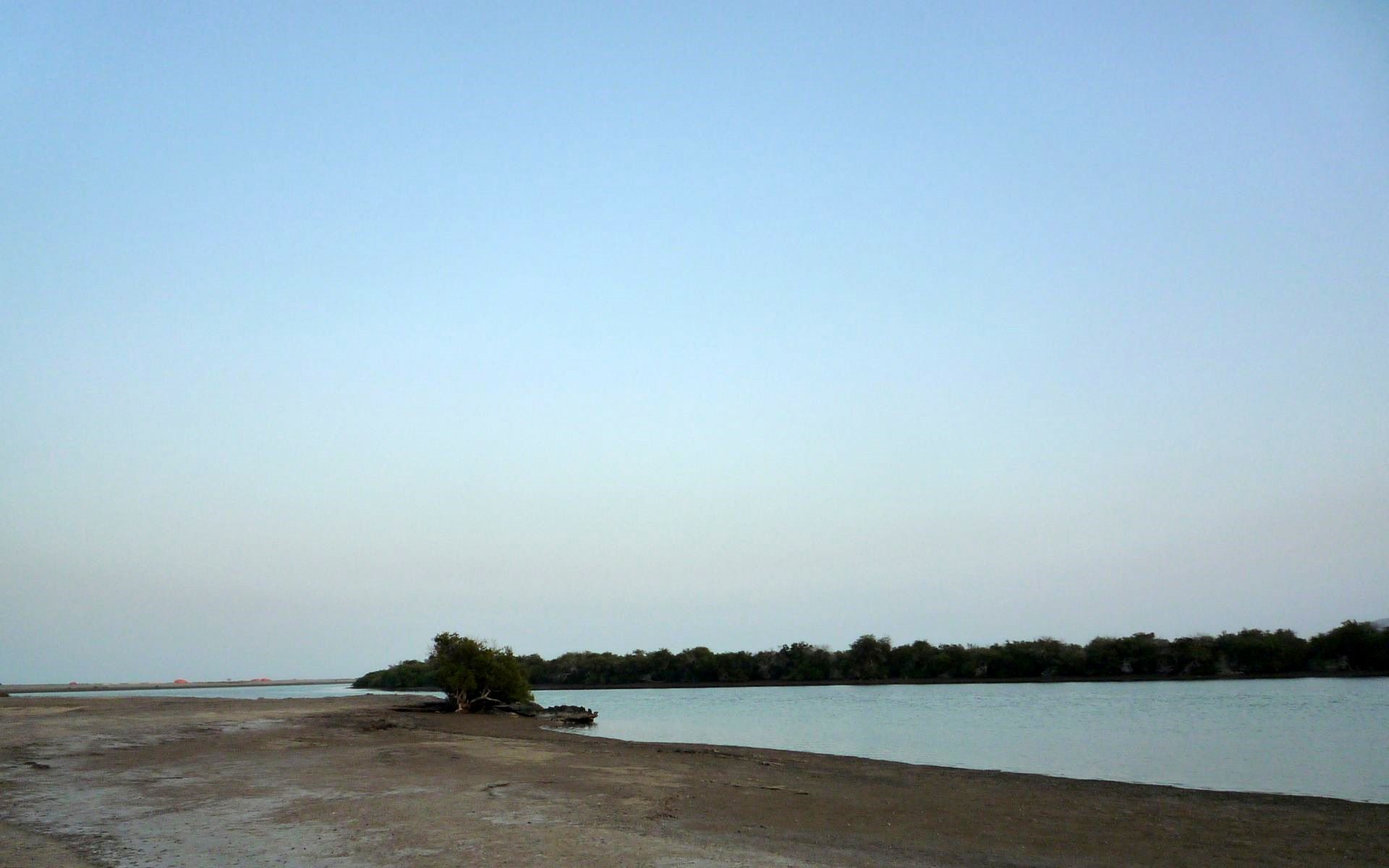
Modern Kalba balances heritage and development with varying success. Khor Kalba, the mangrove creek south of town, is an important nature reserve sheltering hawksbill sea turtles and rare bird species. The Sharjah Investment and Development Authority has developed it as an eco-tourism resort, though conservationists have raised concerns about the project's impact. The old ice factory -- built in the 1970s to provide ice for fishermen transporting their catch 120 km to Dubai -- stood as a ruin for decades before the Sharjah Art Foundation rebuilt it as a contemporary art space. In 2022, the ruler of Sharjah inaugurated the 60-meter Kalba Clock Tower, equipped with two viewing decks offering panoramic views of the city, the mountains, and the mangrove reserve.
From the Air
Located at 25.05N, 56.35E on the Gulf of Oman coast, an exclave of Sharjah between Fujairah and the Omani border. Khor Kalba mangrove creek is visible from altitude south of the town. Nearest airport is Fujairah International (OMFJ), 8 km north. The Hajar Mountains rise immediately to the west.