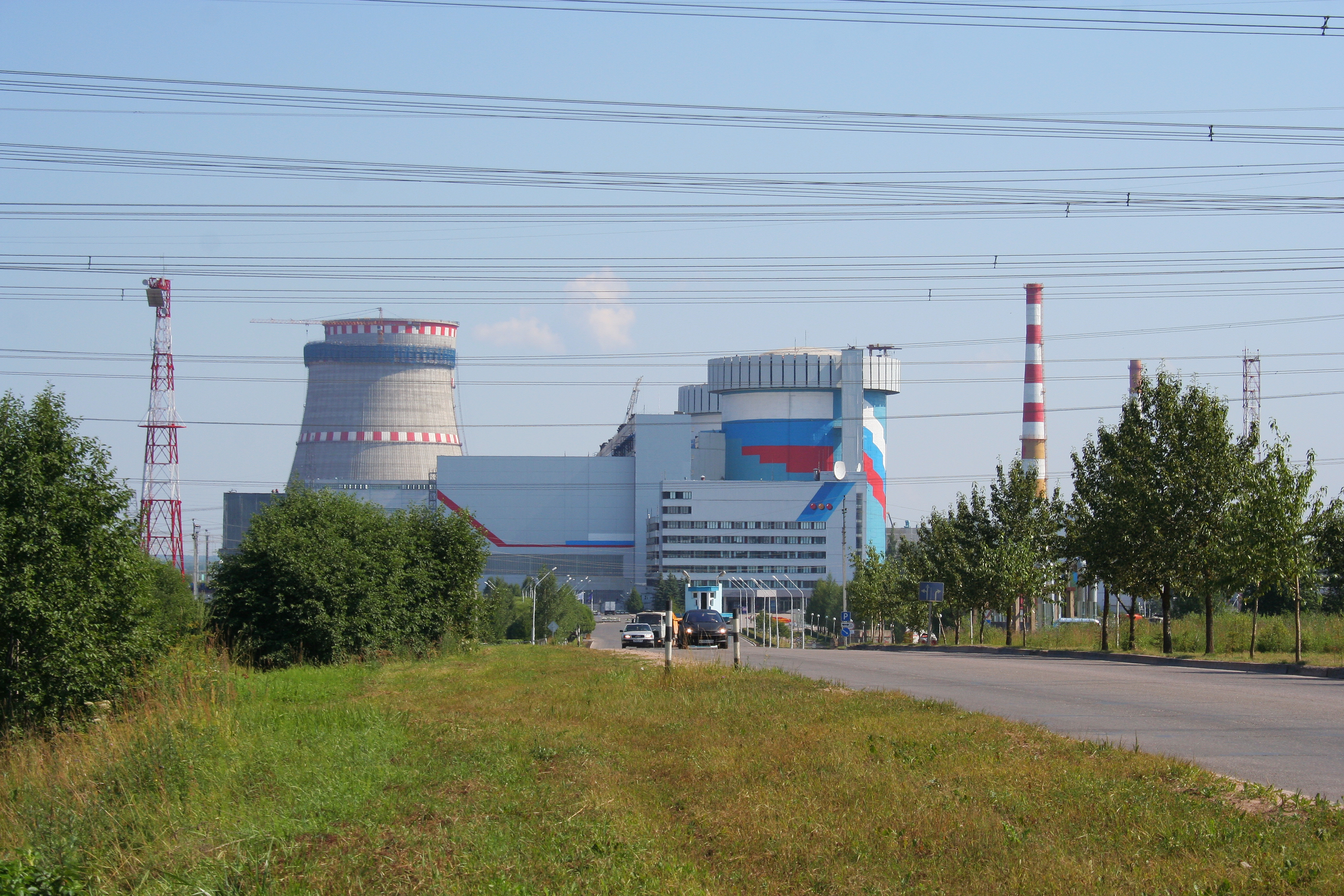
Kalinin Nuclear Power Plant
From the air, the four cooling towers appear first, each 150 meters tall, white plumes of steam trailing into the sky above the dark conifer forests of Tver Oblast. The Kalinin Nuclear Power Station sits near the small town of Udomlya, about 200 kilometers northwest of Moscow, and produces enough electricity to light the capital, Saint Petersburg, Vladimir, and the entire Tver region. Its towers, each assembled from 96 prefabricated concrete sections, have become the dominant landmarks of a landscape otherwise defined by lakes, birch groves, and quiet provincial towns.
Soviet Ambition on a Lakeside
Construction of the Kalinin station began during the Soviet era, when the government pursued an aggressive nuclear energy program to power its vast territory. The site near Udomlya was chosen for its access to cooling water from local lakes and its relative proximity to the enormous electricity demand of Moscow and the northwest. The first unit came online and began feeding power into the grid, eventually joined by three more reactors. All four units use the VVER design, a pressurized water reactor type developed by Soviet engineers and deployed across Russia and several allied states. Each unit generates 950 megawatts of electrical power, giving the station a total capacity of 3,800 megawatts, enough to supply millions of homes.
The Workings of a Giant
The VVER reactor at the heart of each unit operates on principles common to pressurized water reactors worldwide, using enriched uranium fuel to heat water under pressure, which then transfers its energy to a secondary steam loop that drives turbine generators. What distinguishes the Kalinin station is its scale and the visual drama of its cooling system. The four hyperbolic cooling towers dominate the skyline for kilometers in every direction, their distinctive hourglass shapes designed to create a natural updraft that pulls warm water vapor skyward. In 2005, the station fed 17.3 terawatt-hours into the Russian grid. The state enterprise Rosenergoatom, which owns and operates the plant, has extended operating licenses to keep the older units running well beyond their original design lifetimes.
Unit Four and the Next Generation
The newest reactor, Unit 4, represents the most recent phase of the station's expansion. By March 2009, its containment structure was nearly complete, and the reactor achieved its first criticality on 8 November 2011. The addition brought the station to its current four-unit configuration, cementing its role as one of Russia's most important power generation facilities. The construction process stretched over years, reflecting both the complexity of nuclear engineering and the economic disruptions that followed the Soviet Union's collapse. That Unit 4 was completed at all speaks to the continued priority Russia places on nuclear energy, which generates a substantial share of the country's electricity.
Life in the Shadow of the Towers
Udomlya, the nearest town, owes much of its modern character to the power station. Like many Russian nuclear towns, it grew alongside the facility, its economy tied to the plant's operations and its population shaped by the engineers, technicians, and support workers who keep the reactors running. The surrounding landscape of Tver Oblast is a patchwork of forests, agricultural fields, and glacial lakes, a terrain that feels far removed from the industrial purpose humming behind the concrete walls of the station. Yet the towers are visible from remarkable distances, their steam plumes marking the location even on overcast days when the structures themselves fade into the gray sky.
From the Air
Located at 57.91°N, 35.06°E near Udomlya, Tver Oblast, approximately 200 km northwest of Moscow. The four 150-meter cooling towers with their steam plumes are the primary visual landmarks, visible from considerable distance and altitude. Nearest airport is Migalovo (UUEM) near Tver, approximately 120 km to the southeast. The station sits amid flat to gently rolling forested terrain with several lakes nearby. Restricted airspace may apply around the nuclear facility.