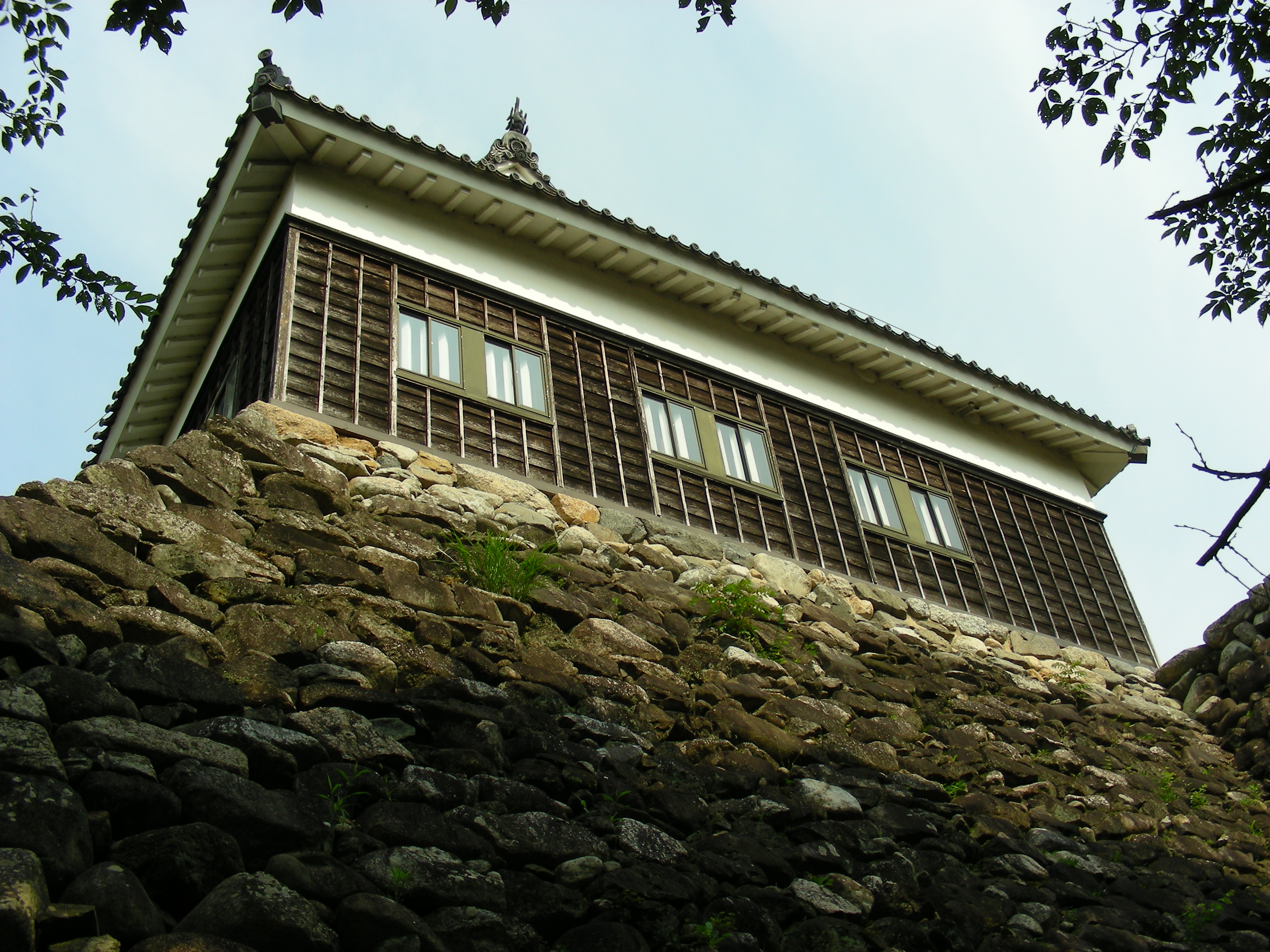
Kameyama Castle (Mie)
In 1632, a man named Horio Torizane demolished the wrong castle. Ambiguously worded orders from the Tokugawa shogunate instructed him to rebuild the keep of Kameyama Castle in Tanba Province, far to the west near Kyoto. Instead, he tore down the tenshu of Kameyama Castle in Ise Province -- this Kameyama Castle, in what is now Mie Prefecture -- a fortress that had guarded one of Japan's most important highways since the thirteenth century. The shogunate, apparently unmoved by the blunder, refused permission to rebuild the tower. For nearly four hundred years since, Kameyama Castle has stood without its crowning feature, a monument to the consequences of reading instructions too quickly.
Sentinel on the Tokaido
Kameyama Castle's story begins in 1264, when Seki Sanetada built the original fortification slightly west of the present site as one of five strongholds guarding clan territories in northern Ise Province. The castle's strategic value lay in its position along what would become the Tokaido -- the great coastal highway linking Edo (modern Tokyo) with Kyoto, the imperial capital. Under the Tokugawa shogunate, the surrounding castle town thrived as one of the fifty-three official post stations on the road. Travelers, merchants, and daimyo processions all passed through Kameyama, making the castle both a military garrison and a gateway of commerce. Even the shoguns themselves -- Tokugawa Ieyasu, Hidetada, and Iemitsu -- used a specially built palace within the main enclosure when journeying to pay formal visits to the emperor in Kyoto.
Warlords at the Gate
Before it became a shogunal rest stop, Kameyama endured the full violence of the Sengoku period. The Oda clan attacked repeatedly from the north, and in the 1570s Oda Nobunaga finally absorbed Ise Province into his growing empire. In 1583, Toyotomi Hideyoshi defeated Takigawa Kazumasu at the castle. When the Seki clan lord Kazumasa was transferred to Shirakawa in 1590, Hideyoshi placed his own retainer, Okamoto Munenori, in charge. Okamoto relocated the castle to the southeast and rebuilt it from the ground up, giving the fortress its current position. Control shifted again after the Tokugawa victory at Sekigahara in 1600, and Kameyama became the headquarters of Ise-Kameyama Domain -- a political prize passed among loyal fudai daimyo families who could be trusted to guard the shogun's highway.
The Tower That Never Returned
After the catastrophic demolition error of 1632, Honda Toshitsugu received permission in 1636 to build a yagura -- a defensive turret -- on the raised stone base where the tenshu had stood. Named the Tamon-yagura, this modest replacement became one of the castle's most enduring structures. The daimyo, meanwhile, was forced out of the main enclosure entirely: a palace built there was reserved exclusively for the shogun's use, and the castle lord had to reside in the Ni-no-Maru, the second bailey. The Tamon-yagura survived the Meiji Restoration's demolition orders that destroyed most of Japan's feudal castles in 1873. The prefectural government declared it a historic site in 1953, recognizing one of the few original castle structures still standing in the region.
Cherry Blossoms on the Ramparts
Today Kameyama Castle's 15-meter-high stone walls are its most striking feature -- weathered blocks of local stone rising above the modern city, tracing the outline of a fortress that once sheltered shoguns. The Tamon-yagura still stands atop the old tenshu base, the lone original structure amid the ruins. A Buddhist temple, Omoto-ji, and the Kameyama City History Museum now occupy the grounds. Since 2001, the annual Kameyama Castle Cherry Blossom Festival has drawn visitors each spring. A major conservation project launched in 2006 restored the Ni-no-maru enclosure and its surroundings to their late Edo-period appearance, with work completed in 2013. The entrance gate to the original Ni-no-maru daimyo residence survives too, though it now serves as part of the nearby temple Tensho-ji in the Nishimachi neighborhood. The castle is a ten-minute walk north of JR Kameyama Station.
From the Air
Kameyama Castle ruins sit at 34.8561N, 136.4506E in the city of Kameyama, northern Mie Prefecture. From the air, the stone wall foundations are visible as a raised platform amid the city center, with the small Tamon-yagura turret on the highest point. The castle is situated along the historic Tokaido route. Nearest major airport: Chubu Centrair International Airport (RJGG, approximately 50 nm east-northeast). The Suzuka Mountains to the west and the Ise Plain stretching southeast provide good visual references. Recommended viewing altitude: 2,000-4,000 feet AGL.