Kaminarimon
A 700-kilogram red lantern hangs from the ceiling of a gate that has burned down at least four times. The Kaminarimon -- the Thunder Gate -- stands at the entrance to Senso-ji in Asakusa, and its survival is an act of pure stubbornness. First erected in 941 AD by the military commander Taira no Kinmasa, the gate has been destroyed by fire, rebuilt, destroyed again, and rebuilt again across more than a thousand years. The current structure dates to 1960, but the story it tells reaches back to a time when Tokyo was still a fishing village and the gods needed a proper front door.
Wind and Thunder at the Threshold
Four statues guard the Kaminarimon. On the front face, visitors are met by Fujin, the Shinto god of wind, on the east side, and Raijin, the god of thunder, on the west. These are not gentle deities. Fujin carries a bag of winds across his shoulders; Raijin beats his ring of drums. The original sculptures were nearly destroyed in the devastating fire of 1865, which burned the gate to the ground, but the heads of both statues were salvaged from the ashes and later used as references when the figures were restored for the 1960 reconstruction. On the reverse side of the gate stand two Buddhist figures added in 1978: Tenryu, the heavenly dragon, on the east, and Kinryu, the golden dragon, on the west. These were donated to commemorate the 1,350th anniversary of the first appearance of the bodhisattva Kannon at Asakusa -- the event that led to the founding of Senso-ji itself.
The 106-Year-Old Sculptor
The 1978 dragon statues carry an extraordinary footnote. They were carved by Hirakushi Denchu, a master sculptor who was 106 years old at the time. Born in 1872, Denchu had been working in wood and bronze since the Meiji era and would live until 1979, reaching the age of 107. His career spanned the entire modern history of Japan, from the abolition of the samurai class through two world wars to the economic miracle. That a sculptor of such age and experience chose to create works for this gate -- a structure repeatedly destroyed and repeatedly reborn -- feels fitting. Denchu understood what the Kaminarimon has always represented: that some things are worth rebuilding as many times as it takes.
The Lantern and Its Patron
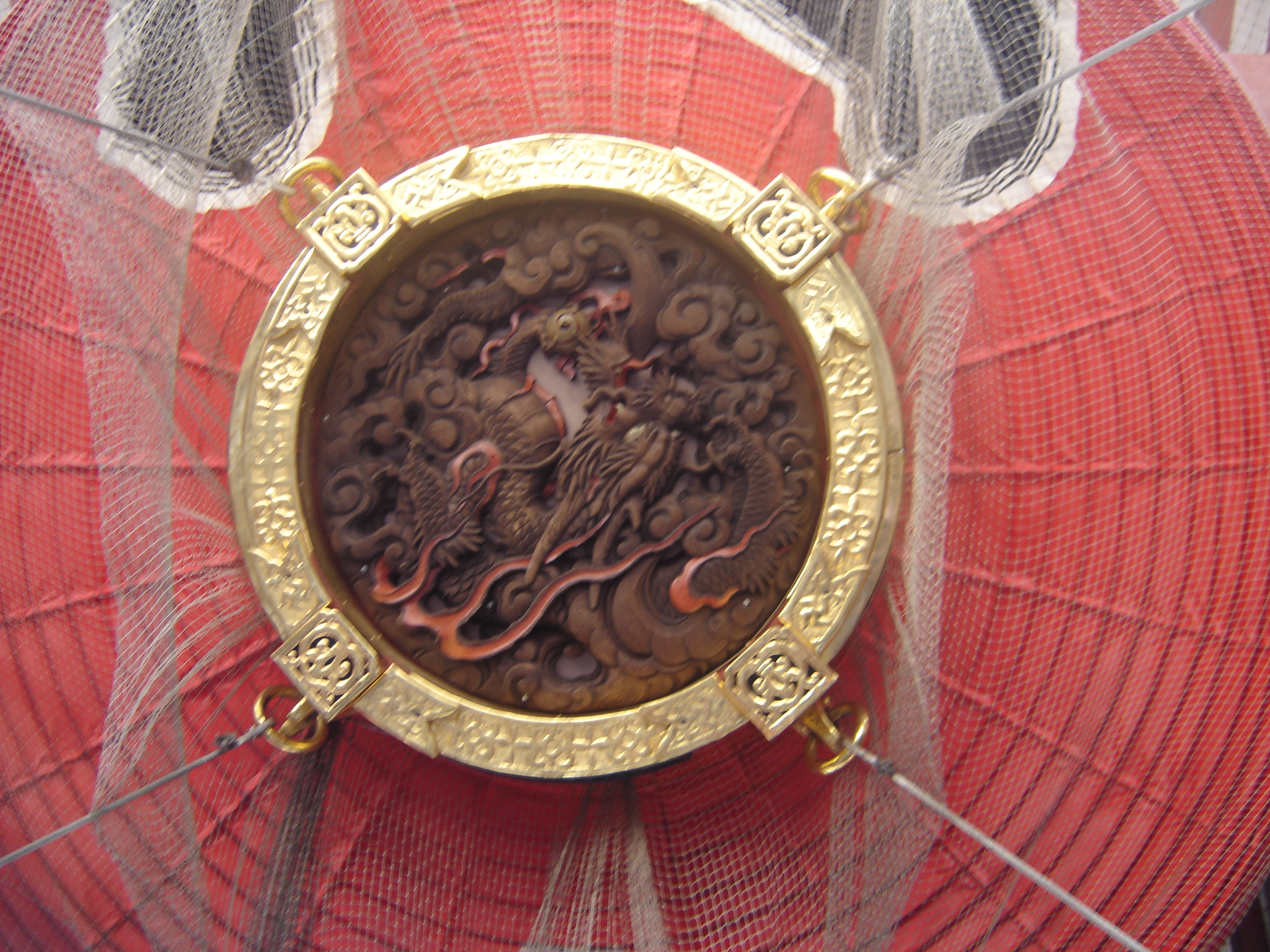
The enormous red paper lantern that hangs beneath the gate's center beam is 3.9 meters tall, 3.3 meters wide, and weighs approximately 700 kilograms. It was donated in 1960 by Konosuke Matsushita, the founder of Matsushita Electric -- known today as Panasonic. Matsushita provided funding for the gate's entire reconstruction after praying at Senso-ji for recovery from illness, and his company has maintained the lantern ever since, replacing its paper and frame every ten years through specialist craftsmen in Kyoto. A small nameplate on the base still reads "Matsushita Denki," the company's original Japanese name. During festivals such as Sanja Matsuri, the lantern is collapsed so that tall portable shrines can pass through the gate -- a practical concession that somehow makes the structure feel even more alive.
The Gate That Keeps Returning
The Kaminarimon stands 11.7 meters tall and 11.4 meters wide, covering an area of 69.3 square meters. It is the outer of two entrance gates leading to Senso-ji, the inner being the Hozomon. The gate's timeline reads like a lesson in persistence: built in 941, burned down shortly after being relocated, rebuilt by Shogun Tokugawa Iemitsu in 1649 along with several other temple structures, destroyed by fire again in 1757, burned once more in 1865, and finally reconstructed in its current form in December 1960. For 95 years between 1865 and 1960, the gate simply did not exist. Asakusa carried on without it. But when it returned, it became the single most photographed spot in Tokyo -- proof that a thousand years of fires cannot erase a place that people refuse to forget.
From the Air
Located at 35.711N, 139.796E in the Asakusa district of Taito, Tokyo. The gate marks the southern entrance to the Senso-ji temple complex, which is visible from altitude as a cluster of traditional rooflines amid dense urban blocks along the west bank of the Sumida River. The distinctive red of the gate and temple buildings can be spotted in good conditions. Nearest major airport is Tokyo Haneda (RJTT), approximately 17 km south. Narita International (RJAA) is 60 km east. The Tokyo Skytree (634 m) stands about 1.2 km to the east and serves as an unmistakable visual landmark.