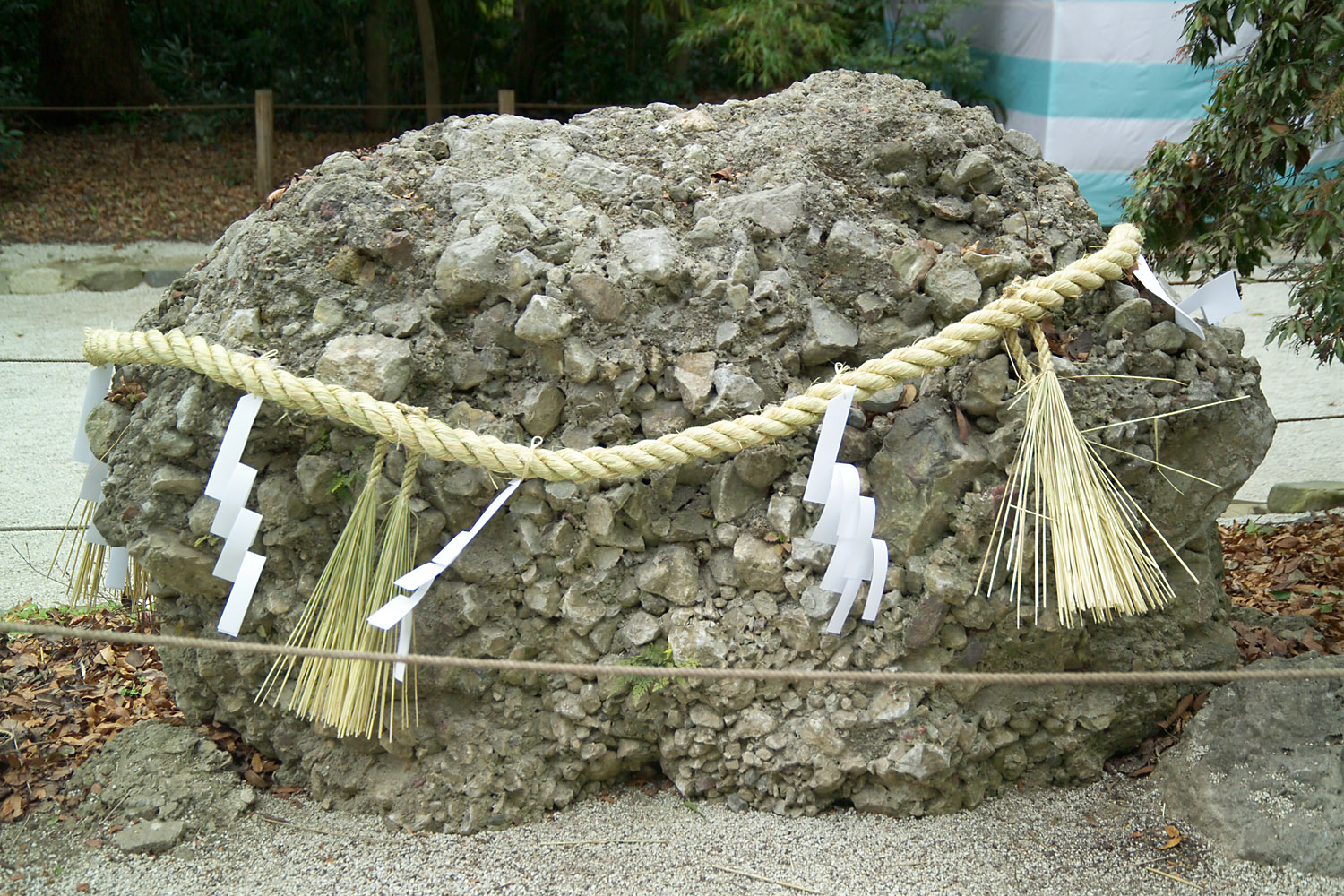
Kamo Shrines: Kyoto's Shield Against Demons
In the geomancy of old Japan, the northeast was the demon gate -- the direction from which misfortune entered a city. When Emperor Kanmu established Kyoto as his capital in 794, the Kamo River posed a problem: it flowed directly from the northeast into the heart of the new metropolis, offering evil spirits a highway straight through the gates. The solution was already ancient. Two shrines of the Kamo clan, one upstream and one downstream, had guarded this river corridor since prehistoric times. The upper shrine honored Kamo Wake-ikazuchi, the thunder kami. The lower honored his mother, Kamo Tamayori-hime. Together, positioned along the river's ill-omened flow, they formed a spiritual barricade against whatever darkness the northeast might send.
A Family Older Than the Capital
The Kamo clan had lived along this river long before anyone imagined a capital city here. They are credited with establishing both shrines, and many clan descendants still reside near the grounds their ancestors served as exclusive caretakers from prehistoric times. The formal names of the two shrines -- Kamigamo (the Upper Shrine, formally Kamo-wakeikazuchi-jinja) and Shimogamo (the Lower Shrine, formally Kamo-mioya-jinja) -- memorialize roots that predate Kyoto's founding. The Kamigamo Shrine sits in Kita Ward, its grounds marked by two striking conical sand mounds that memorialize holy trees once used to welcome spirits. The Shimogamo Shrine occupies a site at the confluence of the Takano and Kamo Rivers in Sakyo Ward, downstream from its twin -- hence the name 'lower.' The head priests of both shrines share the same title, Kamo-no-Agata-no Nushi, a naming convention that merges the area, its sacred centers, and its kami into a single identity.
The Forest Where Lies Are Revealed
Shimogamo Shrine stands within Tadasu no Mori -- the Forest of Truth -- a primeval woodland of approximately 12.4 hectares that has survived where almost nothing else in Kyoto has. The forest is reputed to have never been burned, though in truth it suffered damage during the successive revolts and wars that destroyed much of the capital over the centuries. Each time, the growth rebounded. Tadasu no Mori is left entirely to nature -- neither planted nor pruned -- and this wildness within an ancient city gives it an uncanny atmosphere. The forest is preserved as a national historical site and designated by UNESCO as a World Cultural Heritage site alongside the shrines themselves. Its name carries weight: this is where lies are revealed, where truth rises to the surface like spring water through old stone.
Hollyhock, Horses, and a Thousand Years of Festival
The Aoi Matsuri -- the Hollyhock Festival -- is the oldest of Kyoto's three great festivals, alongside the Gion Matsuri and the Jidai Matsuri. Held each May, it sends a grand procession between the two Kamo shrines, with participants in Heian-period court dress, horse races, and demonstrations of yabusame -- mounted archery at a gallop. The festival's roots reach back to when the shrines became objects of Imperial patronage during the early Heian period. In 965, Emperor Murakami ordered imperial messengers dispatched to report important events to Japan's guardian kami, and those venerated at the Kamo Shrines were among the first sixteen to receive these offerings. The shrine's importance endured for centuries: in 1863, Emperor Komei made an imperial progress to the Kamo Shrines accompanied by the shogun and all principal officials -- the first such imperial visit in over five hundred years.
Guardians at the Demon Gate
The strategic placement of the shrines was no accident. Shrines on the outskirts of Heian-kyo were deliberately positioned to prevent the infiltration of demons, and the Kamo River descending from the ill-omened northeast made these twin sanctuaries essential. Though the shrines do not sit directly on the riverbanks, their locations were calibrated as part of a broader plan that also addressed periodic flooding. Kamigamo was designated one of the highest-ranking government-supported shrines from 1871 through 1946, and its worship hall, rebuilt in 1628-1629, remains one of its most celebrated features. Today the two shrines function independently but remain spiritually linked -- a mother and her divine offspring, an upper and a lower, a pair of sentinels still standing watch on a river that has flowed through Kyoto for more than twelve centuries.
From the Air
Located at 35.06N, 135.75E in northeast Kyoto, Japan. The two shrines are separated by approximately 2 kilometers along the Kamo River -- Kamigamo (Upper) to the north and Shimogamo (Lower) at the river confluence to the south. From 3,000-5,000 feet AGL, the green canopy of Tadasu no Mori forest is visible as a distinct wooded area within Kyoto's urban grid. The Kamo River itself serves as a clear navigation reference running north-south through the city. Nearest airport is Osaka Itami (RJOO), approximately 30 nautical miles southwest.