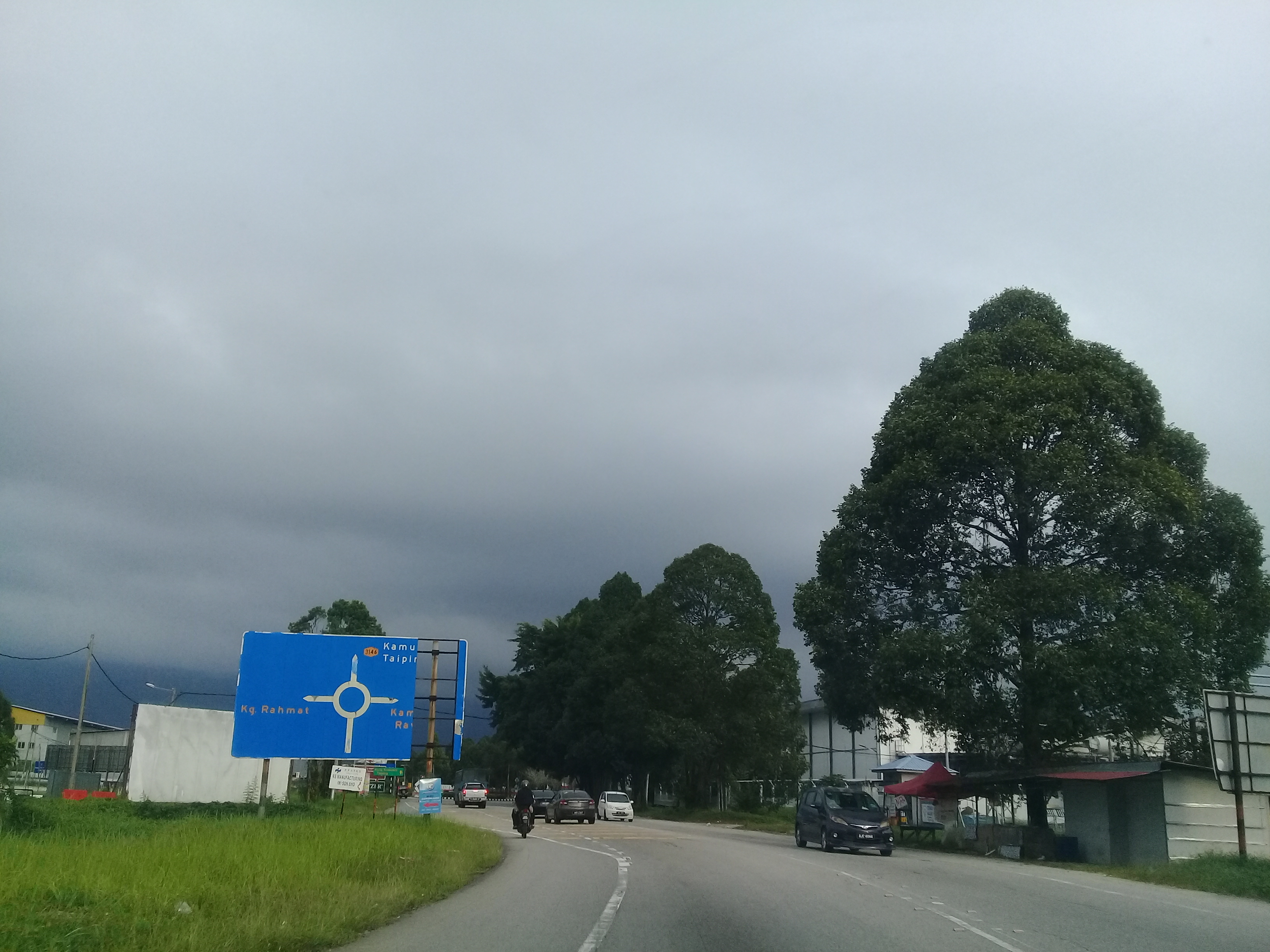
Kamunting
The story of how Kamunting got its start involves an elephant named Larut, a swamp, and the black sludge of tin ore clinging to the animal's legs. In the 1840s, a Malay chief named Long Jaafar was already mining tin at a place called Kelian Pauh -- the future Taiping -- when his elephant, used to haul ore, bolted into the jungle and disappeared for three days. When the animal was finally recovered, wallowing in a distant swamp, the dark sand packed into its hide revealed a new deposit of bijih timah, tin ore. Long Jaafar named the site Kelian Bahru -- "new mine" -- and the town that grew around it became Kamunting.
Black Sand and Rival Clans
Tin transformed the landscape of the Larut district. Long Jaafar brought the first Chinese miners to Kelian Pauh in 1840 -- just three men at the start. By 1844, tin from the area was being exported to Penang. As word of the deposits spread, the workforce swelled dramatically: from 5,000 Chinese miners in the 1850s to between 35,000 and 40,000 by the 1870s. Kamunting, or Kelian Bahru, became the stronghold of the Hakka Fui Chew clan, who dominated 16 of its mines. The rival Hakka Chen Sang group controlled operations at Kelian Pauh. By the early 1860s, Kamunting had some 2,200 Chinese residents packed into 40 to 50 shared row houses, most of them miners, with the remainder growing vegetables to feed the camps. The entire district -- Kelian Pauh, Kelian Bahru, and the surrounding area -- took the name Larut, borrowed from the elephant whose muddy escape had revealed the riches beneath the jungle floor.
Soldiers in the Rubber Trees
A century after the tin rush, Kamunting's role shifted from extraction to defense. During the Malayan Emergency, the twelve-year insurgency that stretched from 1948 to 1960, Kamunting became the site of a major British and Commonwealth military base. The 28th Commonwealth Independent Infantry Brigade garrisoned here, and one of only three British Military Hospitals in all of Malaya operated in the town. Thousands of British, Australian, New Zealand, Fijian, and Gurkha troops rotated through Kamunting and neighboring Taiping over the course of the conflict. Between the two towns lies one of the main military cemeteries in Malaya, a quiet testament to those who did not rotate home. The jungle that Long Jaafar had once entered in search of tin became the terrain where Commonwealth soldiers hunted communist guerrillas.
Saturday Night Market
Modern Kamunting serves as the largest satellite town of Taiping, connected to the North-South Expressway via its northern exit. The town anchors everyday life around the Kamunting Raya bus station, which handles transit for the wider Taiping area. Every Saturday night, a pasar malam -- night market -- unfolds near the station, where vendors sell fresh local produce, cooked food, and whatever the season's harvest offers. Along the roads leading to the bus stops, fruit sellers set up during durian and mangosteen season, and the smell of ripe fruit fills the humid evening air. Kamunting is also a gateway to Bukit Jana, where a waterfall and streams cascade from the slopes of the Bukit Larut range, the same hills that once drew colonial administrators to escape the lowland heat. The Bukit Jana Golf and Country Club sits nearby, serving a quieter form of recreation.
The Smallest New Village
Tucked within Kamunting is Kampung Baru Kamunting, described by its village headman as the smallest new village among all of Malaysia's new villages. New villages were a creation of the Malayan Emergency, when the British forcibly resettled rural populations -- primarily ethnic Chinese -- into fenced and guarded settlements to cut off support for communist insurgents. Kampung Baru Kamunting, founded over eighty years ago, retains traces of that era: wooden houses scattered without a grid, a village feel that resists the tidiness of urban planning. With a population of roughly 3,000, the village faces the pressures common to rural Malaysia. Young people leave for jobs in cities, and the residents who remain are mostly children and older residents -- the "evergreens," as locals call them. Taiping, just five kilometers away, provides what the village cannot.
Layers Beneath the Surface
Kamunting's population of roughly 36,000 is predominantly Malay, with the Perak dialect shaping daily conversation. The town remains one of the larger industrial centers in Malaysia, a designation that would have surprised no one in the tin-mining era but that now rests on manufacturing rather than ore. What the town lacks in fame it compensates for in depth. The same ground that yielded tin in the 1840s later hosted an imperial garrison, then a detention centre that held some of Malaysia's most prominent political figures. Each chapter left its mark -- in place names, cemeteries, night market rhythms, and the quiet persistence of a village that the Emergency created and the decades have not erased.
From the Air
Located at approximately 4.88°N, 100.73°E in the Larut, Matang and Selama District of Perak, Malaysia. Kamunting sits just north of Taiping, identifiable from the air by the urban sprawl between Taiping proper and the expressway interchange. The Bukit Larut hill range rises prominently to the east. Nearest major airports: Sultan Azlan Shah Airport (WMBA) in Ipoh, roughly 80 km southeast; Penang International Airport (WMKP) approximately 90 km northwest. Recommended viewing altitude: 3,000-5,000 feet for detail of the town layout and surrounding terrain.