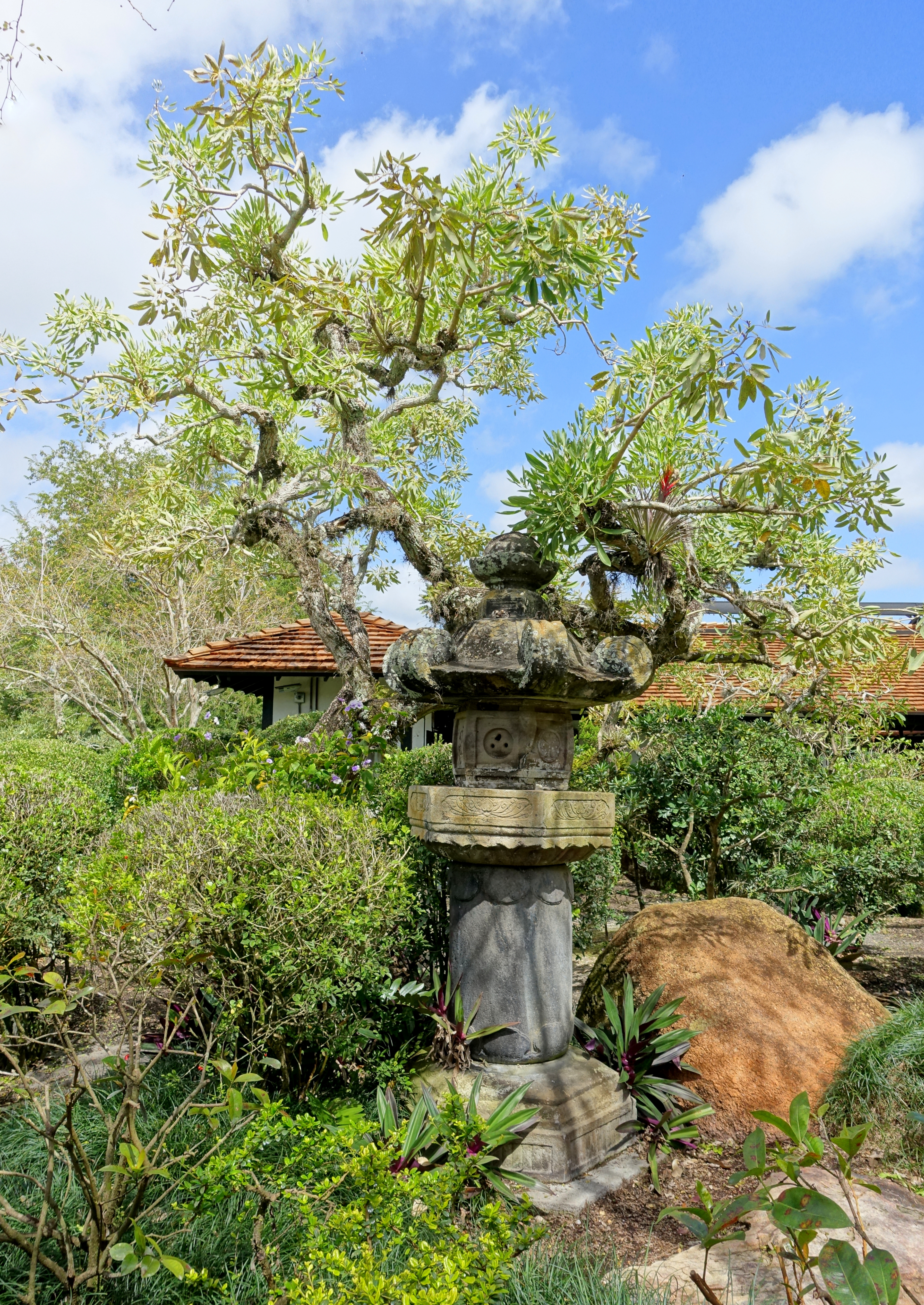
Kan'ei-ji
Six shoguns sleep beneath quiet graves that once anchored an empire. Kan'ei-ji, founded in 1625 in what is now Tokyo's Ueno district, was built to be nothing less than the eastern mirror of Kyoto's mighty Enryaku-ji, the most powerful Buddhist institution in Japan. The monk Tenkai chose the site deliberately: just as Enryaku-ji sat atop Mount Hiei to guard Kyoto's northeastern flank from evil spirits, this new Tendai temple would shield Edo Castle from the same unlucky direction. Its very name, Toeizan, translates to "Mount Hiei of the East." For over two centuries, the complex sprawled across the heights north of Shinobazu Pond and the flatlands where Ueno Station stands today, encompassing more than 30 buildings and radiating the kind of wealth and authority that comes from burying the most powerful men in Japan.
The Shoguns' Resting Place
As one of the two official Tokugawa bodaiji, or funeral temples, Kan'ei-ji shared the sacred duty of interring the shogunate's rulers with Zojo-ji in the Shiba district. Of the fifteen Tokugawa shoguns, six were laid to rest within Kan'ei-ji's grounds. This was not merely a spiritual arrangement but a political one: the temple's immense prestige grew with each royal burial, and its abbot wielded influence that rivaled secular lords. A new hall was constructed inside the enclosure in 1698, expanding the already vast complex. The last recorded visit by a member of the Tokugawa household came on August 8, 1863, when Tensho-in arrived for the memorial service of her husband, Tokugawa Iesada. She could not have known that within five years, the world she came to honor would be swept away entirely.
One Afternoon in May
By 1868, the Tokugawa shogunate was collapsing. Revolutionary forces had seized most of Tokyo and accepted the surrender of Edo Castle, but roughly 2,000 men of the Shogitai, a military unit of die-hard Tokugawa retainers, barricaded themselves inside Kan'ei-ji's grounds at Ueno, determined to make a stand. On the morning of the final attack, artillery rounds arced from the heights of Hongo down onto the temple district. The fighting was fierce but brief. By late afternoon, imperial forces smashed through the southern defenses at the Kuromon, the Black Gate, near what is today the entrance to Ueno Park. Around 300 lay dead, most of them defenders. The artillery had been wildly inaccurate, and the errant shells ignited fires that consumed not only Kan'ei-ji's buildings but up to a thousand surrounding homes. The temple's abbot fled the burning ruins in disguise and escaped the city by boat.
What Remains
Kan'ei-ji was never restored to its former grandeur. The vast grounds were eventually transformed into Ueno Park, one of Tokyo's most beloved public spaces, while the temple itself was reduced to a modest compound. The mausoleums of shoguns Ietsuna and Tsunayoshi survived the battle only to be destroyed in the firebombing of 1945. Today the cemetery where six shoguns rest is closed to the public, though it can be glimpsed from the street through gaps in walls and hedges. What stands now is a quiet temple in a busy city, its scale almost impossible to reconcile with the 30-building complex that once defined the area. The grounds carry a particular stillness, the kind that settles over places where history compressed violently into a single day.
Echoes Across Ueno
The ghost of Kan'ei-ji's original footprint is legible across the entire Ueno district. Shinobazu Pond, once part of the temple's designed landscape, remains a centerpiece of the park. The Ueno Toshogu shrine, a separate structure dedicated to Tokugawa Ieyasu, survived the 1868 battle and still gleams with gold lacquer among the trees. A 1959 recording of Kan'ei-ji's bell being struck at six in the morning, preserved in the Internet Archive, captures a sound that once echoed across a temple complex large enough to be a small city. Visitors walking through Ueno Park today pass through ground that was simultaneously a spiritual center, a necropolis of shoguns, and a battlefield where Japan's feudal era came to its violent end.
From the Air
Kan'ei-ji sits at 35.7214N, 139.7743E in Tokyo's Ueno district, within the Taito ward. The temple grounds are nestled among the trees of Ueno Park, just north of Shinobazu Pond. From the air, the green expanse of Ueno Park is a clear landmark amid the dense urban fabric of northeast Tokyo. The nearest major airport is Tokyo Haneda (RJTT), approximately 15 km to the south, with Narita (RJAA) about 60 km to the east. Best viewed at 2,000-3,000 feet AGL for context of the park within the surrounding cityscape.