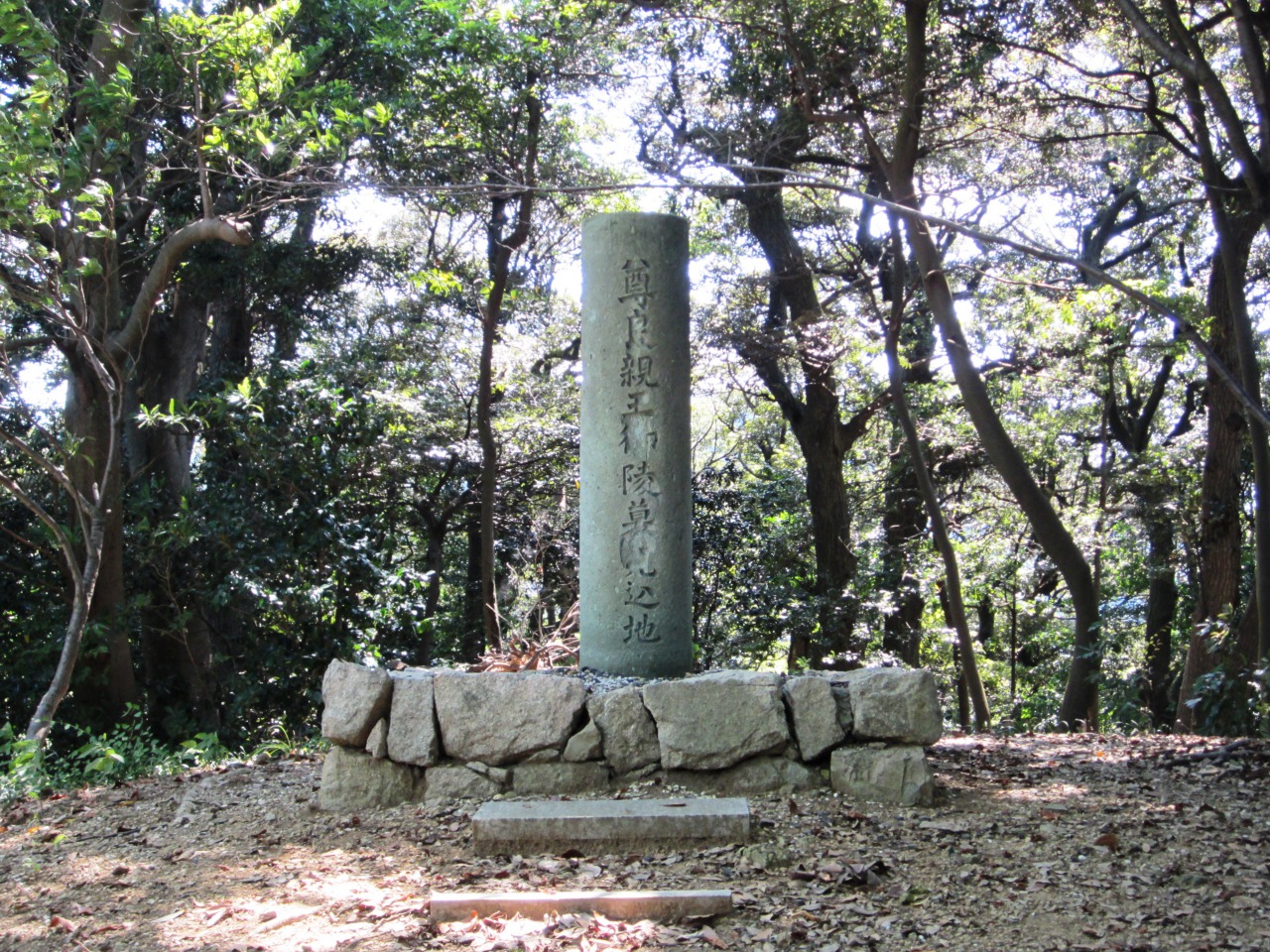
Kanagasaki Castle
Three hundred warriors trapped on an 86-meter hill, their food exhausted, their horses slaughtered for meat, stared down at the armies of Ashikaga Takauji encircling them below. The year was 1337, and Kanagasaki Castle -- perched above what is now the port city of Tsuruga in Fukui Prefecture -- was about to witness one of the most harrowing sieges in Japanese medieval history. When the end came, Prince Takanaga and the son of the great loyalist general Nitta Yoshisada chose suicide over capture. Two centuries later, this same modest hilltop would witness another pivotal battle, this time involving the most famous warlords of the Sengoku period. For a castle whose ruins today amount to little more than earthen mounds and dry moats, Kanagasaki punches far above its weight in the annals of Japanese warfare.
Where the Genpei War Left Its Mark
The fortification on this hill above Tsuruga Bay dates to the late twelfth century, when Taira no Michimori built defenses here during the Genpei War, the civil conflict between the Taira and Minamoto clans that reshaped Japan. Michimori, who lived from 1153 to 1184, chose the site for its commanding views of the bay and the approaches from the northeast. The hill rises just 86 meters above sea level, but in an era of ground combat, that elevation meant everything. Stone and earthen enclosures ringed the summit, with dry moats carved into the hillside and a fortified gate controlling access. It was a classic yamashiro -- a mountain castle built not for elegance but for survival.
The Siege That Broke an Emperor's Cause
The castle's darkest chapter unfolded during the wars between the rival Northern and Southern Courts. In 1337, forces loyal to Nitta Yoshisada -- champion of Emperor Go-Daigo's Southern Court -- found themselves trapped at Kanagasaki by the armies of Ashikaga Takauji. For three months, the garrison held out as supplies dwindled to nothing. Nitta's ally Uryu Tamotsu was forced to retreat to Somayama Castle in March, and Yoshisada himself soon followed, leaving the remaining defenders stranded. A counter-attack launched from Somayama failed to break the siege. Inside the walls, the garrison ate their warhorses and reportedly came close to cannibalism before the end. When the castle finally fell, Prince Takanaga -- a son of Emperor Go-Daigo -- and Nitta Yoshiaki, son of Yoshisada, were among some 300 Southern Court partisans who died fighting or took their own lives rather than submit.
Nobunaga's Retreat, Hideyoshi's Rise
Over two centuries later, in 1570, Kanagasaki entered Japanese history again when Oda Nobunaga -- the warlord who would begin the unification of Japan -- launched an attack against the Asakura clan at this very fortress. The campaign went badly. Nobunaga found himself outmaneuvered and facing potential annihilation. What saved him was the rearguard action fought by a relatively obscure officer then known as Kinoshita Hideyoshi. His fierce defense of the retreat allowed Nobunaga to escape the disaster. That officer would eventually become Toyotomi Hideyoshi, the second of Japan's three great unifiers. Military historians have long pointed to the Siege of Kanegasaki in 1570 as the moment Hideyoshi first proved his extraordinary tactical ability under the most desperate of circumstances.
Shrine, Ruins, and Memory
Today the hilltop is a quiet place. The remnants of stone walls, earthen enclosures, and dry moats are still visible among the trees, and the foundations of the central building and gate can be traced by careful observers. The Japanese government designated the site a National Historic Site in 1934, recognizing its layered significance across multiple eras. At the base of the hill, the Kanegasaki-gu shrine was established during the Meiji period, honoring the memory of Prince Takanaga and the loyalists who perished here. A memorial to Prince Takayoshi also stands on the grounds. The castle ruins sit just seven minutes by car from Tsuruga Station on the JR West Hokuriku Main Line, making this blood-soaked hilltop remarkably accessible for a site of such historical gravity.
From the Air
Located at 35.67N, 136.07E on a small hill overlooking Tsuruga Bay in Fukui Prefecture, Japan. The castle site sits at 86 meters elevation on the northeastern edge of Tsuruga city. Look for the wooded hilltop near the port area. Nearest airport is Komatsu Airport (RJNK), approximately 70 km to the northeast. Fukui Airport (RJNF) is closer at about 50 km north. Best viewed at 2,000-3,000 feet AGL to appreciate the hilltop position relative to the bay.