Kanamara Matsuri: Kawasaki's Festival of the Steel Phallus
A demon hides inside a woman and bites. Twice, on her wedding nights, the sharp-toothed creature destroys her marriages. In desperation, she seeks out a blacksmith who forges a phallus of steel. The demon bites down and shatters its own teeth. This ancient Japanese legend sits at the origin of one of the country's most surprising spring festivals -- the Kanamara Matsuri, held every first Sunday of April at the Kanayama Shrine in Kawasaki. What began centuries ago as a local rite for protection and fertility now draws tens of thousands of visitors to a celebration that is equal parts sacred procession, public health campaign, and gleeful spectacle.
The Blacksmith Gods of Kanayama
The Kanayama Shrine, part of the larger Wakamiya Hachimangu Shrine near Kawasaki-Daishi Station, venerates two deities: Kanayama-hiko and Kanayama-hime. They are gods of blacksmithing, metalsmithing, and metalwork -- the forge and the anvil made divine. But their patronage extends beyond industry. Worshippers have long prayed to them for easy childbirth, marital harmony, and protection from sexually transmitted infections. The shrine's roots reach into the Edo period, when Kawasaki served as a lodging stop along the Tokaido, the great road connecting Edo to Kyoto. Sex workers in the area prayed at the shrine for safety and health, creating a tradition that linked the sacred to the body in ways that Western visitors sometimes struggle to square with the solemnity of Shinto ritual.
Three Shrines on the March
The heart of the Kanamara Matsuri is the mikoshi parade -- three portable shrines carried through the streets of Kawasaki. The Kanamara Mikoshi is the oldest, a traditional shrine with a square base and roof housing a carved wooden phallus. The Kanayama Boat Mikoshi rides on a boat-shaped base and shelters a gleaming black iron phallus, donated by the shipbuilder Hitachi Zosen. Then there is the Elizabeth Mikoshi, the festival's most photographed attraction: a towering pink phallus mounted on an open base with no roof, donated by Elizabeth Kaikan, a crossdressing club in Asakusabashi. The Elizabeth Mikoshi is carried primarily by women, who chant 'Kanamara' as they process through the streets. In 2016, concerns over spectator behavior led organizers to switch the Elizabeth Mikoshi to a wheeled trolley, though the road procession was revived the following year for a one-way trip to Daishi Park.
From Local Rite to Global Curiosity
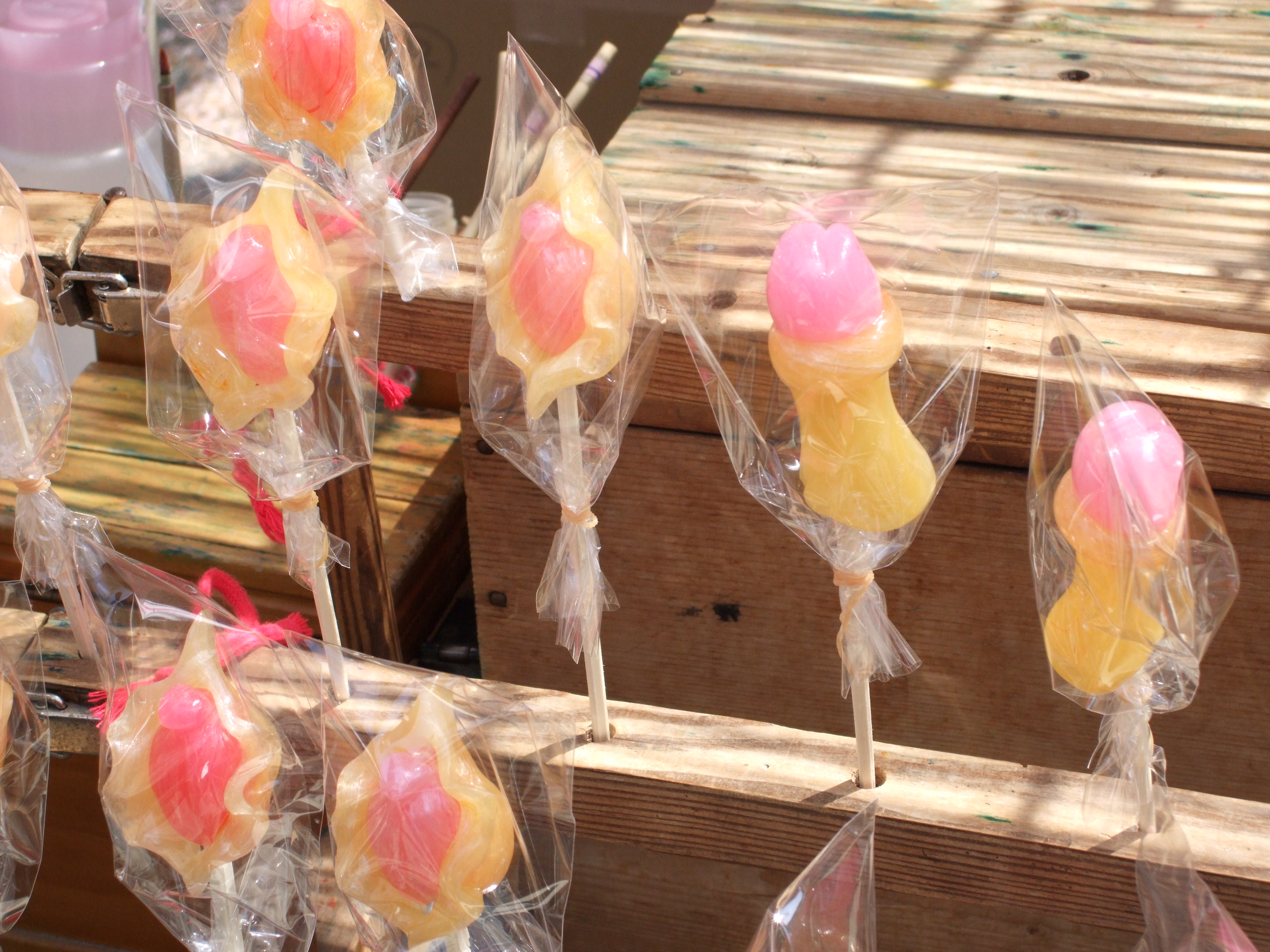
The modern festival began in 1969, but its transformation into an international event came gradually. In 1977, the Kanamara Kou -- an organization of shrine followers -- was formed and expanded the celebration from a small morning gathering into a full-day public event. The festival now attracts visitors from around the world who photograph the phallic candy, carved vegetable sculptures, and decorations that line the shrine grounds. Illustrations, souvenirs, and food items all echo the central theme with an openness that surprises many first-time visitors. The atmosphere is joyful rather than solemn, though the Shinto rituals at its core are performed with genuine reverence. The BBC has listed it among the events not to miss in April, and international media coverage has turned Kanamara Matsuri into one of Kawasaki's most recognizable cultural exports.
Sacred Purpose, Modern Mission
Behind the spectacle lies purpose. The festival has become a significant fundraiser for HIV research, channeling the energy and attention of its enormous crowds into a public health cause that connects directly to the shrine's ancient role as protector against disease. The Kanayama deities who once watched over Edo-period sex workers now lend their name to modern awareness campaigns. Similar fertility festivals exist across Japan -- the Honen Matsuri in Aichi Prefecture features a 2.5-meter wooden phallus, and phallic processions have deep roots in Shinto practice -- but Kanamara Matsuri stands apart for how thoroughly it bridges the ancient and the contemporary. It is a shrine festival, a charity drive, and a celebration of openness, held every spring in a city just south of Tokyo where the sacred and the irreverent walk the same street.
From the Air
Located at 35.534°N, 139.725°E in Kawasaki, Kanagawa Prefecture, just south of central Tokyo. The Kanayama Shrine sits near Kawasaki-Daishi Station on the Keikyu Daishi Line. From altitude, Kawasaki is identifiable as the dense urban corridor between Tokyo and Yokohama, bordered by Tokyo Bay to the east. The industrial waterfront of Kawasaki's port area is visible nearby. Best viewed at 2,000-3,000 feet AGL. Tokyo Haneda Airport (RJTT) lies approximately 4 nautical miles to the northeast.