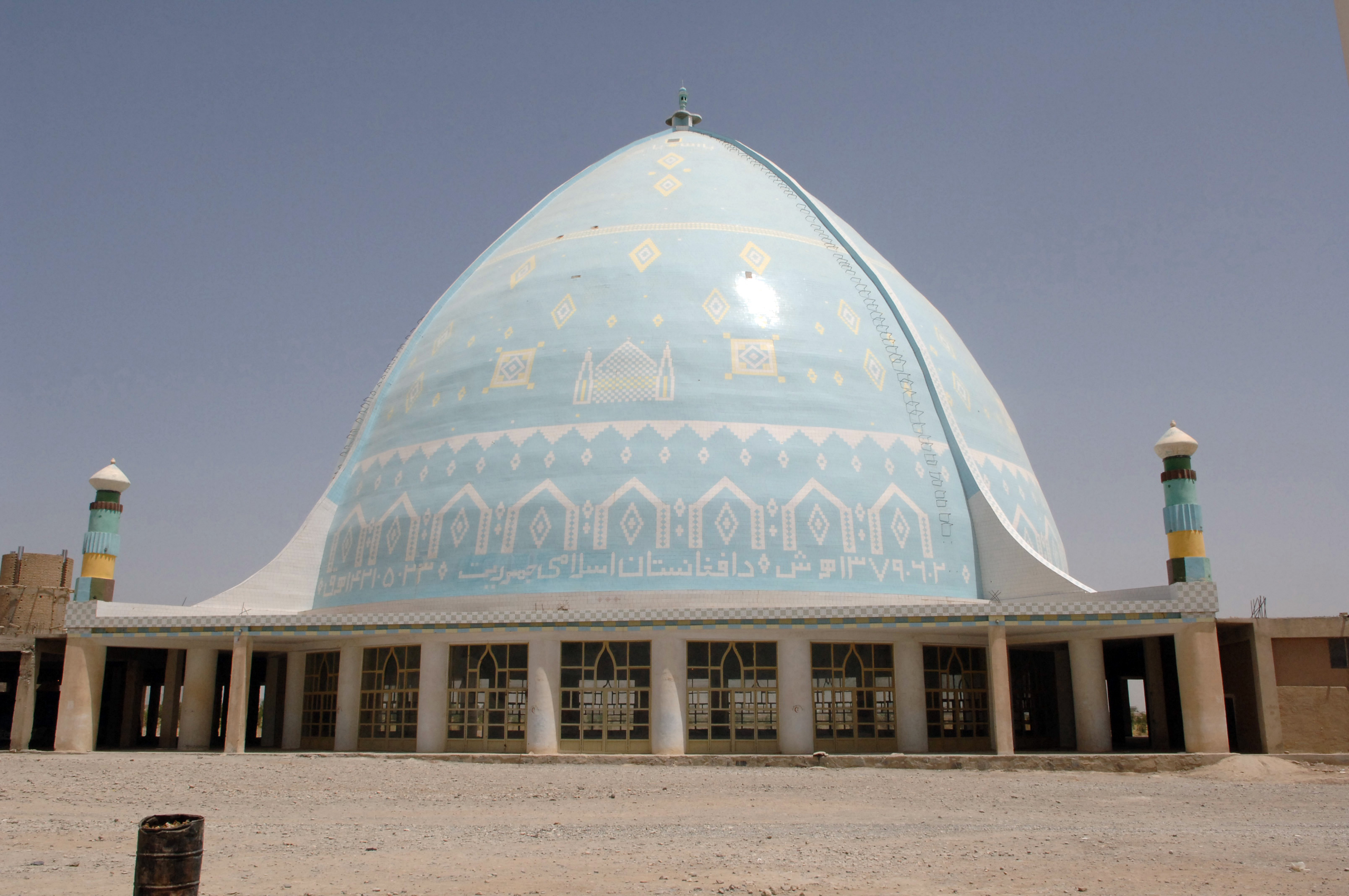
Kandahar
Every conqueror who ever marched through southern Afghanistan eventually arrived at the same conclusion: whoever holds Kandahar holds the south. Alexander the Great founded a city here around 330 BCE. The Mauryan emperor Ashoka left Buddhist edicts carved in Greek on its hillsides. Babur inscribed his own conquests into the rock above the plain. Ahmad Shah Durrani crowned himself here in 1747 and made Kandahar the capital of a new Afghan state. And on April 4, 1996, Mullah Omar stood before a crowd of religious scholars near Durrani's tomb, held aloft a cloak believed to have belonged to the Prophet Muhammad, and declared himself Commander of the Faithful. The city absorbs its conquerors the way bedrock absorbs rain: slowly, completely, on its own terms.
Layers of Conquest
Old Kandahar, known as Zor Shar in Pashto, sits southwest of the modern city as an archaeological palimpsest. The Sarpuza Fortress in the old quarter is said to date originally to the Mauryan emperor Ashoka in the 3rd century BCE. The citadel of Shah Hussain Hotak, destroyed by the Afsharid forces of Nader Shah in 1738, still stands in ruin. On the Chil Zena outcrop at the western edge, a rock-cut chamber reached by forty carved steps contains an inscription recording Babur's 16th-century conquest. Ashoka's bilingual rock inscription in Greek and Aramaic was found on the same mountainside. The only surviving historical city gate stands at Eidgah Gate Square, on the main road, a solitary remnant of fortifications that once enclosed the entire city.
The Tomb and the Cloak
Near the Eidgah Gate stands the Mausoleum of Ahmad Shah Durrani, the man Afghans call "Baba" -- father. His octagonal tomb houses his brass helmet and personal weapons alongside a marble sarcophagus draped in gold-embroidered velvet. But the building that draws the deepest reverence sits just in front: the Shrine of the Cloak, which holds a garment believed to have belonged to the Prophet Muhammad. The Sacred Cloak is kept locked away, brought out only at moments of existential crisis. It emerged during a cholera epidemic in the 1930s. Decades later, Mullah Omar displayed it to declare his authority over the Taliban movement. For Kandahar, the cloak is not a museum piece. It is a political instrument, a source of spiritual legitimacy that has outlasted every government that has tried to claim it.
Saints and Shrines
Kandahar's sacred geography extends well beyond Durrani's tomb. North of the city, the grave of Hazratji Baba stretches long across the ground to signify the saint's greatness, covered only in rock chips and marked by tall pennants. The shrine of Baba Wali Kandhari in the Arghandab district draws both Muslims and Sikhs, honoring a Sufi pir whose encounter with Guru Nanak at Hasan Abdal in present-day Pakistan made him a figure shared between faiths. Martyrs' Square in the city center commemorates Afghan fighters who died attacking British-Indian forces at the Herat Gate in an earlier era of foreign occupation. Everywhere in Kandahar, the past is not buried. It is prayed to, argued over, and walked through daily.
Pomegranates and Cricket Bats
Beneath the weight of its history, Kandahar is also a working city. Its economy runs on agriculture, trade, and transport, with grapes and pomegranates as the signature exports. Some 300 factories operate across several industrial parks. The bazaars -- Sarposh, the covered market in the city center; Shah Bazaar; Herat Bazaar -- remain the commercial heart, noisy and dense in ways that predate any modern planning. Cricket has become the dominant sport, played in dusty lots and in Kandahar International Cricket Stadium alike. The city's population has grown rapidly with the return of Afghans from Pakistan and Iran, and new townships like Ayno Maina and Hamidi Maina have risen on the outskirts, their grid-planned streets a stark contrast to the tangled lanes of the old quarters.
The City That Refuses Simplicity
Kandahar resists the single narrative that outsiders want to impose on it. It is not only a Taliban stronghold, though the movement's spiritual leadership has deep roots here. It is not only a city of war, though its modern history has been shaped by Soviet occupation, civil conflict, and American intervention. It is also the city that produced Malalai of Maiwand, the national folk hero who rallied Afghan forces against the British in 1880. It produced Nur Jahan, empress of the Mughal Empire, and the Karzai family, who would lead post-2001 Afghanistan. The Kandahar Museum, near the Eidgah Gate, holds paintings by Ghiyassuddin, one of Afghanistan's leading artists. Pashtun culture, with its code of Pashtunwali, pervades everything -- hospitality, honor, and the fierce independence that has made this city ungovernable for every empire that tried.
From the Air
Located at 31.62N, 65.72E in southern Afghanistan. Kandahar International Airport (OAKN) is the primary airport, approximately 16 km southeast of the city center. The city is visible as a large urban area on the flat desert plain, with the Arghandab River valley to the north and the rugged Chil Zena hills to the southwest marking Old Kandahar. Best viewed at 5,000-8,000 ft AGL. The Kandahar-Herat highway (Highway 1) and Kandahar-Kabul highway are visible as major road arteries. The desert terrain provides excellent visibility in clear weather.