Kandahar Greek Edicts of Ashoka
In 1963, archaeologists working in the ruins of Old Kandahar unearthed a stone fragment covered in Greek text. The words were not Homer, not Herodotus, not the usual fare of the Hellenic world. They were the moral edicts of Ashoka, the Mauryan emperor who ruled most of the Indian subcontinent from 269 to 233 BCE, translated into elegant Greek for an audience that had been living in southern Afghanistan since the armies of Alexander the Great passed through more than a century earlier. Here, at the crossroads of two civilizations, a Buddhist emperor addressed his Greek-speaking subjects in their own language, urging them toward compassion and righteous conduct.
Alexander's Children on the Steppe
Greek communities had been rooted in this part of the world since around 323 BCE, when Alexander's conquests and colonization efforts deposited settlers across what is now Afghanistan and Pakistan. They lived in the ancient region of Gandhara, near modern Islamabad, and in Gedrosia to the south. By Ashoka's time, these were not recent arrivals but established communities with generations of history in Central Asian soil. To the north, the Greco-Bactrian kingdom flourished, centered on cities like Ai-Khanoum, where Greek theaters and gymnasiums stood within sight of the Hindu Kush. Kandahar itself, which some scholars connect to a corruption of "Alexandria," sat at the southern edge of this Hellenistic cultural zone. These were the people Ashoka wanted to reach.
Philosophy Carved in Stone
What makes the Kandahar Greek Edicts remarkable is not simply that they exist, but the sophistication of their language. Scholars who have analyzed the inscription note that the Greek is of a very high level, displaying philosophical refinement and a deep understanding of Hellenic political vocabulary as it was used in the 3rd century BCE. This was not a rough translation by a bilingual merchant. Someone with genuine literary education composed these words, choosing Greek philosophical concepts to convey Buddhist ethical principles. The fragment that survives is incomplete, its beginning and end broken away, suggesting the original inscription may have contained all fourteen of Ashoka's Major Rock Edicts in Greek, as similar sites in India do. The effort implied is staggering: a full philosophical translation of an emperor's moral program, rendered for a foreign audience on the far edge of his empire.
A City of Many Scripts
The Greek Edicts were not Kandahar's only multilingual inscription. In 1958, five years earlier, the famous Kandahar Bilingual Rock Inscription had been discovered on the mountainside of the Chil Zena outcrop on the city's western edge, bearing Ashoka's words in both Greek and Aramaic. Two other Greek inscriptions are known from the area: a dedication by a man who identified himself as the "son of Aristonax," dating to the 3rd century BCE, and an elegiac poem by Sophytos, son of Naratos, from the 2nd century BCE. Together, these fragments paint a picture of a city where Greek was not a curiosity but a living literary language, used for religious edicts, personal dedications, and poetry alike.
Lost in the Crossfire
The Greek Edicts were once housed in the Kabul Museum, Afghanistan's national museum. Then came the civil war. Between 1992 and 1994, during the factional fighting that followed the fall of the communist government, the museum was looted. The Greek Edicts vanished. Their current location is unknown. What remains is the scholarly record: photographs, translations, and the memory of a stone that testified to one of history's most improbable cultural conversations. An Indian Buddhist emperor speaking Greek to the grandchildren of Macedonian soldiers, urging gentleness in a land that has known so little of it. The inscription is gone, but the fact of its existence still reshapes how we understand the ancient world: not as separate civilizations in sealed compartments, but as cultures that borrowed, translated, and argued with one another across every boundary we draw on maps.
From the Air
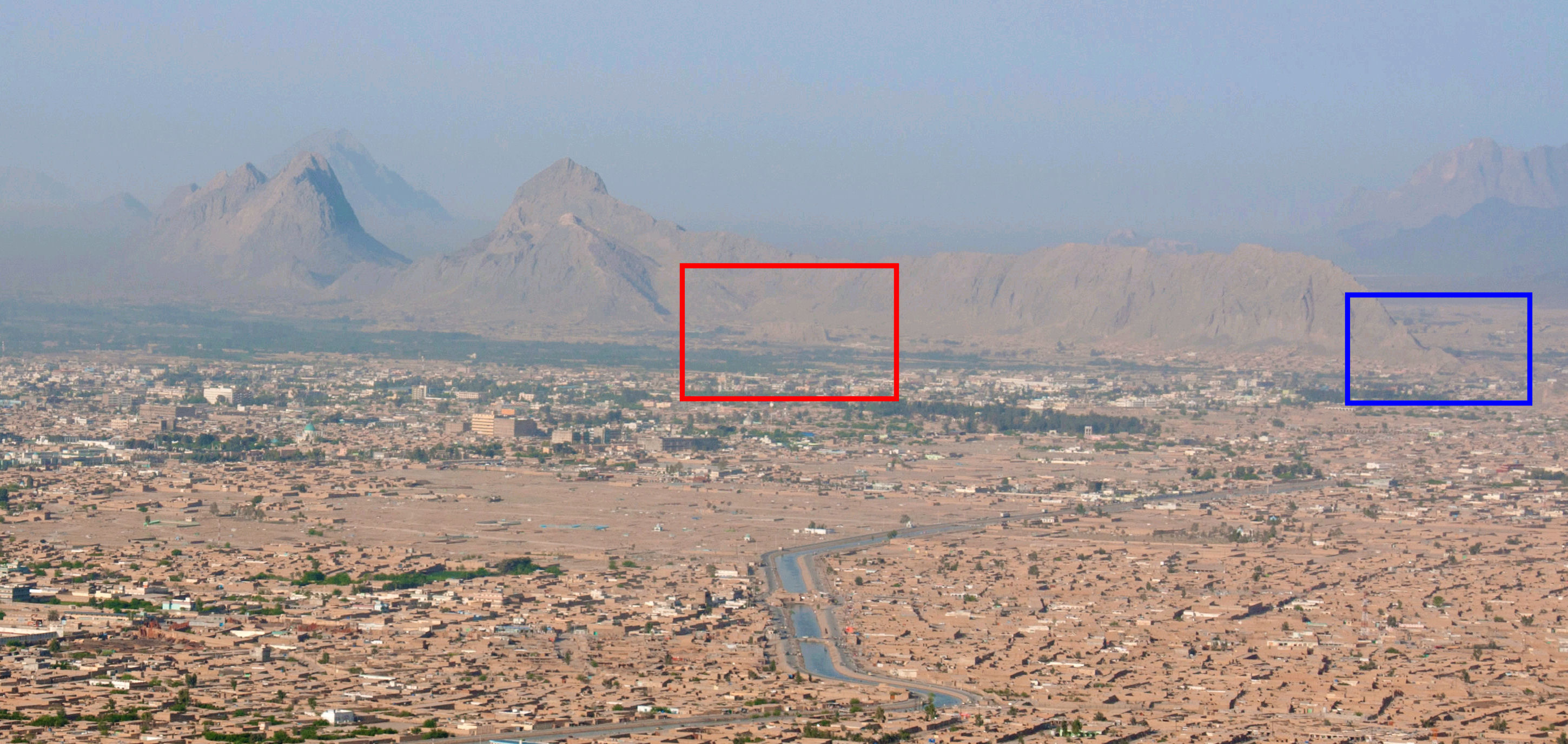
Located at 31.60N, 65.66E in the Old Kandahar (Zor Shar) archaeological area, southwest of the modern city center. Kandahar International Airport (OAKN) lies approximately 16 km to the southeast. The Chil Zena rocky outcrop, where the bilingual inscription was found, is visible as a rugged chain of hills on the western side of the old city. Best viewed at 3,000-5,000 ft AGL. The Arghandab River valley runs to the north, and the flat desert terrain makes the old citadel mound distinguishable from the air.