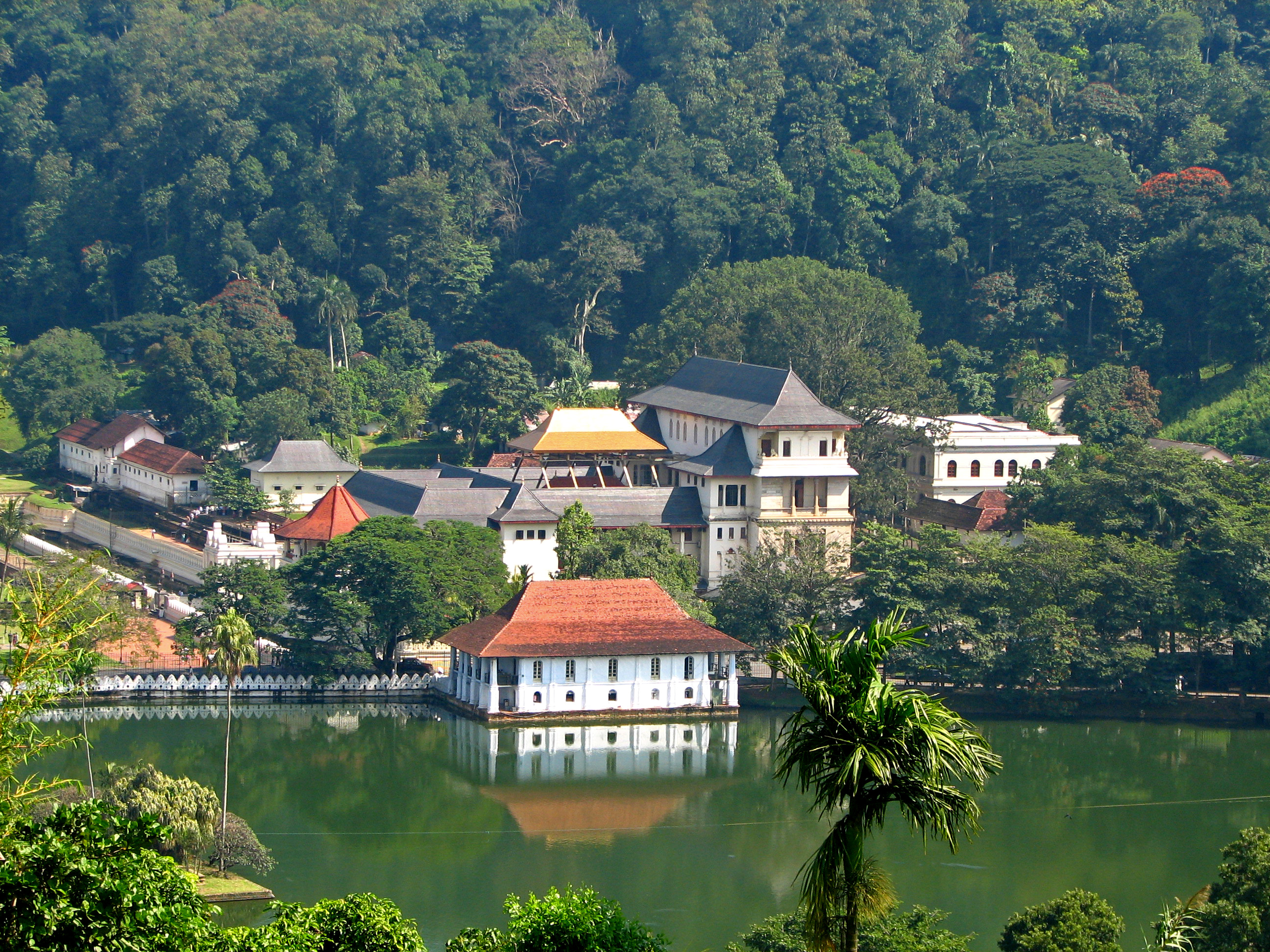
Kandy
Kandy is Sri Lanka's spiritual heart, the hill city of 125,000 where the Temple of the Tooth houses what Buddhists believe is the Buddha's tooth relic and where the last Sinhalese kingdom held out until 1815. The city that the lake anchors and the hills embrace, where the Esala Perahera procession draws crowds each August - Kandy is where Sri Lankan Buddhism and Sinhalese culture concentrate, the pilgrimage destination that every Buddhist Sri Lankan visits.
The Temple of the Tooth
The Temple of the Tooth is Sri Lanka's most sacred site, the temple complex where the tooth relic of the Buddha has been enshrined since the 16th century. The temple that pilgrims fill daily, that ceremonies honor, that the tooth relic makes Buddhism's most important site in Sri Lanka.
The temple is what makes Kandy pilgrimage destination, the relic that Buddhists come to venerate. The temple is faith made architectural; the faith fills the temple.
The Lake
Kandy's lake is what the last king created, the artificial body of water that anchors the city center and that provides the peaceful setting the temple overlooks. The lake that strollers circle, that the Temple of the Tooth reflects in, that defines Kandy's geography.
The lake is what makes Kandy pleasant, the water that softens the city's tropical character. The lake is royal legacy; the legacy beautifies.
The Perahera
The Esala Perahera is Kandy's great spectacle, the ten-day procession each August when the tooth relic is paraded on elephants through streets that crowds line. The perahera that is Sri Lanka's most famous festival, that dancers and drummers and elephants make unforgettable - the perahera is when Kandy shows what Buddhist devotion looks like.
The perahera draws visitors who time their trips for it, the spectacle that tourism markets. The perahera is tradition maintained; the maintenance is spectacular.
The Last Kingdom
Kandy was the last Sinhalese kingdom, the highland state that resisted Portuguese and Dutch until the British finally conquered it in 1815. The kingdom whose palace ruins remain, whose independence lasted longest, whose fall ended Sinhalese self-rule until 1948.
The kingdom's history is what Kandy remembers, the pride in resistance that lasted when coastal kingdoms fell. The kingdom is gone; the memory persists.
The Hills
Kandy's hills are what the climate creates, the elevation that makes the city cooler than the coast, that tea plantations cover beyond the city. The hills that the train from Colombo climbs through what's called the world's most scenic rail journey - the hills are Kandy's setting and its escape.
The hills shape Kandy's character, the cooler weather that the British appreciated, the greenery that elevation enables. The hills are why Kandy feels different from coastal Sri Lanka.
From the Air
Kandy (7.29N, 80.64E) lies in Sri Lanka's central highlands at 465m elevation. There is no commercial airport in Kandy - the nearest is Bandaranaike International (CMB) 115km southwest. A small domestic airport exists but has limited service. The city surrounds an artificial lake. The Temple of the Tooth complex is visible at the lake's north end. Hills and tea plantations surround the city. Weather is tropical highland - cooler than the coast, rainy October-January. The scenic train journey from Colombo passes through hill country.