Kani Shaie
Sixty-two clay sealings, two cylinder seals, and a fragment of a gold pendant. That is what emerged from the dirt at Kani Shaie during recent excavations, artifacts from a time before writing, before bronze, before any kingdom had a name. This small archaeological mound, rising 15 meters above the Basian Basin at the western edge of the Zagros Mountains, holds roughly 7,000 years of human activity compressed into layers of earth and ash. Located 23 kilometers west of modern Sulaymaniyah in the Kurdistan Region of Iraq, it is a place where the deep origins of civilization are measured not in chapters but in strata.
Fifteen Layers Deep
The main mound at Kani Shaie covers about half a hectare, with a diameter of 75 meters at the base. A "lower town" extends northward. The site's primary occupation spans from the 5th millennium BC Chalcolithic period to the middle of the 3rd millennium BC Early Bronze Age, encompassing the Ubaid period, the Uruk period, and the Early Dynastic period. Fifteen occupational layers have been defined, their ages confirmed by radiocarbon dating. Level 8, a Late Chalcolithic 2 deposit containing a jar burial, dates to 4065-3959 cal BC. Level 6 dates to 3770-3665 cal BC. Level 4, from Late Chalcolithic 4, dates to 3530-3370 cal BC. Minor occupation from the Halaf, Neo-Assyrian, Parthian, Islamic, and Ottoman periods rounds out the timeline. An Ottoman-era cemetery marks the most recent use of the site.
Fire and Bowls
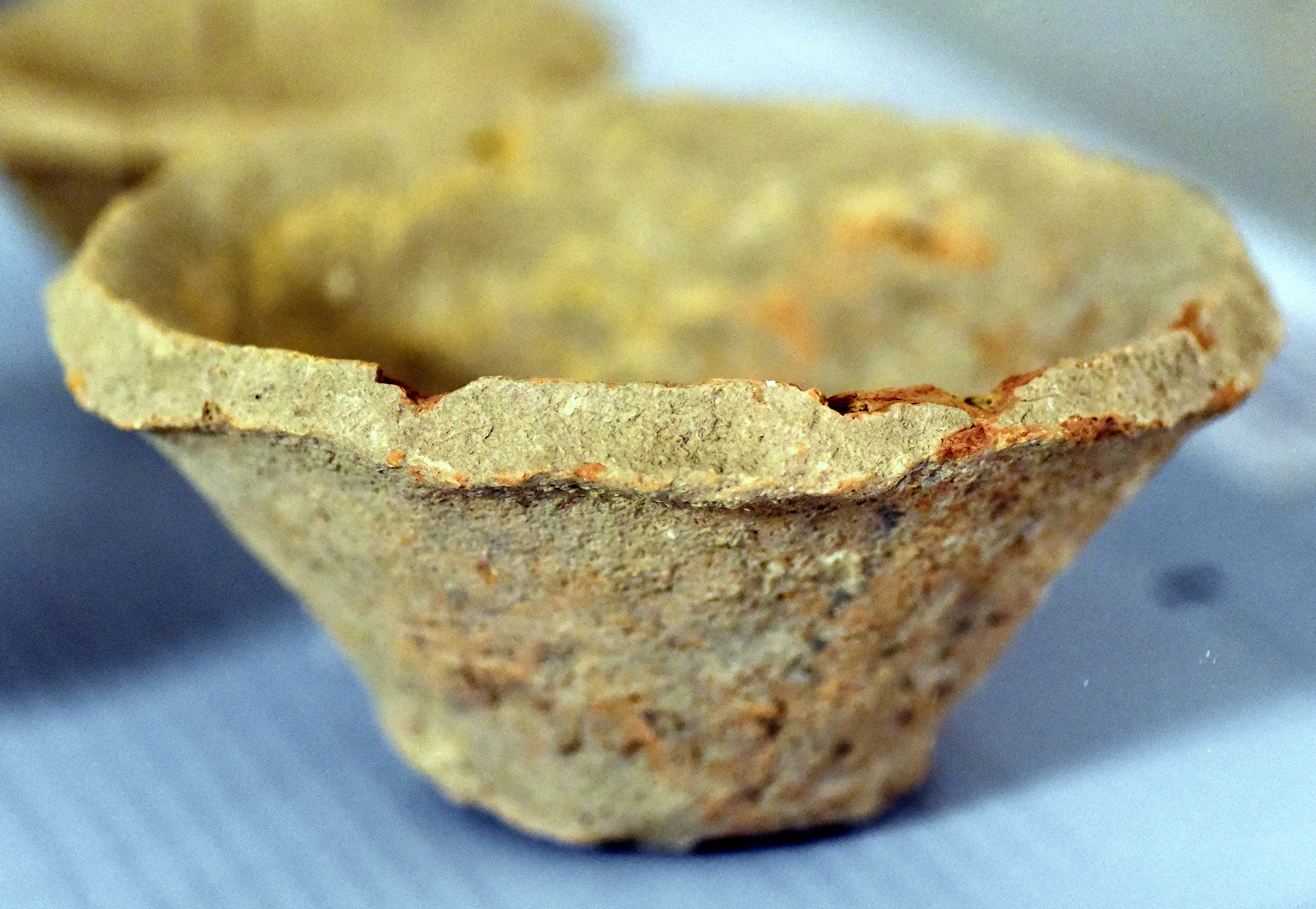
Markers of the Uruk culture, the world's first urban civilization centered in southern Mesopotamia, appear at Kani Shaie in Late Chalcolithic 2 and persist through Late Chalcolithic 4. Among the most telling artifacts are beveled rim bowls, mass-produced vessels believed to have served as standardized containers for grain rations. Their presence here, hundreds of kilometers from the Uruk heartland, speaks to the reach of early economic networks. But this chapter ended violently. The Uruk-period occupation at Kani Shaie was destroyed by conflagration. The top of the mound was leveled, and a new Early Bronze Age settlement rose on the ashes. A single clay numerical tablet, heavily sealed, was found in association with the destruction level, though displaced from its original context. It hints at early record-keeping practices at the very moment they were being consumed by fire.
Grain, Seals, and the Shape of Authority
Excavations resumed in 2024 under a joint team from the University of Coimbra and the University of Cambridge, part of the Kani Shaie Archaeological Project first launched after surveys in 2012 and excavation seasons in 2013, 2015, and 2016. The 2024 campaign uncovered part of a large Early Bronze Age circular building designed to hold grain. An adjacent architectural complex appeared to function as a food distribution operation. In Room A, 28 clay sealings were found. In Room B, 34 more. Plant remains included barley, emmer wheat, lentil, chickpea, and pea. These are not the remnants of a simple farming village. Sealings imply administration, authority, an institution that controlled who received food and in what quantities. Two cylinder seals dated to the end of the 4th millennium BC suggest that this administrative function had deep roots.
A Monumental Discovery
The 2025 season yielded a find that reshaped understanding of the site. A monumental Late Uruk period building, dating to approximately 3300-3100 BC, was uncovered. It was adorned with decorative clay cones, a construction technique typical of Uruk culture that involved embedding thousands of small clay cones into wet plaster to create geometric patterns on walls. The finds included a fragment of a gold pendant and a Uruk-period cylinder seal. A building of this scale and ornamentation, this far from the Mesopotamian lowlands, challenges assumptions about the relationship between the Uruk core and its periphery. Kani Shaie was not merely receiving cultural influence from the south. It was participating in the same architectural and administrative traditions, suggesting that the Zagros foothill communities were active partners in the earliest experiments with urban civilization.
From the Air
Located at 35.56N, 45.18E in the Basian Basin, about 23 km west of Sulaymaniyah, Kurdistan Region of Iraq. The mound is small (75m diameter) and may be difficult to spot from high altitude, but the surrounding agricultural basin is distinctive. Nearest airport is Sulaymaniyah International Airport (ORSU). Best viewed below 5,000 feet AGL. The Zagros Mountains rise dramatically to the east.