Kanjizaio-in
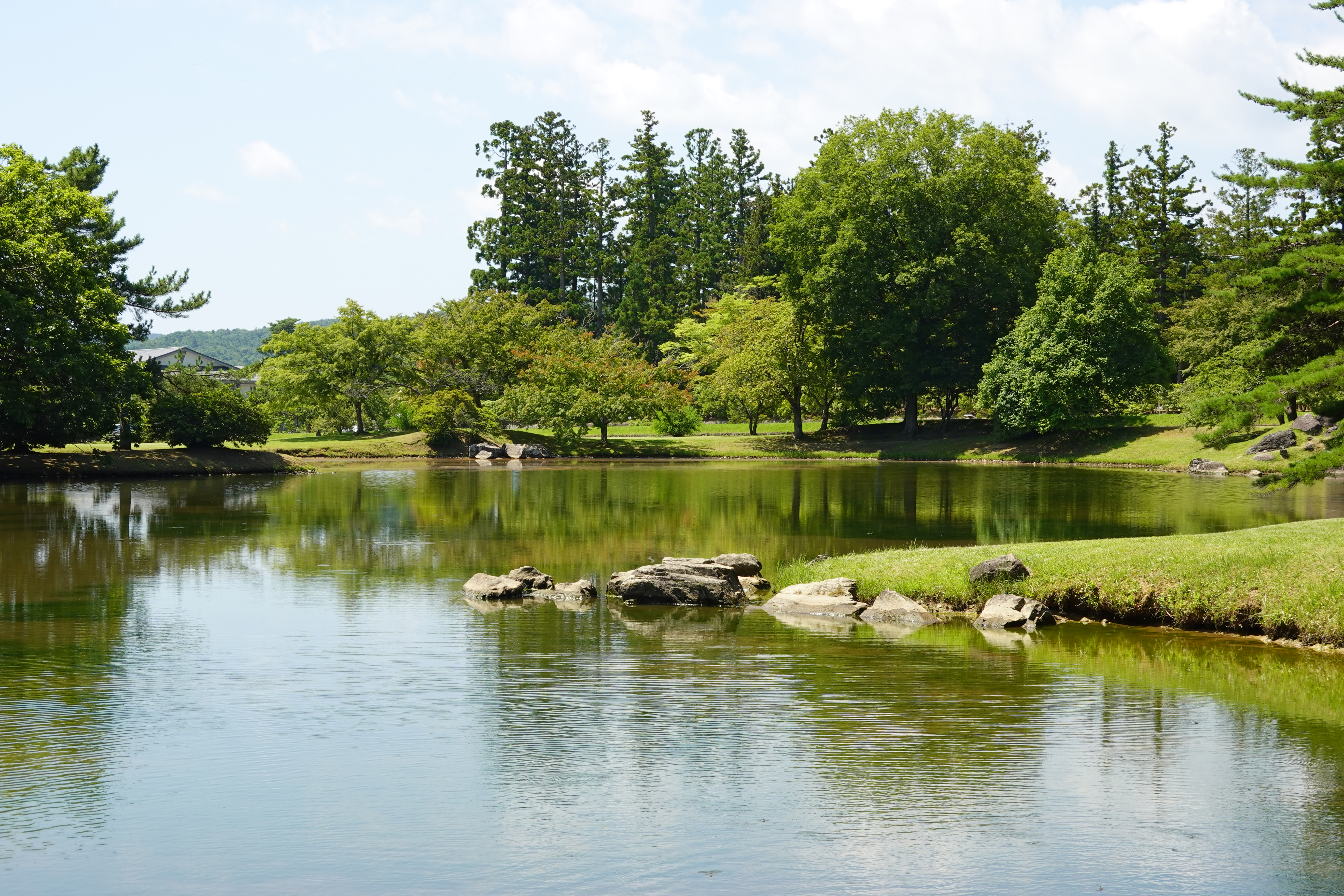
For centuries, the farmers who worked the rice paddies in southern Hiraizumi had no idea what lay beneath their feet. When archaeologists began excavating the site in 1973, they uncovered something remarkable: the almost perfectly preserved remains of a twelfth-century Pure Land garden pond, its original shoreline and rock formations intact after more than eight hundred years underground. The pond, called Maizuru ga Ike, had been buried by time and agriculture but never destroyed. Today, restored to its original dimensions -- roughly 90 meters on each side -- it is the quiet, contemplative heart of Kanjizaio-in, a vanished Buddhist temple that forms one of the five components of Hiraizumi's UNESCO World Heritage Site.
A Lady's Temple
Kanjizaio-in was not built by a warlord or a shogun. It was commissioned by the wife of Fujiwara no Motohira, the second lord of the Northern Fujiwara dynasty that ruled Hiraizumi and much of the Tohoku region during the twelfth century. Her temple stood directly across from Enryuji and Kashoji, twin temple complexes founded by her husband. The placement was deliberate: in the geography of Hiraizumi's Pure Land vision, sacred buildings were positioned in careful relationship to one another, each contributing to a landscape meant to mirror the Buddhist paradise. Kanjizaio-in shared water with its neighbor Motsuji, the pond fed by a stream that connected the two compounds. But where Motsuji was elaborate and opulent in its architecture, Kanjizaio-in was simpler and plainer -- a more intimate expression of the same devotion.
Bridges to Paradise
The compound measured 160 by 260 meters and centered on two Amida halls -- one large, one small -- positioned on the northern shore of the garden pond. Visitors entered from the south gate and crossed bridges that led from the entrance over water to an island in the center of the pond, and then onward to the halls on the far side. The crossing was symbolic: in Pure Land Buddhism, water represents the boundary between the earthly world and Amida's paradise, and crossing it enacts the spiritual passage from suffering to salvation. The Large Amida Hall housed a triad of Buddhist figures -- Amida Buddha flanked by two bodhisattvas -- and its walls were painted with scenes of Kyoto, the imperial capital. The Small Amida Hall was decorated with poems by Fujiwara no Norinaga. Some scholars believe Motohira's wife lived in the smaller hall and worshipped in the larger one; others suggest the entire complex was built as a memorial after her husband's death.
Fire, Fields, and Rediscovery
The Northern Fujiwara dynasty fell in 1189 when Minamoto no Yoritomo's forces swept through Hiraizumi. Both Motsuji and Kanjizaio-in were destroyed by fire in 1198, though a smaller temple may have persisted on the site until as late as 1578. After that, the ruins disappeared beneath centuries of agricultural use. The garden that had been designed to embody paradise became a working rice paddy. The 1973-1976 excavations changed everything. Archaeologists located the foundation pillars of the buildings described in the Kamakura-period chronicle Azuma Kagami, confirming the historical accounts. More remarkably, they found the pond itself largely intact -- its rock formations, island, and shoreline preserved by the very soil that had hidden them. The rocky coastline formation on the pond's western edge is thought to follow principles from the Sakutei-ki, the oldest Japanese gardening manual, written during the Heian period.
The Pond Restored
Today, Kanjizaio-in is an open park centered on the restored Maizuru ga Ike pond. None of the temple buildings have been reconstructed -- the site preserves the archaeology rather than attempting to recreate the architecture. The pond's nearly square shape, its central island, and the careful rock arrangements along its shores are all that visitors see. In 2005, the garden was designated a nationally recognized Place of Scenic Beauty, and it is also protected as part of the Special National Historic Site designation covering neighboring Motsuji. Together with the other Hiraizumi components, Kanjizaio-in became part of the UNESCO World Heritage inscription in 2011. The absence of buildings is part of its power. Standing at the pond's edge, looking north toward where the Amida halls once stood, the visitor sees only water, stone, and sky -- which may be closer to the Pure Land ideal than any golden hall could achieve.
From the Air
Kanjizaio-in lies at 38.99N, 141.11E, immediately adjacent to the Motsuji temple complex in Hiraizumi, Iwate Prefecture. The restored pond is visible from the air as a square body of water surrounded by parkland on the western side of town. The nearest airport is Iwate Hanamaki Airport (RJSI), approximately 50 km north. Sendai Airport (RJSS) lies roughly 120 km south. From altitude, look for the cluster of green spaces along Hiraizumi's western hills -- Kanjizaio-in sits just south of Motsuji's larger garden pond. Recommended viewing altitude: 2,000-4,000 feet to distinguish the pond's distinctive square shape and central island.