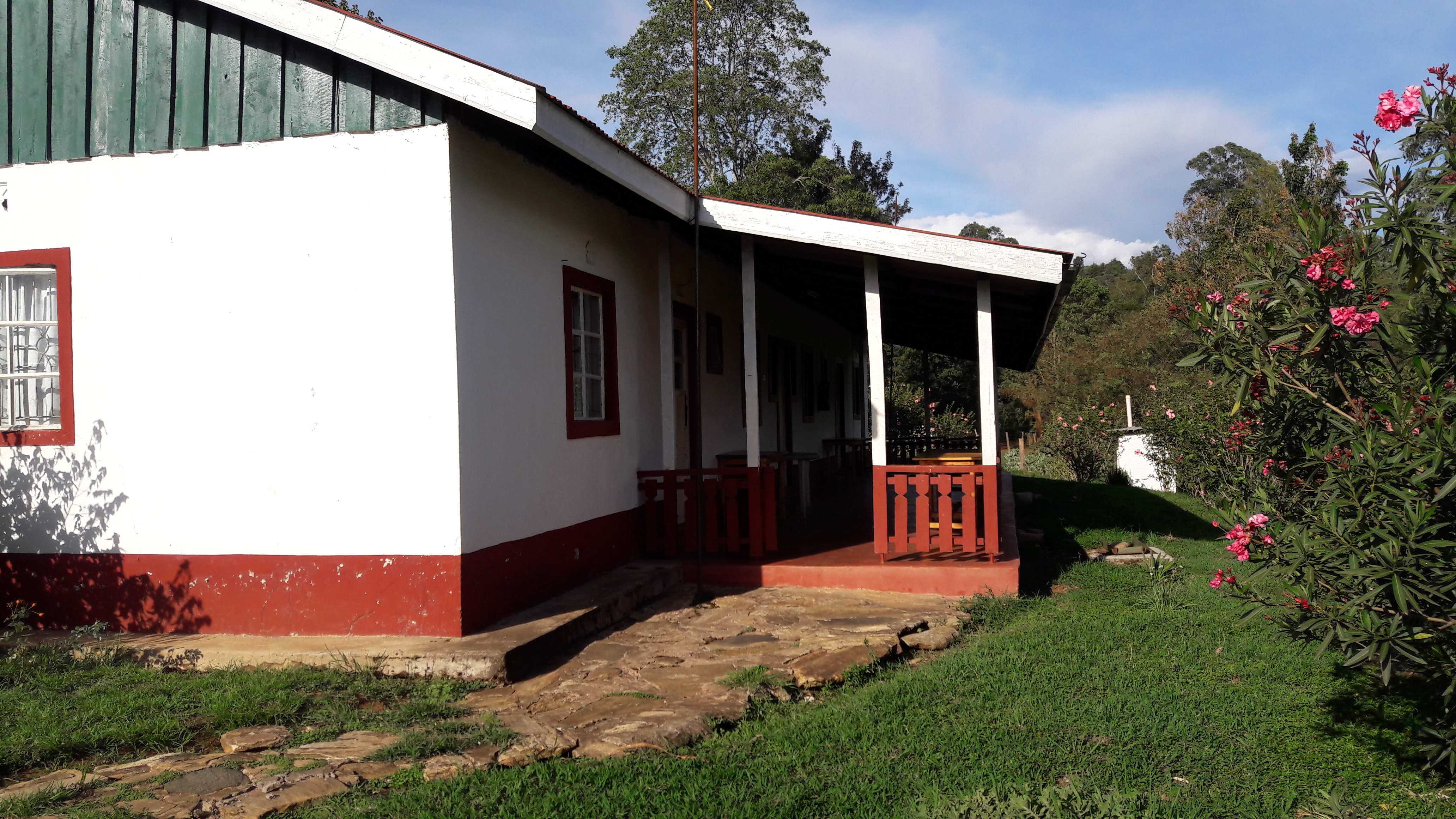
Kapenguria
The prison still stands. In Kapenguria, a small town of about 40,000 people in Kenya's West Pokot County, the building where Jomo Kenyatta was held in 1953 has been converted into a museum. The transformation is deliberate and symbolic: the place that colonial authorities chose for its remoteness, hoping to bury a political trial far from public attention, is now a monument to the independence movement that trial failed to suppress. Kapenguria's name became permanently fused with Kenyan nationhood on that day in 1953, but the town has continued producing figures whose impact extends far beyond its dusty streets.
The Trial That Named a Movement
In 1953, British colonial authorities arrested Jomo Kenyatta and five associates -- Bildad Kaggia, Kung'u Karumba, Fred Kubai, Achieng' Oneko, and Paul Ngei -- charging them with managing the Mau Mau Rebellion. The group would become known as the Kapenguria Six, and their trial would become one of the most consequential legal proceedings in African colonial history. The authorities chose Kapenguria precisely because of its isolation. Lying northeast of Kitale along the A1 road in northwestern Kenya, the town was far from the political centers of Nairobi and the Central Province where the Mau Mau movement was strongest. The strategy backfired. The trial drew international attention and turned the defendants into symbols of African resistance to colonial rule. Kenyatta was convicted and imprisoned, but the cause he represented proved impossible to contain. A decade later, he became the first president of an independent Kenya.
Where Runners Make Peace
Kapenguria's second claim to global significance comes through Tegla Loroupe, born in the surrounding West Pokot region. Loroupe held world records in the marathon and the 20,000-metre, 25,000-metre, and 30,000-metre road distances, and was a three-time World Half-Marathon champion -- achievements that would be remarkable from any background, but are extraordinary considering she grew up in an area plagued by inter-tribal conflict. Rather than leaving her hometown behind, Loroupe channeled her fame into peacebuilding. She established the annual Peace Race in Kapenguria, designed to bring together members of the eight tribes in the West Pokot area through the shared language of athletics. She also founded the Tegla Loroupe Peace Academy, which provides education to children orphaned by tribal wars. Running, in this context, is not just sport. It is diplomacy conducted at altitude.
Capital of the Pokot Frontier
Beyond its historical resonance, Kapenguria functions as the administrative capital and largest urban center of West Pokot County. The town sits along the Kitale-Lodwar road, serving as a gateway to Kenya's remote northwestern territories. Government at both county and national level is the largest employer. Financial institutions including Cooperative Bank, Kenya Commercial Bank, and Equity Bank maintain branches here, and the town hosts campuses of the University of Nairobi and Kisii University, along with a Kenya Medical Training College and the West Pokot Teachers Training College. The Kapenguria County Referral Hospital serves as the main health facility for the entire county. About 25 kilometres south, off the road to Kitale, lies the Saiwa Swamp National Park -- Kenya's smallest national park and the only place in the country where the rare sitatunga antelope can be reliably observed.
The Weight of a Name
Kapenguria occupies an unusual position in Kenyan geography. It is small enough to walk across in half an hour, remote enough that colonial administrators considered it the perfect place to hide a political trial, and yet its name resonates in the national consciousness like few other towns of its size. The museum in the old prison draws visitors who come to stand where Kenyatta stood, to see the courtroom where the prosecution built its case and the defense -- led by the distinguished barrister D.N. Pritt -- challenged the legitimacy of colonial law itself. Outside the museum, the town carries on with the quotidian business of county governance, university education, and market commerce. But the name endures. In Kenya, to say 'Kapenguria' is to invoke a turning point, a moment when the machinery of empire was challenged in a remote courtroom and, despite securing a conviction, ultimately lost.
From the Air
Located at 1.24N, 35.12E in northwestern Kenya at approximately 2,000m elevation. The town appears as a small urban settlement along the A1 road northeast of Kitale. Nearest airport is Kitale Airstrip, approximately 75 km to the southwest. Eldoret International Airport (HKEL) is about 120 km to the south. From the air, the Cherangani Hills rise to the east and the landscape transitions from highland farming to more arid terrain to the north toward Turkana.