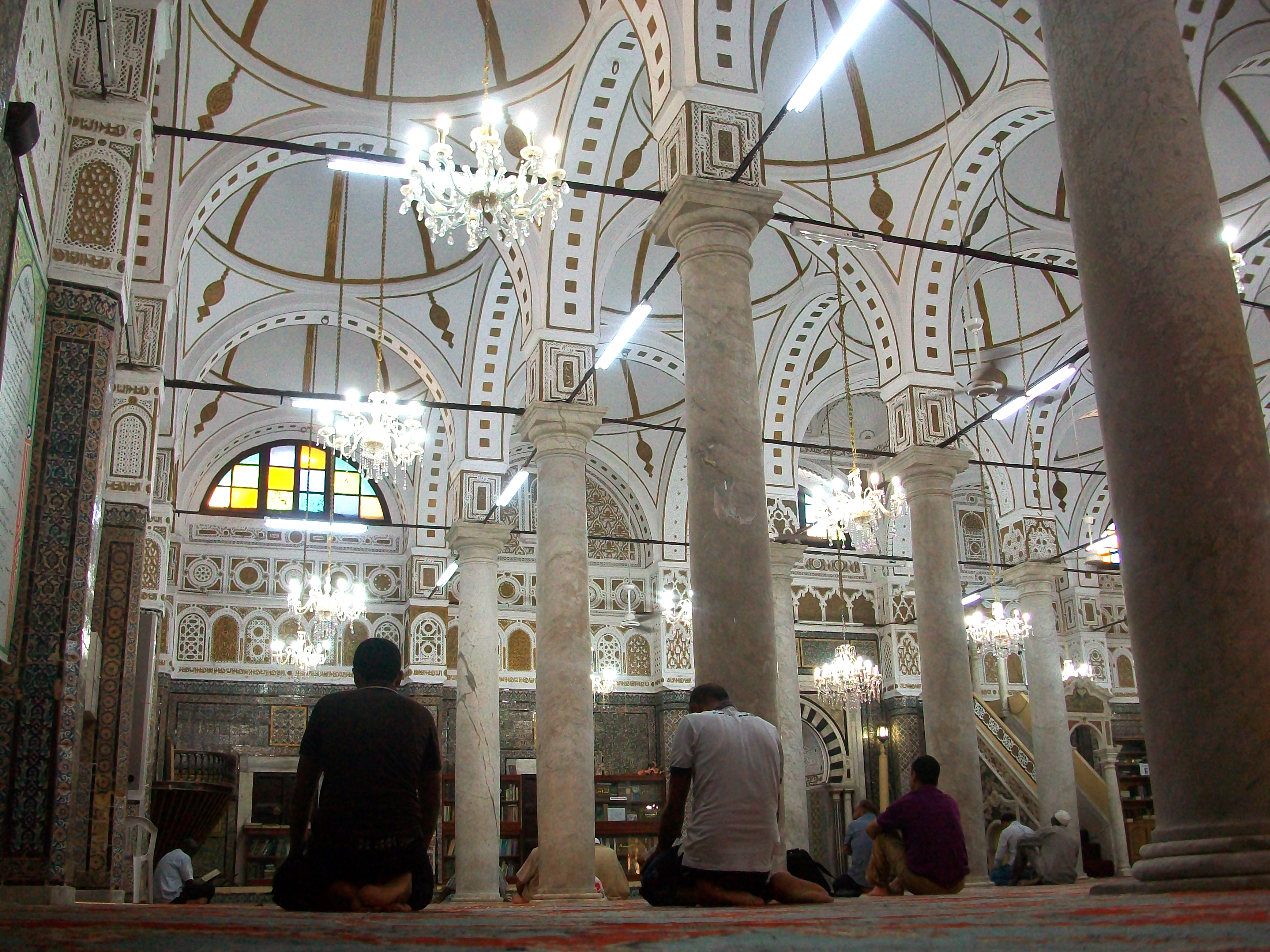
Karamanli Mosque
Ahmed Karamanli wanted a mosque that would outlast his dynasty. He began construction in 1736, when his family's grip on Ottoman Tripoli was still tightening, and the result was a complex that would carry the Karamanli name long after the dynasty itself collapsed. Nearly three centuries later, in 2014, militants smashed through the doors and attacked the ceramic tiles and marble decorations that had survived colonial occupation, world wars, and revolution. UNESCO condemned the vandalism. The tiles could not condemn anything. They simply broke.
A Dynasty Built in Stone
The Karamanli dynasty ruled Tripoli semi-independently from the Ottoman Empire for over a century, from 1711 to 1835. Ahmed Karamanli, who commissioned the mosque, was the founder of this dynasty, a military officer who seized power and then sought to legitimize his rule through architecture. The mosque became the centerpiece of a larger complex that includes a madrasa, an Islamic school, and the tombs of Karamanli family members. With entrances on three sides, the complex was designed to be woven into the fabric of the medina, accessible from multiple directions rather than set apart. The tombs within guarantee that visitors to the mosque walk past the remains of the very family that built it, a physical reminder that power and piety were, in Ottoman Tripoli, inseparable.
Ceramic and Marble Under Fire
For 278 years, the Karamanli Mosque's ceramic tiles and marble decorations survived remarkably intact. Ottoman rule gave way to Italian colonization in 1911. The Italians gave way to the British during World War II. Monarchy yielded to Gaddafi's revolution in 1969, and Gaddafi's four decades of rule ended in the 2011 uprising. Through each upheaval, the mosque endured. Then in 2014, during the chaos of Libya's ongoing civil war, attackers vandalized the interior. The ceramic tiles that had been laid in the 18th century were damaged, their patterns broken. The marble decorations that had framed the prayer space for generations were scarred. UNESCO issued a public condemnation, calling on all parties in the Libyan conflict to protect cultural heritage. But condemnations do not repair tile.
Faith in the Medina's Maze
The Karamanli Mosque sits within Tripoli's medina, the old walled city that has been continuously inhabited for centuries. Walking the medina's narrow streets, visitors pass from one era to the next without warning. Roman columns stand embedded in medieval walls. Ottoman doorways open onto courtyards that predate the dynasty that framed them. The mosque shares this neighborhood with the Gurgi Mosque, built nearly a century later in 1834, and together they represent two distinct moments in Ottoman Tripoli's architectural ambitions. Where the Gurgi Mosque is exuberant, fusing European and Islamic styles with decorative abandon, the Karamanli Mosque carries the heavier purpose of a dynastic monument, a place where power was meant to be felt as much as faith.
What Remains and What Was Lost
The story of the Karamanli Mosque is, in miniature, the story of Tripoli itself. Built by rulers who seized power and sought permanence, maintained through centuries of foreign occupation, damaged by the very conflicts that were supposed to liberate the country. The madrasa that once educated students of Islamic law still stands as part of the complex. The dynastic tombs still hold the Karamanli dead. But the 2014 attack left wounds that serve as a reminder of how fragile cultural heritage becomes when a nation fractures. The mosque remains open, its three entrances still drawing worshippers and visitors from the surrounding streets, its damaged tiles now part of the story rather than separate from it.
From the Air
Located at 32.90N, 13.18E in Tripoli's old city medina along the Mediterranean coast. Nearest major airport is Mitiga International Airport (HLLM), about 8 km east. The medina is identifiable as the dense historic quarter along the waterfront. Recommended viewing altitude 2,000-3,000 ft. The nearby Red Castle (As-Saraya al-Hamra) is a prominent visual landmark on the promontory above the old city.